

Market Overview:
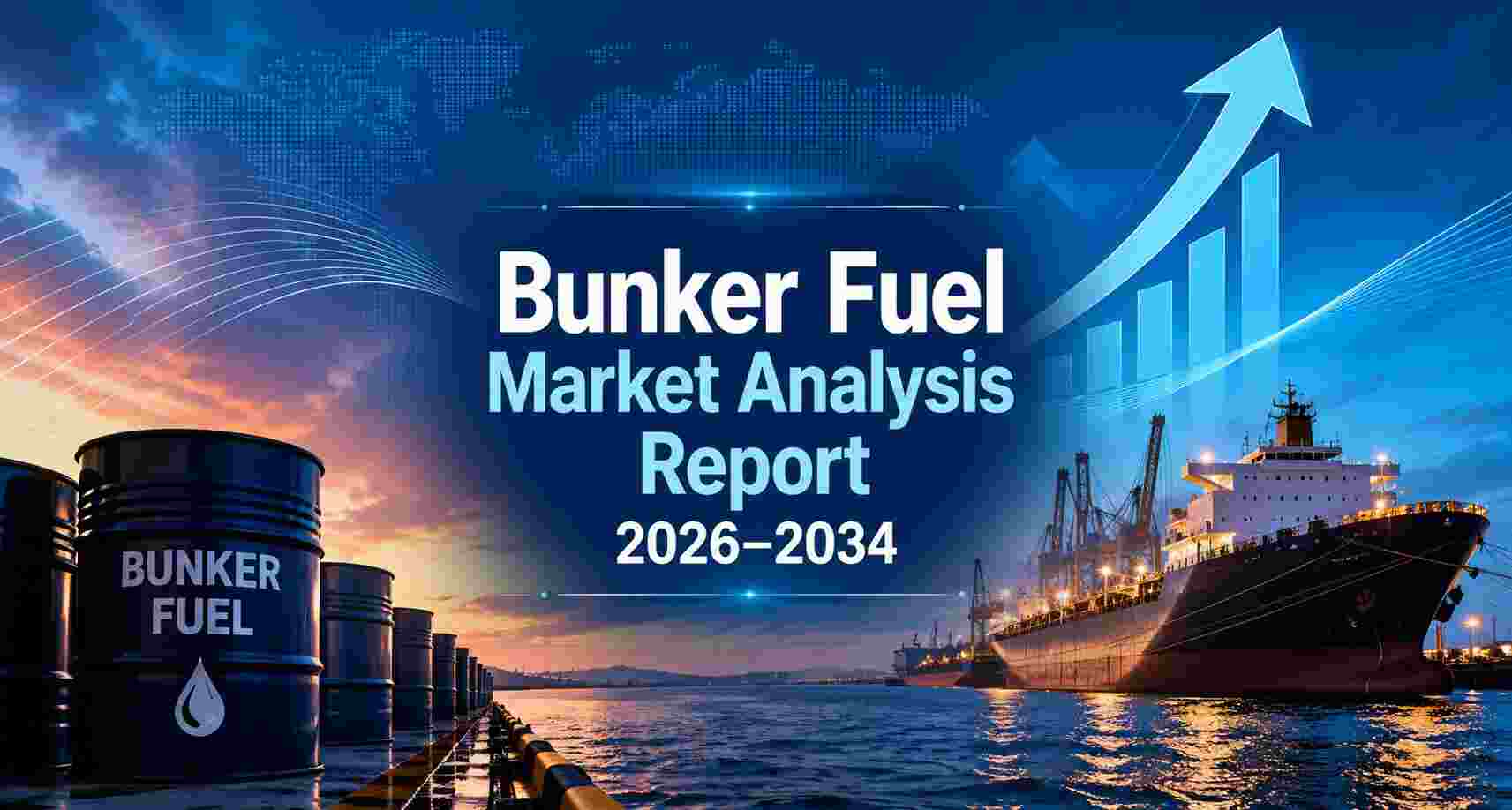
The bunker fuel market is experiencing rapid growth, driven by expansion of global seaborne trade, stringent environmental regulations and IMO mandates, and technological advancements and infrastructure development. According to IMARC Group’s latest research publication, “Bunker Fuel Market Size, Share, Trends and Forecast by Fuel Type, Vessel Type, Seller, and Region, 2026-2034”, The global bunker fuel market size reached USD 177.1 Billion in 2025 and is projected to reach USD 275.0 Billion by 2034, exhibiting a CAGR of 4.86% during 2026-2034.
This detailed analysis primarily encompasses industry size, business trends, market share, key growth factors, and regional forecasts. The report offers a comprehensive overview and integrates research findings, market assessments, and data from different sources. It also includes pivotal market dynamics like drivers and challenges, while also highlighting growth opportunities, financial insights, technological improvements, emerging trends, and innovations. Besides this, the report provides regional market evaluation, along with a competitive landscape analysis.
Download a sample PDF of this report: https://www.imarcgroup.com/bunker-fuel-market/requestsample
Our report includes:
The primary driver of the bunker fuel market is the continuous expansion of international seaborne trade, which remains the backbone of the global economy. Containerized shipments and tanker operations are rising steadily due to increased movements of crude oil, refined products, and surging e-commerce demand. Bulk carriers, which transport critical commodities such as coal, iron ore, and grains, accounted for 34.7% of the market share in 2025. This high frequency of long-haul voyages necessitates substantial fuel consumption. In 2026, United Nations Conference on Trade and Development (UNCTAD) data indicates that maritime trade volume is supporting a market volume of approximately 249.65 million tonnes. Strategic port expansions and the development of new shipping routes, particularly in the Middle East and Asia-Pacific, further solidify this growth. As industrial production and infrastructure development accelerate in emerging economies, the demand for reliable marine fuel solutions continues to scale across all major vessel categories.
Regulatory pressure is fundamentally reshaping the bunker fuel landscape, forcing a transition toward compliant fuel grades. The International Maritime Organization (IMO) has implemented rigorous sulfur caps and decarbonization targets, including a 2025 Net-Zero Framework that mandates binding emissions reductions. These regulations have made Very Low Sulfur Fuel Oil (VLSFO) the global standard, with this fuel type capturing a 52.4% market share in 2025. Major oil companies, including Shell, TotalEnergies, and BP, have optimized their refinery configurations to maximize VLSFO yield to meet this regulatory demand. Furthermore, the FuelEU Maritime initiative is pushing for even lower carbon intensity, incentivizing the adoption of biofuels and synthetic blends. Governments are also establishing “green shipping corridors,” such as the partnership between Australia’s Fortescue and China’s COSCO Shipping, to develop ammonia-powered supply chains. This regulatory environment ensures a steady demand for high-quality, compliant fuels while phasing out traditional heavy fuel oils.
The growth of the bunker fuel market is increasingly supported by technological innovations and massive infrastructure investments at key global hubs. Advanced fuel blending technologies and digital monitoring systems are being deployed to improve fuel efficiency and ensure quality control, which is vital as fuel costs represent nearly 50% to 60% of total ship operating costs. Port infrastructure is also evolving rapidly; for instance, the Zhoushan hub in China and the port of Singapore have significantly expanded their storage and bunkering capacities. In 2025, the Asia-Pacific region anchored 44.7% of global volume, benefiting from these advanced facilities. Additionally, the installation of exhaust gas cleaning systems, or scrubbers, on approximately 5,000 vessels globally allows for the continued use of High Sulfur Fuel Oil (HSFO), maintaining a specialized niche in the market. These technological and physical upgrades create a more resilient and efficient supply chain for marine energy.
Liquefied Natural Gas (LNG) has emerged as the leading alternative to traditional petroleum-based bunkers, with infrastructure reaching a critical mass at major ports. By 2024, the global orderbook for LNG-fueled vessels surpassed 500 ships, driven by large-scale container and cruise fleet programs. LNG bunkering terminals in Rotterdam, Singapore, and South Korea are now facilitating broader adoption, providing a cleaner energy bridge for shipowners. In 2025, LNG-barge-to-ship operations became a major bunkering method, reflecting the industry’s shift toward flexible delivery systems. The environmental profile of LNG, which significantly reduces nitrogen oxides and particulate matter, makes it a preferred choice for vessels operating in Emission Control Areas (ECAs). As more dedicated LNG bunkering vessels enter service, the accessibility of this fuel continues to improve, establishing it as a permanent fixture in the modern maritime energy mix.
A significant trend in 2026 is the commercialization of bio-blended marine fuels, which combine VLSFO or Marine Gas Oil (MGO) with hydrotreated vegetable oil (HVO) or fatty acid methyl esters (FAME). These blends allow vessel operators to reduce their carbon footprint without requiring expensive engine retrofits, making them an attractive short-term decarbonization solution. Regulatory momentum in Europe, supported by over EUR 1 billion in funding for green fuel terminals, is accelerating the availability of bio-bunkers. Ports like Copenhagen and Rotterdam are already supplying these fuels regularly to meet renewable energy targets. This trend is further bolstered by corporate sustainability goals, as major shipping lines seek to offer “green” freight options to cargo owners. The integration of biofuels into the existing supply chain demonstrates a practical approach to lowering emissions while the industry awaits the maturation of zero-carbon technologies.
The digitalization of the bunkering process is revolutionizing how fuel is procured and consumed across the global fleet. Shipping companies are increasingly adopting AI-driven fuel-route optimization tools that analyze weather patterns, vessel performance, and real-time fuel prices to minimize wastage. These digital systems enable precise fuel planning and emissions tracking, which is essential for compliance with new carbon intensity indicators. In 2026, innovations like real-time consumption tracking and automated quality assurance are becoming standard features in the industry. For example, some major bunkering hubs are implementing mass flow meters and digital bunker delivery notes to enhance transparency and prevent quantity disputes. This digital shift not only reduces operational costs but also provides the data granularity needed for companies to manage their energy transition more effectively in a highly volatile market environment.
Leading Companies Operating in the Global Bunker Fuel Industry:
Bunker Fuel Market Report Segmentation:
By Seller:
Major oil companies hold a 55.6% market share in 2025 due to their integrated supply chains and global presence, while leading independent sellers at 28.4% leverage regional expertise and flexible pricing, and small independent sellers at 16.0% cater to niche markets.
By Fuel Type:
VLSFO dominates with a 43.2% share following IMO 2020 regulations, HSFO accounts for 27.5% supported by scrubber-equipped vessels, MDO stands at 18.6% for smaller vessels, and LNG, at 10.7%, is the fastest-growing segment with a 9.2% CAGR.
Regional Insights:
Asia Pacific leads with a 45.6% share driven by key bunkering hubs like Singapore and Shanghai; Europe holds 20.3% with compliance-driven demand; North America accounts for 14.8% focusing on LNG exports; Middle East & Africa have 10.2% with strategic hubs like Fujairah; Latin America represents 9.1% with Panama Canal fueling and offshore demand.
Note: If you require specific details, data, or insights that are not currently included in the scope of this report, we are happy to accommodate your request. As part of our customization service, we will gather and provide the additional information you need, tailored to your specific requirements. Please let us know your exact needs, and we will ensure the report is updated accordingly to meet your expectations.
About Us:
IMARC Group is a global management consulting firm that helps the world’s most ambitious changemakers to create a lasting impact. The company provide a comprehensive suite of market entry and expansion services. IMARC offerings include thorough market assessment, feasibility studies, company incorporation assistance, factory setup support, regulatory approvals and licensing navigation, branding, marketing and sales strategies, competitive landscape and benchmarking analyses, pricing and cost research, and procurement research.
Contact Us:
IMARC Group
134 N 4th St. Brooklyn, NY 11249, USA
Email: [email protected]
Tel No:(D) +91 120 433 0800
United States: +1-201971-6302

© 2025 Crivva - Hosted by Airy Hosting Managed Website Hosting.