

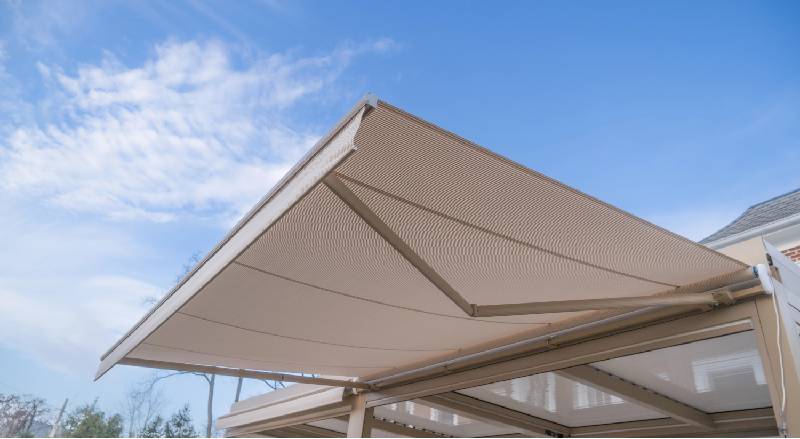
In the Valley of the Sun, an awning isn’t just a home improvement project; it’s a frontline soldier in the war against triple-digit temperatures. But even the sturdiest soldiers get battle-worn. Between the relentless UV bombardment and the sudden, violent microbursts of monsoon season, your shade structures take a beating.
At Phoenix Tent and Awning Company, we’ve seen it all—from sun-bleached fabric that tears like tissue paper to heavy-duty frames bent by haboob-strength winds. If your shade is looking a little worse for wear, you’re likely wondering about the best approach for awning repair. Is it a DIY patch job, or is it time to call in the cavalry?
This guide breaks down the most effective ways to handle patio awning repair, from the delicate “skin” of the fabric to the structural “bones” of the frame.
The first step in any awning repair Arizona project is an honest assessment. In our dry climate, “damage” usually falls into two categories: structural failure or material degradation.
If your fabric still has plenty of life but suffered a snag or a small tear, you can often handle the awning fabric repair Arizona homeowners frequently encounter with a few specialized tools.
For tears under two inches, adhesive repair tapes (like Tear-Aid) are surprisingly effective. These aren’t your average rolls of duct tape; they are made of high-strength elastomers that resist UV and heat.
For larger damage, a “patch and stitch” method is the gold standard for fabric awning repair.
While not a “tear,” deep stains can ruin an awning’s look. For awning fabric repair Arizona residents often face after a humid monsoon, a mixture of mild soap and water is best. Avoid bleach unless your fabric is specifically solution-dyed acrylic, as it can strip the protective coatings off cheaper materials.
The frame is the skeleton of your shade system. When it fails, the results can be dangerous. Most patio awning repair needs center on the moving parts of retractable units.
Budget is always a concern. When calculating your awning repair cost, you have to weigh the price of the fix against the remaining lifespan of the unit.
In the long run, the awning repair cost is significantly lower than the cost of neglect. A small tear left unaddressed will catch the wind and eventually destroy the entire frame.
Arizona is a unique environment. A repair method that works in a humid, temperate climate like Florida or Oregon will fail here. The heat in Phoenix can reach levels that melt standard adhesives and “cook” low-quality threads.
When you look for awning fabric repair Arizona specialists, you want someone who uses Gore-Tex Tenara thread and marine-grade acrylics. At Phoenix Tent and Awning Company, we’ve been refining our repair techniques since 1910. We know which tapes hold up to 115°F heat and which mechanical parts are most likely to fail during a haboob.
Your awning is an investment in your home’s comfort and energy efficiency. While small snags can be handled with a DIY awning fabric repair kit, larger structural issues require a professional touch to ensure your shade stays safe and functional.
Don’t let a small rip turn into a total replacement. Regular maintenance and timely awning repair will keep your patio cool and your home protected for years to come.
Generally, no. Most home sewing machines cannot handle the thickness of heavy-duty outdoor fabric or the weight of the UV-resistant thread required. For a lasting awning fabric repair Arizona sun won’t destroy, a commercial-grade walking-foot machine is usually necessary.
First, check your GFCI outlet and circuit breaker. If the power is on, listen for a humming sound when you press the button. If it hums but doesn’t move, the fabric might be bunched or the limit switches might be stuck. If there is no sound at all, the motor or the remote receiver may have failed.
If the rust is superficial, you can sand it down, apply a rust-inhibitor primer, and repaint. However, if the rust has “pitted” the metal or compromised the joints, the frame is structurally unsafe. In the world of awning repair Arizona, we usually recommend replacing rusted steel components with powder-coated aluminum.
Yes, a patch will usually be visible, especially if the original fabric has faded over time. However, if we perform the awning fabric repair Arizona style, we try to place patches on the underside or use matching remnants to minimize the visual impact.
Most minor fabric or hardware repairs can be completed in a single service call of 1 to 3 hours. If the fabric needs to be taken back to our shop for major restitching or a full recover, the turnaround time is typically 1 to 2 weeks.
Know more https://www.phoenixtent.com/blog/repair-damaged-awning-fabrics-frames/

© 2025 Crivva - Hosted by Airy Hosting Managed Website Hosting.