

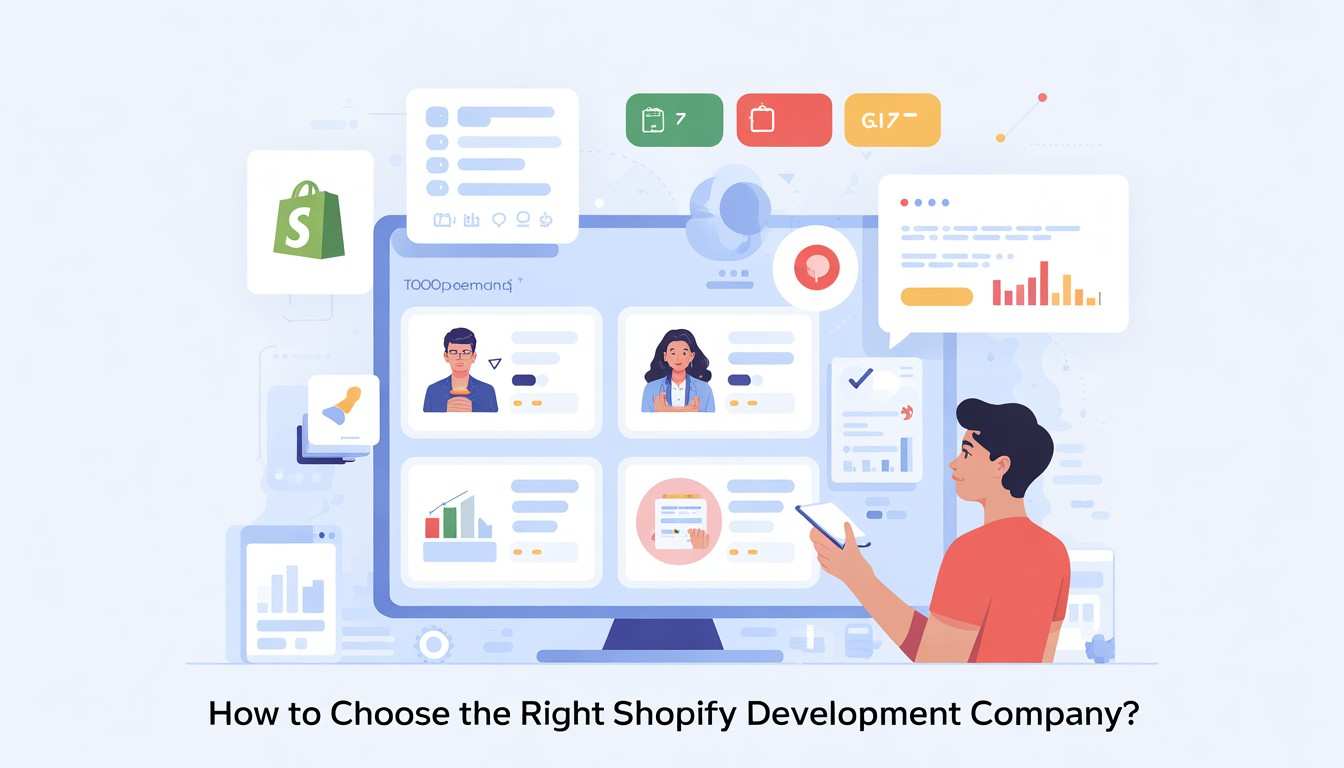
Launching or scaling an online store sounds exciting. But you may quickly realize there are many technical decisions between your idea and a profitable Shopify store.
You might be asking yourself:
If these questions seem familiar, you’re not alone. Picking the wrong Shopify development company can result in missed deadlines, glitchy stores, slow performance, and constant changes. Choosing the right one, on the other hand, can make Shopify a strong revenue source that grows with your business.
This guide explains how to pick the right Shopify development company, without jargon, fluff, or sales talk. It offers practical advice you can actually use.
Shopify is easy to use at first glance, but creating a successful, scalable store that drives conversions requires more than just selecting a theme and uploading products.
A strong Shopify development company helps you:
The wrong partner? They’ll leave you with a store that looks okay but underperforms when traffic or sales increase.
Selecting the right Shopify development company is crucial for your online store’s success. This step-by-step guide will help you assess agencies with confidence, steer clear of expensive errors, and find a team that genuinely grasp your business goals.
Choosing the right Shopify development company begins before you look at portfolios or pricing. If you don’t have a clear idea of your goals, even the best agency can’t provide the right solution. This step lays the groundwork for all future decisions.
Before you even search for a Shopify development company, get clear on what you need.
Ask yourself:
When you know your goals, it becomes easier to spot a company that understands your needs rather than selling you unnecessary features.
A portfolio is important, but it’s not the full story.
When reviewing a company’s Shopify portfolio, don’t just look at visuals. Ask:
Even better: Check out live Shopify stores they’ve created and try them out. Add items to the cart, check the mobile version, and see how easy the checkout process is.
A strong portfolio should show variety, usability, and real-world success.
Not all Shopify developers are familiar with your industry. An agency that has experience with fashion brands might not automatically grasp subscription-based products, B2B eCommerce, or digital goods.
Ask questions like:
Industry experience helps developers make smarter decisions that save time and improve performance.
Technical expertise sets apart a smooth, scalable Shopify store from one that frequently crashes or slows down. Many issues, such as slow speed, SEO problems, or checkout errors, arise from weak technical foundations. That’s why this step requires extra attention.
A reliable Shopify development company should be comfortable with:
You don’t need to know every technical detail, but you should be confident that they do. A good sign is when they explain technical topics clearly without talking down to you or using confusing jargon.
Strong communication can determine the success or failure of a development project, no matter the technical skill. Even seasoned developers may feel frustrated when expectations aren’t set early on. For this reason, it’s important to assess communication style from the very first conversation.
Even the most talented developers can be frustrating to work with if communication is poor.
Pay attention early:
A great Shopify partner acts like an extension of your team, not a black box you chase for updates.
A clear process demonstrates professionalism and experience. When developers stick to a structured workflow, projects progress more quickly, mistakes decrease, and expectations remain clear. Without a solid process, delays and confusion can arise.
Ask them to walk you through their workflow:
Clear processes lead to fewer surprises. If a company can’t explain how they operate, that’s a warning sign.
Your Shopify store is not a one-time project. It is a growing digital asset. Decisions made today can support growth or lead to expensive rebuilds later. That’s why scalability should be discussed before development starts.
Your store shouldn’t just work today, it should work a year from now.
Ask:
A forward-thinking Shopify development company builds with growth in mind, not just launch day.
Pricing can be confusing, especially when quotes differ significantly for the same project. While budget is important, focusing only on cost can result in poor quality or hidden fees. Smart pricing decisions strike a balance between value, transparency, and long-term return.
Shopify development pricing varies widely, and that’s normal.
Be cautious of:
Instead, look for transparent pricing that explains:
Quality Shopify development is an investment, not an expense.
Past client experiences provide more insight than marketing promises can. Reviews help you see how the developer performs in real-world situations, especially when problems come up.
Social proof matters.
Look for:
Bonus points if reviews mention communication, reliability, and long-term partnerships, not just design quality.
Launching your store is just the start. Updates, bug fixes, and feature improvements are all part of running a successful eCommerce business. Ongoing support ensures your store remains stable and competitive.
After your store goes live, questions and updates will happen.
Ask:
Many businesses need Shopify eCommerce development services that extend beyond launch, especially as sales grow and requirements change.
Choosing the right Shopify development company isn’t about finding the biggest agency or the cheapest quote; it’s about finding a partner who understands your business, communicates clearly, and focuses on long-term growth.
Take your time, ask the right questions, and trust your instincts. A good Shopify partner won’t just build a store; they’ll help you grow a business that’s ready to scale.
The timeline depends on the store’s complexity. Simple Shopify stores usually take 2 to 4 weeks to complete. Custom designs, integrations, or advanced features can extend the timeline to 2 to 3 months or more.
You can build a basic store yourself using Shopify’s tools and themes. However, a Shopify development company is better for custom features, performance improvement, and long-term scalability. Professionals can help avoid technical issues that limit growth.
Costs vary based on design, customization, and required features. Basic projects may cost a few thousand dollars, while complex stores can cost significantly more. Pricing often reflects experience, support, and quality of work.
Ask about their Shopify experience, development process, timelines, and post-launch support. It’s also important to understand how they handle updates, scalability, and future feature additions. Clear answers indicate reliability.
Yes, many Shopify development companies create SEO-friendly site structures. They optimize page speed, mobile responsiveness, and technical SEO elements during development. This helps improve visibility in search results.
Yes, ongoing support is highly recommended after launch. Regular updates, security patches, app changes, and performance improvements are easier with professional support. This ensures your store remains stable and scalable.

© 2025 Crivva - Hosted by Airy Hosting Managed Website Hosting.