

You just received your internet bill, and something seems wrong. It increased again, quietly, like utility bills often do. Maybe you’ve been paying the same rate for two years and haven’t thought to ask: is this normal? Or you’re moving to a new place and don’t know what a reasonable price is in 2026. Either way, you’re not interested in a sales pitch; you want a clear answer: how much does the internet cost per month, what’s average, and are you getting a fair deal?
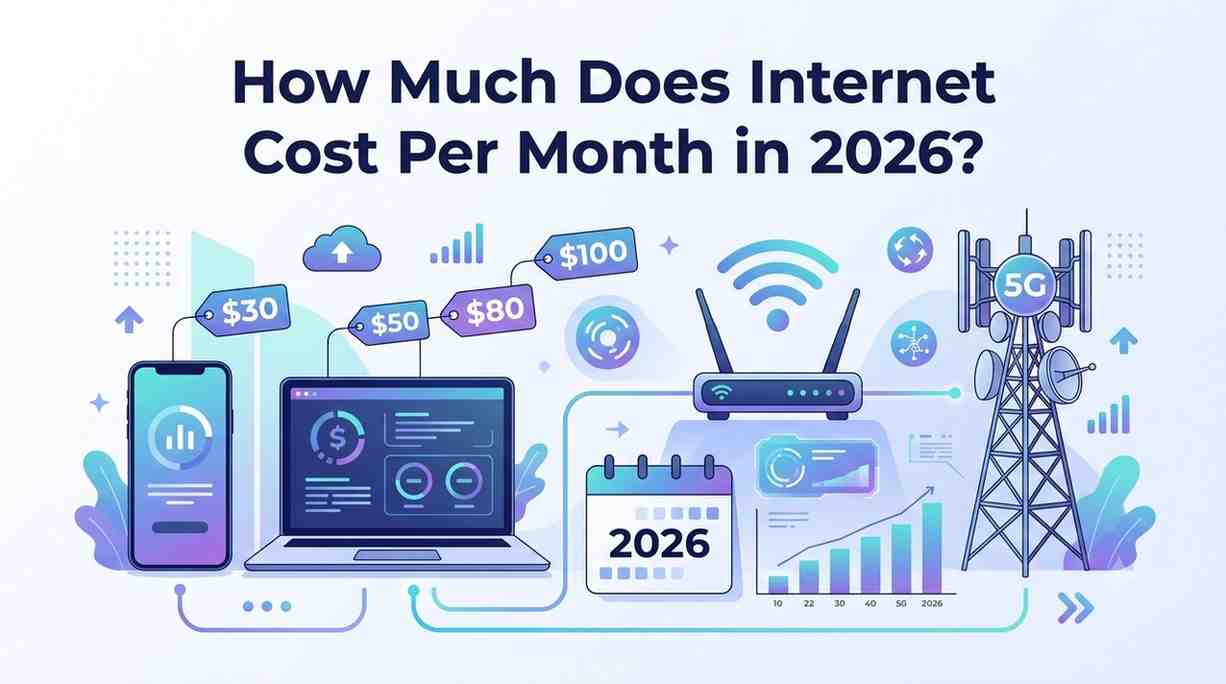
The national average internet cost per month is about $60 to $75 in 2026. This depends on your location, the type of connection you have, and how long you’ve been a customer. While that number seems neat, it hides a big range. Some households pay less than $40, while others pay over $120 for the same basic service.
What’s causing that difference? Mostly location and competition. In crowded cities where many providers are vying for your business, prices are usually lower and deals are more common. In rural or suburban areas with few choices, you might end up paying more for the same download speeds since there are no real alternatives.
Quick context: The average monthly internet cost has increased by about 4 to 5% each year since 2024. This rise is partly due to investment in infrastructure. Additionally, many promotional rates from 2022 to 2023 have ended without customers being aware.
The type of connection in your home matters more than most people realize, both for speed and for your monthly bill.
|
Connection Type |
Typical Speed |
Avg Monthly Cost |
Availability |
|
Fiber |
500 Mbps – 5 Gbps |
$55 – $100 |
~50% of US homes |
|
Cable |
100 – 1,200 Mbps |
$50 – $110 |
~90% of US homes |
|
DSL |
10 – 100 Mbps |
$35 – $60 |
Wide coverage |
|
Fixed Wireless |
25 – 300 Mbps |
$50 – $80 |
Rural/suburban |
|
Satellite |
20 – 220 Mbps |
$60 – $150 |
Nationwide |
|
5G Home Internet |
50 – 1,000 Mbps |
$50 – $70 |
Expanding |
Fiber consistently provides the best value for your money. Its speed-to-price ratio is much better than cable. The drawback is that it still isn’t available everywhere in 2026, although the rollout has sped up significantly since the infrastructure funding started in 2024.
Internet Connection type sets the limit, but the provider determines the price you pay. Below is a real-world look at what customers are paying monthly with the most popular providers in 2026, based on standard plan pricing. The starting costs shown are for entry-level plans. Actual bills can vary by location and the selected speed tier.
|
Provider |
Type |
Starting Price/mo |
Avg Customer Bill |
Best For |
|
UbiFi ⭐ |
Fixed Wireless / 4G LTE |
$89 |
$89 – $109 |
Rural homes, no contract |
|
Xfinity |
Cable |
$30 |
$65 – $90 |
Urban/suburban, bundles |
|
AT&T |
Fiber / DSL |
$55 |
$60 – $80 |
Fiber where available |
|
Spectrum |
Cable |
$50 |
$60 – $85 |
No data caps |
|
Verizon Fios |
Fiber |
$50 |
$60 – $90 |
Northeast US, reliability |
|
T-Mobile Home |
5G Home |
$50 |
$50 – $70 |
No contract, flat rate |
|
Verizon 5G Home |
5G Home |
$35 |
$50 – $70 |
Urban 5G coverage areas |
|
CenturyLink / Lumen |
DSL / Fiber |
$50 |
$50 – $70 |
Stable pricing, no contracts |
|
Starlink |
Satellite |
$120 |
$120 – $150 |
Very remote / off-grid |
|
HughesNet |
Satellite |
$50 |
$75 – $100 |
Rural, limited alternatives |
A few things to note about this table: “starting price” and “average customer bill” are listed separately because the difference between them often causes frustration. Promotional pricing, equipment rental fees, and speed tier upgrades frequently increase bills by $20 to $40 above what was advertised at signup.
The advertised plan price is never the full story. Here’s what actually determines what lands in your monthly statement:
Paying for a 1 Gbps plan when you live alone and mostly stream videos is like buying a truck to get to work. You are spending too much on capacity you don’t need. For a 1-2 person household with typical usage, such as streaming, video calls, and browsing, 200-300 Mbps is more than enough. Larger families with multiple devices running at the same time should consider 500 Mbps or higher.
This is where many people quietly lose $10 to $15 a month to router and modem rental fees. If you’re renting equipment from your provider, you might be paying an extra $8 to $20 per month. Buying compatible equipment outright, usually costing between $80 and $180, typically pays for itself within a year.
That great rate you signed up for likely had a 12-month or 24-month promotional period. Once it expired, your bill quietly increased to the standard rate. Most customers don’t notice this until they take the time to compare their current statements with past ones.
Internet bundles with TV or phone service can lower the overall cost per service, but only if you were going to pay for those services anyway. Spending an extra $40 a month for a TV package you use twice a week to save $10 on internet isn’t a good deal.
Urban markets with three or more competing providers usually have lower average monthly internet costs. In contrast, rural areas with one or two options often pay more for slower speeds. This situation creates a real access inequality that policy changes are gradually working to fix.
Worth knowing: Data caps are still a reality in 2026. Some plans, especially those based on cable, have a soft or hard cap of 1 to 1.25 TB per month. If your household streams a lot of 4K content or has remote workers, you might face overage charges of $10 to $15 for every 50 GB you go over.
Here’s a grounded way to judge your current plan without spending hours comparing plans:
|
Household Type |
Recommended Speed |
Fair Monthly Price |
Verdict |
|
1–2 people, light use |
100–200 Mbps |
$40 – $55 |
Budget-friendly zone |
|
2–4 people, mixed use |
300–500 Mbps |
$55 – $75 |
Average range |
|
4–6 people or remote work |
500 Mbps – 1 Gbps |
$70 – $95 |
Reasonable if fiber |
|
Power users / content creators |
1 Gbps+ |
$85 – $120 |
Worth it only on fiber |
|
Rural / satellite only |
25–100 Mbps |
$60 – $130 |
Limited options |
You don’t need to switch providers to save money, though sometimes that’s the right call. Here’s what actually works:
Pro move: Set a calendar reminder six weeks before your contract expires. That’s your window to shop competing offers and use them as negotiating leverage before you’re back on a standard rate you didn’t agree to.
The average internet cost per month in 2026 is about $60 to $75 for most households. However, your actual price depends a lot on where you live, the type of connection, the speed tier, and whether you are still on a promotional rate. Fiber usually provides the best value when it is available. Cable is commonly accessible, but its pricing varies more. DSL is cheaper but offers slower speeds. Satellite and fixed wireless serve rural areas, but they come with some downsides.
The most important thing you can do today is check your last three months of bills. Look at your current speed tier and see if your promotional rate has expired. Spend five minutes checking what options are available in your area. Those five minutes could save you $15 to $30 a month.
The national average monthly internet cost for a household in 2026 is about $67, based on mid-range plans across cable, fiber, and DSL. This figure includes equipment rental fees, which are common but often overlooked. Households that own their equipment and negotiate often pay $10 to $20 less per month than the average.
Some effective steps include buying your own modem or router, which can save you $10 to $20 per month. You can also call your provider to ask for a loyalty or retention discount. Consider dropping to the speed tier you actually need and timing your negotiation for the end of your contract when you have more leverage. Low-income households may also qualify for subsidy programs that can greatly reduce monthly internet costs.

© 2025 Crivva - Hosted by Airy Hosting Managed Website Hosting.