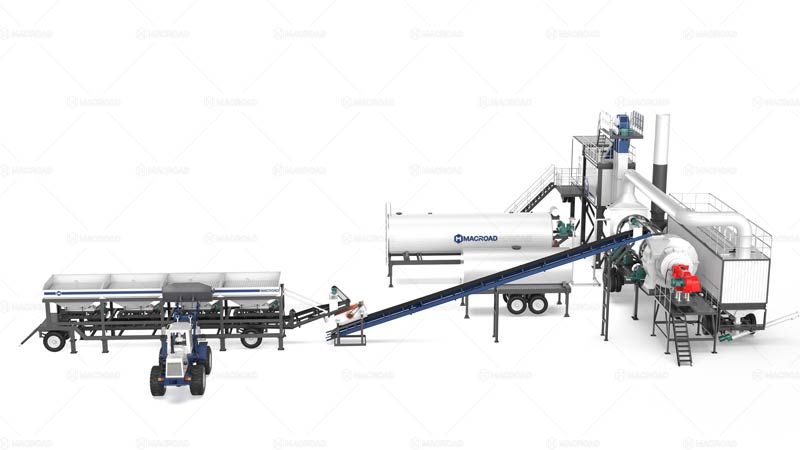
The diversity of road construction projects across Latin America demands equipment that can adapt to varying conditions while maintaining efficiency and reliability. From the high-altitude highways of Bolivia to the coastal roads of Ecuador, contractors face unique challenges that influence their choice of asphalt production technology. Among the available options, drum-type mixing plants have gained significant traction throughout the region for compelling practical reasons. Unlike their batch plant counterparts, these systems offer distinct advantages in the contexts where most Latin American road projects operate. When evaluating an asphalt plant for sale, contractors increasingly recognize that the continuous mixing process inherent in drum technology aligns perfectly with the project types, material conditions, and operational constraints common across Central and South America.
Perhaps the most significant advantage of drum technology in the Latin American context is its tolerance for varying material qualities.
Across much of Latin America, high humidity and seasonal rains mean aggregates often carry significant moisture. Drum mix asphalt plants(planta de asfalto continua) excel in these conditions because the drying and mixing occur in the same long drum. The extended residence time allows for thorough drying before the aggregate meets the bitumen. This integrated design ensures that even materials with higher-than-ideal moisture content can still produce quality mix. For projects in regions like the Colombian coffee zone or the Brazilian Atlantic forest, where rainfall is frequent and unpredictable, this capability keeps production running when batch plants might struggle with wet screens or inconsistent drying.
Many Latin American projects rely on locally sourced aggregates to control costs. These materials can vary widely in gradation and quality from one source to another. A drum mix asphalt plant handles this variability more gracefully than batch plants, which require precise screening and remixing of different aggregate sizes. The continuous mixing process accommodates reasonable variations without requiring constant adjustment, making it easier to maintain production while using whatever materials are available near the job site. This flexibility becomes particularly valuable in remote areas where transporting high-quality aggregates from distant quarries would be prohibitively expensive.
Operating costs are always a concern, and fuel represents one of the largest ongoing expenses in asphalt production.
The thermal efficiency of drum plants generally exceeds that of comparable batch plants. By combining drying and mixing in a single drum, heat loss between stages is eliminated. The hot gases that dry the aggregates also contribute to maintaining mix temperature through the process. In regions where diesel or heavy oil prices can be volatile, this efficiency advantage translates directly to bottom-line savings. Over the course of a large project, the fuel savings from a well-designed drum plant can offset a significant portion of the initial investment. Advanced burner technologies available on modern drum mix asphalt plant models further enhance this efficiency.
Because the process is continuous, the drum mix asphalt plant maintains stable temperatures throughout operation without the temperature fluctuations inherent in batch cycling. This stability means less fuel is wasted reheating components between batches. For night operations or projects at high altitudes where ambient temperatures drop significantly, this consistent thermal performance ensures mix quality without excessive fuel consumption.
Labor considerations play a major role in equipment selection across Latin America.
The control systems for drum plants are generally more intuitive than those for complex batch facilities. Operators can master the basics of running a continuous plant more quickly, reducing training time and the risk of operational errors. For contractors who may need to hire local operators in different regions for each project, this simplicity is invaluable. A hot mix asphalt plant of the drum type can be producing quality mix within days of a new operator taking the controls, whereas batch plants often require more extensive experience to optimize.
With fewer moving parts and no complex screening or hot bin systems, maintenance requirements are more straightforward. Local mechanics can handle most routine service without specialized training. This self-sufficiency is particularly valuable when working in countries like Paraguay or Bolivia, where manufacturer support networks may be limited. The ability to keep the plant running with locally available skills and tools means less downtime and more consistent production.
The physical configuration of drum plants offers practical benefits for companies that move frequently between projects.
Drum plants typically break down into fewer major components than batch plants of equivalent capacity. The main drum itself is a single large piece, but it is designed for transport on specialized trailers. The rest of the system packages into relatively few loads. For contractors who evaluated an asphalt plant for sale(planta de asfalto venta) specifically for its mobility characteristics, this simplicity of transport is a major advantage. The reduced number of transport loads translates directly to lower relocation costs.
Because there are fewer components to interconnect, setup times are shorter. A crew experienced with a particular drum plant can have it operational in days rather than weeks. When a project finishes, teardown proceeds just as quickly. For contractors who move multiple times per year, these time savings add up significantly over the life of the equipment.
The economics of drum plants align well with the project sizes most common in Latin America.
Most drum plants available on the market offer capacity ranges that match the typical daily production needs of regional highway projects. They can run efficiently at reduced output when necessary, unlike some batch plants that lose efficiency when not operating at full capacity. This flexibility allows contractors to match production precisely to paving rates without wasting fuel or wearing components unnecessarily.
Generally speaking, drum plants carry a lower initial price tag than batch plants of equivalent capacity. For contractors watching their capital expenditures, this cost advantage allows them to acquire production capacity while preserving working capital for other needs. When comparing any asphalt plant for sale, the total cost of ownership calculation often favors drum technology for companies focused on standard highway and road projects rather than specialty mixes.
Environmental regulations are becoming increasingly important across Latin America, and drum plants offer several advantages in this area.
The efficient combustion achieved in well-designed drum plants results in lower emissions per ton of mix produced. For projects located near populated areas or in environmentally sensitive regions, this cleaner operation can simplify permitting and reduce community opposition. Modern baghouse systems integrated with drum plants achieve high particulate capture rates, meeting regional environmental standards.
The continuous operation of drum plants typically generates less noise than the cyclic operation of batch plants. The absence of dropping materials between multiple tower sections eliminates much of the impact noise that characterizes batch facilities. For projects near urban areas where noise restrictions apply, this quieter operation can extend allowable working hours.
Quality control is essential for meeting project specifications and ensuring road longevity.
The continuous process maintains more stable mix temperatures than batch production. Without the temperature drop that occurs between batches, the asphalt delivered to the paving site has more consistent workability. This consistency translates to better compaction and longer pavement life.
The extended mixing time within the drum ensures thorough coating of aggregates with bitumen. The tumbling action within the drum, combined with the continuous flow, produces uniform coating that meets specification requirements consistently. This reliability reduces the risk of rejected loads and the associated costs of reprocessing.
Looking across the road construction landscape of Latin America, the patterns are clear. Projects tend to be linear, extending highways across long distances. Aggregates come from local sources with variable quality. Workforces may have limited formal training but strong mechanical aptitude. Operating conditions range from tropical humidity to high-altitude cold. In this environment, the drum mix asphalt plant demonstrates its strengths day after day. Its tolerance for challenging materials, fuel efficiency, operational simplicity, and cost-effectiveness make it the logical choice for contractors who need reliable production without excessive complexity. While batch plants certainly have their place for projects requiring frequent mix changes or precise recipe control, the majority of Latin American road construction falls squarely within the sweet spot where drum technology delivers the best combination of performance and value. For companies building the infrastructure that will connect the region’s communities and support its economic growth, that reliability is ultimately what matters most.

© 2025 Crivva - Hosted by Airy Hosting Managed Website Hosting.