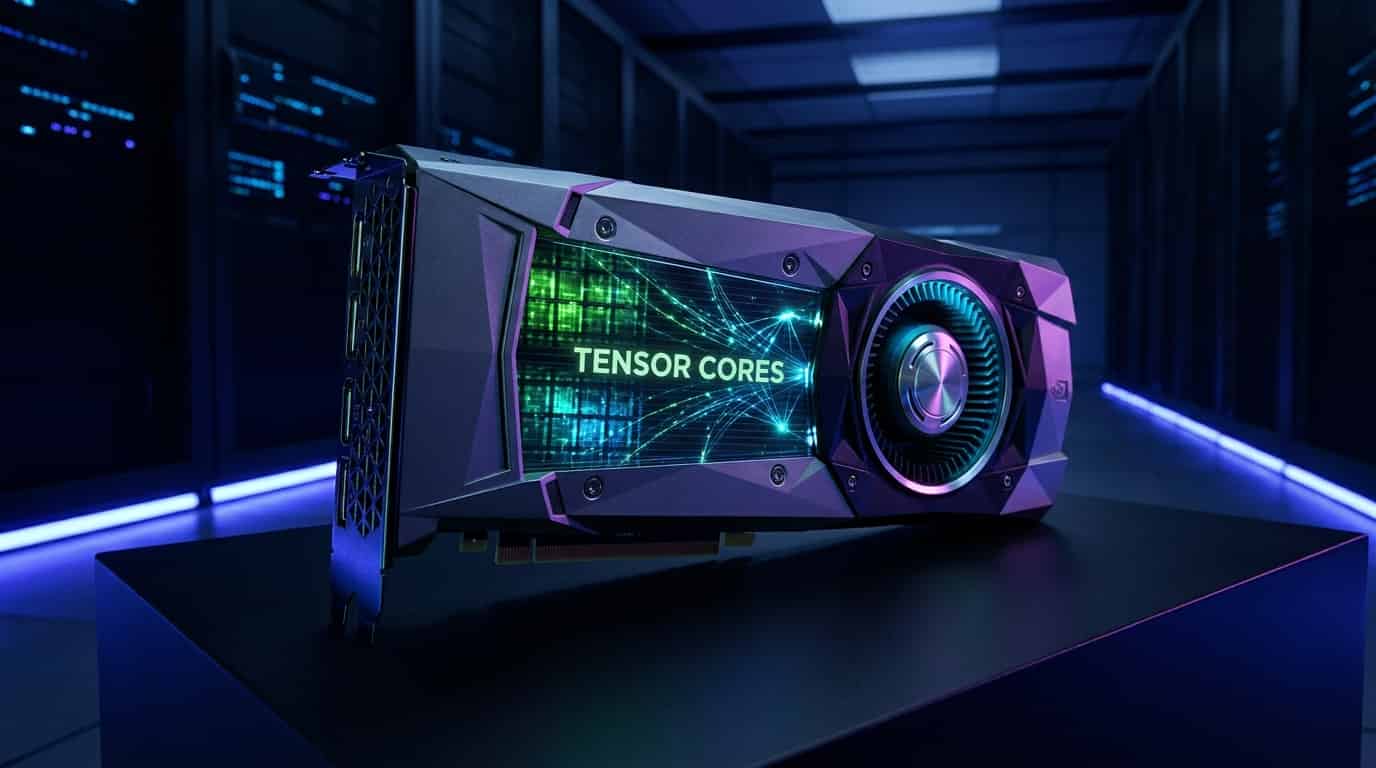


Few components in PC history have undergone a more dramatic transformation in purpose than the graphics card. What began as a specialized piece of hardware designed to offload the computational burden of drawing pixels from the CPU has evolved, through a series of engineering leaps driven by entirely different market forces, into one of the most powerful and versatile compute platforms in modern technology.
For anyone buying a graphics card today, understanding this evolution is not just historical context. It directly explains why GPU specifications have become so complex, why prices at the high end have reached levels that once seemed implausible for consumer hardware, and why the decision of which card to buy requires considering dimensions of performance that did not exist in the market just a few years ago. Those looking to [buy a graphics card](https://www.etechdevices.com/) in 2026 are choosing from a product category that has been reshaped by forces beyond gaming alone, and that context shapes which specifications actually matter for any given use case.
The Origins: Offloading Pixels From the CPU
Early graphics hardware in the 1980s and early 1990s was relatively simple: dedicated silicon designed to handle the repetitive mathematical operations of rendering character sets, 2D sprite graphics, and basic geometric shapes without consuming CPU cycles that the rest of the system needed. The performance demands were modest, and the hardware reflected that. Accelerating the display pipeline was a convenience, not a competitive advantage, and the components doing it were correspondingly unambitious.
3D gaming changed this equation entirely. The release of consumer 3D games in the mid-1990s placed workloads on home computers that far exceeded what CPUs of the era could handle alongside their other responsibilities. Drawing three-dimensional geometry, applying textures, calculating lighting across polygon surfaces, and compositing the result into a coherent frame sixty times per second required a degree of parallel floating-point computation that general-purpose processors were not designed to deliver.
The dedicated 3D graphics card was the industry’s answer, and the competitive dynamics that followed, a race between NVIDIA, ATI, and several other vendors to deliver better frame rates in the games that defined each new product cycle, drove a pace of architectural innovation in GPU design that became one of the fastest in the consumer electronics industry.
GPGPU: The Discovery That Changed Everything
The transition from graphics-specific to general-purpose GPU computing began not in a commercial product but in academic and scientific research. Researchers in the early 2000s recognized that the massively parallel floating-point compute capability inside consumer GPUs, designed for 3D rendering, could be repurposed for scientific computation if the right programming abstractions were available.
NVIDIA’s release of CUDA in 2006 formalized this insight into a programmable platform that allowed developers to write general-purpose computation workloads targeting the GPU’s parallel processing architecture. The discovery that GPUs could accelerate physics simulation, fluid dynamics, financial modeling, and eventually machine learning at speeds that CPUs could not approach transformed how the research community thought about computing hardware, and it set the trajectory that has led to the GPU’s current centrality in AI development.
Deep Learning’s Arrival as a GPU Workload
The connection between GPU architecture and artificial intelligence became decisive with the deep learning revolution of the early 2010s. The training of deep neural networks involves performing enormous numbers of matrix multiplication operations, exactly the kind of massively parallel floating-point computation that GPU architectures had been optimizing for years in the context of 3D rendering.
When researchers demonstrated that neural network training on GPUs ran orders of magnitude faster than equivalent CPU implementations, the AI research community’s hardware requirements converged almost entirely onto GPU platforms. NVIDIA found itself at the center of the AI hardware market without having specifically designed for it, a position it has since built an entire product ecosystem around through the development of tensor cores, NVLink interconnects, and the CUDA software ecosystem that has created substantial switching costs for the AI research community.
The Architectural Bifurcation of Modern GPUs
Modern graphics cards reflect the tension between their two primary use cases in explicit silicon design decisions. NVIDIA’s Blackwell architecture GPUs contain conventional shader cores optimized for rasterization alongside dedicated tensor core blocks optimized for matrix operations at reduced precision. These tensor cores provide AI inference and training throughput that the shader cores alone could not approach, and they have become a meaningful differentiator between products and generations that cannot be captured by shader count or clock speed comparisons alone.
AMD’s RDNA 4 architecture and Intel’s Battlemage designs reflect similar dual-mandate pressures, with each manufacturer implementing their own version of dedicated AI acceleration hardware alongside conventional graphics processing capability. The result is that evaluating a modern GPU requires understanding two distinct performance dimensions: rasterization performance for rendering workloads and AI compute throughput for inference and generation workloads, with different use cases weighting these dimensions differently.
Consumer AI Features Built on This Architecture
The GPU’s AI compute capability is no longer relevant only to researchers and data scientists. Consumer-facing AI features built on this hardware have arrived in mainstream software and are becoming a meaningful part of the everyday user experience. NVIDIA’s DLSS uses AI inference running on tensor cores to reconstruct higher-resolution output from lower-resolution rendered frames, delivering frame rate improvements that conventional upscaling cannot match at equivalent quality. AMD’s FSR 4 and Intel’s XeSS implement similar approaches with their own architectures.
Stable Diffusion, local large language model inference, AI-assisted photo editing, and real-time video processing all run on the GPU’s AI compute capability when executed locally rather than in the cloud. For users integrating these workflows into their daily work, the AI compute performance of the GPU is as relevant to purchasing decisions as frame rates in gaming benchmarks.
Where Graphics Cards Are Heading
The architectural trajectory of the GPU over the next several years points toward continued investment in AI compute capability alongside gaming performance, with the two use cases increasingly shaping each other’s development. As local AI applications demand more inference throughput, GPU architectures will dedicate more silicon area to tensor and matrix processing. As games increasingly rely on AI-based rendering techniques rather than pure rasterization, the distinction between the GPU’s gaming and AI capabilities will blur further.
VRAM capacity is the physical constraint most likely to create differentiation in the near term. Both gaming and AI workloads are demanding more on-card memory with each generation, and manufacturers are navigating the economics of providing sufficient VRAM across product tiers in ways that will shape the value proposition of each price segment.
Final Thoughts
The graphics card has traveled an extraordinary distance from its origins as a display accelerator to its current position at the center of both consumer gaming hardware and global AI infrastructure. Understanding that journey illuminates why GPU decisions are complex in 2026 in ways they were not a decade ago, why prices at the high end reflect a competitive market that extends well beyond gaming, and why the specifications that matter most depend on the use case the hardware needs to serve. The GPU is no longer just a graphics card. It is the defining compute platform of the AI era.

© 2025 Crivva - Hosted by Airy Hosting Managed Website Hosting.