

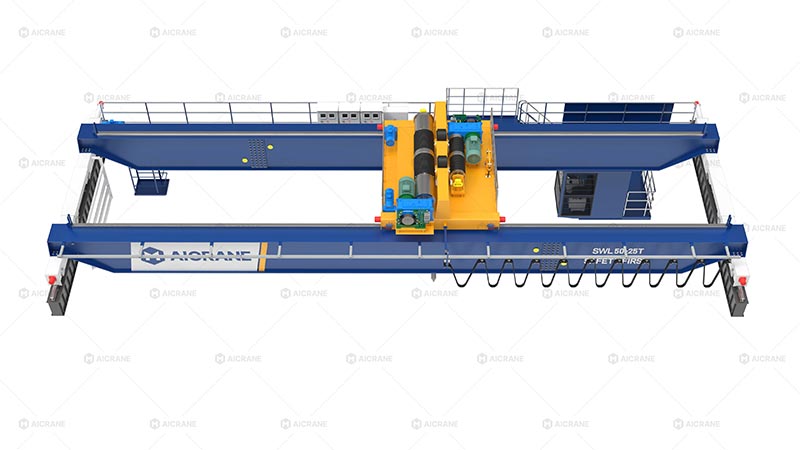
When it comes to purchasing a 50 ton overhead crane, the initial price is often the most visible factor. A lower price can seem appealing, especially for businesses aiming to cut upfront expenses. However, in the crane industry, an inexpensive purchase does not always equate to overall savings. In fact, choosing a cheaper 50 ton overhead crane can lead to significantly higher long-term costs due to factors like maintenance, safety risks, operational inefficiencies, and shorter service life. Understanding these hidden costs is crucial for any buyer looking to make a truly cost-effective investment.
The most obvious advantage of a low-priced crane is reduced upfront capital expenditure. For small and medium-sized enterprises, this can be very tempting. However, the 50 ton overhead crane price is not solely determined by its lifting capacity. High-quality components, structural integrity, safety features, and compliance with international standards such as ISO or FEM all contribute to the cost.
A 50 ton overhead crane is a heavy-duty industrial asset, designed to lift extremely heavy loads on a consistent basis. Skimping on quality in materials, design, or manufacturing can compromise the crane’s durability and performance. The lower purchase price may mask the fact that the crane may require more frequent repairs or replacements of critical components like hoists, brakes, and wire ropes.
One of the most significant long-term costs of a lower-priced overhead crane is maintenance. Cheaper cranes often use substandard electrical systems, motors, and mechanical components. These parts are more prone to wear and tear, requiring more frequent inspection, servicing, and replacement.
For example, an inferior motor may overheat under heavy loads, leading to downtime and costly repairs. Similarly, low-quality wire ropes can fray more quickly, increasing the risk of accidents and replacement costs. While a premium crane may have a lifespan of 15–20 years with minimal maintenance, a lower-cost crane might only last 7–10 years, with frequent interventions that cumulatively outweigh any initial savings.
Safety is non-negotiable in crane operations. A 50 ton overhead crane handles massive loads that can cause catastrophic damage or injury if failure occurs. Low-cost cranes are often manufactured with minimal safety features, lacking advanced limit switches, anti-sway systems, overload protection, or emergency braking systems.
The potential consequences of a crane failure go beyond repair costs. Workplace accidents can result in regulatory fines, legal liabilities, worker compensation claims, and reputational damage. In industries such as steel fabrication, shipbuilding, or precast concrete, even a single accident can have financial repercussions far exceeding the initial savings on a cheap crane.
Cheaper cranes often compromise on precision, smoothness, and control features. Operators may experience jerky movements, inaccurate positioning, or slower lifting speeds. Over time, these inefficiencies add up: slower production cycles, increased wear on materials, and higher labor costs due to manual adjustments.
High-quality 50 ton overhead cranes are designed with advanced hoist control, anti-sway mechanisms, and ergonomic operator cabins, which reduce fatigue and improve productivity. By cutting corners on these features, a low-priced crane may save money upfront but hinder your operational efficiency in the long run.
Energy efficiency is another often-overlooked factor. Budget cranes typically use older motor designs with lower efficiency ratings. High energy consumption leads to increased electricity costs, particularly when operating at full load capacity daily. Over a decade of operation, energy inefficiency can amount to a substantial expense, further diminishing any perceived savings from the lower purchase price.
Investing in a higher-quality crane with modern, energy-efficient components may have a higher initial cost, but the reduction in operational energy costs can offset this over time.
Cheaper cranes are frequently produced by lesser-known manufacturers or local suppliers who may not have reliable service networks or readily available spare parts. This can result in longer downtime when repairs are needed, affecting production schedules and potentially causing missed deadlines.
In contrast, reputable overhead crane manufacturers provide robust after-sales support, including spare parts supply, maintenance services, and technical assistance. This ensures that any necessary repairs are completed quickly, minimizing the long-term operational impact.
A low-cost crane often depreciates faster than a high-quality alternative. Used cranes are frequently evaluated based on reliability, safety features, and manufacturer reputation. A budget crane may be difficult to resell, meaning the business absorbs the depreciation cost entirely.
A higher-quality 50 ton overhead crane, even if more expensive upfront, retains its value better due to its durability, performance, and brand reputation. When upgrading or selling equipment, this difference can represent a significant financial advantage.
Consider a steel fabrication plant that purchased a low-priced 50 ton overhead crane. Initial cost: $80,000. Over five years, the crane experienced multiple breakdowns: hoist motor replacement ($12,000), wire rope replacement ($3,500), and control system repairs ($5,000). Energy inefficiency added approximately $2,500 per year, totaling $12,500 over five years. Production delays due to downtime also led to lost revenue estimated at $20,000.
Total five-year cost: $133,000.
Had the plant invested in a higher-quality crane costing $120,000 with superior components, safety systems, and energy efficiency, maintenance and downtime costs would have been significantly lower. The long-term cost over the same period might have been $130,000, with higher reliability, efficiency, and safety. This simple comparison demonstrates how a lower initial price can be misleading.
When evaluating a 50 ton overhead crane, buyers should consider the following factors in addition to price:
Manufacturer Reputation: Established brands with proven track records offer better reliability and after-sales support.
Duty Classification: Ensure the crane is rated for the intended frequency of use (e.g., A5 or A6) to prevent overloading.
Safety Features: Overload protection, anti-sway systems, limit switches, and emergency braking are critical.
Energy Efficiency: Modern motors and drives reduce operating costs.
Spare Parts Availability: Easy access to parts and service reduces downtime.
Warranty Terms: A longer warranty often reflects confidence in product quality and reduces risk.
Control and Precision: Smooth operation and accurate positioning enhance productivity.
Purchasing an overhead crane is a long-term investment. The right decision balances upfront cost with operational efficiency, maintenance, safety, and longevity. While it may be tempting to select the lowest-priced option, businesses must evaluate total cost of ownership (TCO) rather than initial purchase price alone.
Investing in a quality 50 ton overhead crane ensures consistent performance, minimizes unexpected repair costs, improves safety, and enhances productivity. Over the crane’s lifetime, these benefits can significantly outweigh any initial savings from a cheaper purchase.
A lower 50 ton overhead crane price can be deceiving. The allure of saving on upfront costs often leads to higher long-term expenditures through frequent maintenance, downtime, safety risks, operational inefficiency, and faster depreciation. Businesses that consider total cost of ownership, focusing on quality, reliability, and manufacturer support, will find that a higher initial investment pays off with lower long-term costs, safer operations, and better productivity.
In the end, the old adage holds true in industrial lifting: “You get what you pay for.” Selecting a 50 ton overhead crane should prioritize long-term performance and safety over initial savings. Making an informed choice ensures that your crane remains a reliable and efficient asset for years to come.

© 2025 Crivva - Hosted by Airy Hosting Managed Website Hosting.