If you’re planning to build a jewellery ecommerce website in 2026, you’re no longer just budgeting for “a website.” You’re investing in a revenue engine—one that blends design, technology, psychology, and performance marketing into a single digital asset.
Most businesses still approach this the wrong way. They compare quotes, pick the cheapest jewellery website development company, and expect results. But in 2026, pricing reflects something much deeper: how well your platform converts, scales, and competes.
Whether you’re evaluating agencies claiming to deliver the Top Jewellery website development in India or trying to understand where your budget should go, this guide breaks down the real cost structure—strategically, not just numerically.
1. Basic Template-Based Site
Cost: ₹50,000 — ₹1,50,000
This is the starting point—a fast, functional setup designed to get you online quickly. But let’s be precise: this is not a competitive advantage, it’s just market entry.
Platform
Shopify or WooCommerce
What you actually get in 2026:
- Pre-designed theme with limited customization
- Basic catalog setup (50–200 products)
- Integrated payment gateway (Razorpay, Stripe, etc.)
- Standard shipping configuration
- Mobile-responsive layout (template-based)
- WhatsApp chat integration or simple CRM plugin
- Basic SEO setup (meta tags, sitemap, indexing)
What’s missing (and why it matters):
- No strong brand storytelling or premium feel
- Generic UX that doesn’t guide conversions
- Limited speed optimization (affects SEO rankings)
- No personalization or intelligent product recommendations
- Weak scalability beyond a few hundred SKUs
Best for:
- Small jewelry businesses testing online demand
- Instagram sellers transitioning to a website
- Local retailers validating digital traction
👉 Strategic insight:
This model works only as a validation phase. If your goal is long-term growth, you’ll outgrow this within 6–12 months.
2. Semi-Custom Ecommerce Site
Cost: ₹2,50,000 — ₹5,00,000
This is where real competition begins. A semi-custom build is not just about better design—it’s about performance, user behavior optimization, and brand positioning.
Platform
Laravel, React, headless Shopify, or hybrid frameworks
What you get:
- Fully customized UI/UX tailored to your brand identity
- Advanced product filtering (metal type, purity, budget, occasion)
- High-resolution product display (zoom, 360°, lifestyle shots)
- Video integration for storytelling
- AR try-on features (increasingly expected in 2026)
- Structured SEO architecture (schema, internal linking, optimized URLs)
- Mobile-first speed optimization
- Integration with inventory systems or light ERP
- Multi-language or region-specific targeting
What actually drives ROI here:
- Conversion-focused design: guiding users from browsing to buying
- Speed optimization: faster load = lower bounce rates
- Trust signals: certifications, reviews, policies clearly visible
- Content layering: product + educational + emotional storytelling
Best for:
- Growing brands aiming for national visibility
- Retailers with consistent inventory and brand identity
- Businesses ready to invest in marketing and scale
👉 This is the most practical level for brands that want to compete in the Top Jewellery website development in India landscape without overspending.
3. Fully Custom Enterprise Solution
Cost: ₹7,00,000 — ₹20,00,000+
At this level, you’re not building a website—you’re building infrastructure.
This is where technology meets strategy at scale.
Platform
Fully custom architecture (microservices, headless CMS, cloud-native systems)
What you get:
- Bespoke UI/UX engineered for luxury positioning
- Custom jewelry configurators (design your own ring, necklace, etc.)
- AI-powered recommendations based on browsing and purchase behavior
- Advanced search (voice search, visual search)
- Multi-store or franchise management system
- Deep ERP/CRM integrations
- Real-time gold pricing integration
- Advanced analytics dashboards (funnels, heatmaps, behavior tracking)
- Omnichannel sync (website + mobile app + offline store data)
Why brands invest at this level:
- Full control over customer experience
- Ability to optimize high-ticket conversions
- Seamless scaling across cities, countries, and channels
- Data-driven decision-making at every step
Best for:
- Luxury jewelry brands
- Multi-location chains
- High-volume ecommerce businesses
👉 At this stage, selecting the right jewellery website development company is not optional—it’s a business-critical decision.
Hidden Costs Most Businesses Underestimate
The biggest mistake? Thinking development is the main expense.
In reality, ongoing costs define your success.
1. Maintenance
₹10,000 — ₹50,000/month
Includes updates, bug fixes, feature improvements, and monitoring.
2. Hosting & Infrastructure
₹5,000 — ₹20,000/month
Cloud hosting, CDN, and performance optimization.
3. Security & Compliance
SSL, backups, fraud protection—essential for trust and SEO.
4. Marketing Investment
₹50,000 — ₹5,00,000+/month
This includes:
- SEO (content, backlinks, technical optimization)
- Paid ads (Google, Meta, YouTube)
- Influencer collaborations
- Social commerce
👉 Blunt truth:
Even the best jewellery ecommerce website fails without consistent traffic and visibility.
Which Jewelry Businesses Benefit Most from Ecommerce in 2026?
Not all segments grow equally online. The winners are those aligned with digital buying behavior and content consumption patterns.
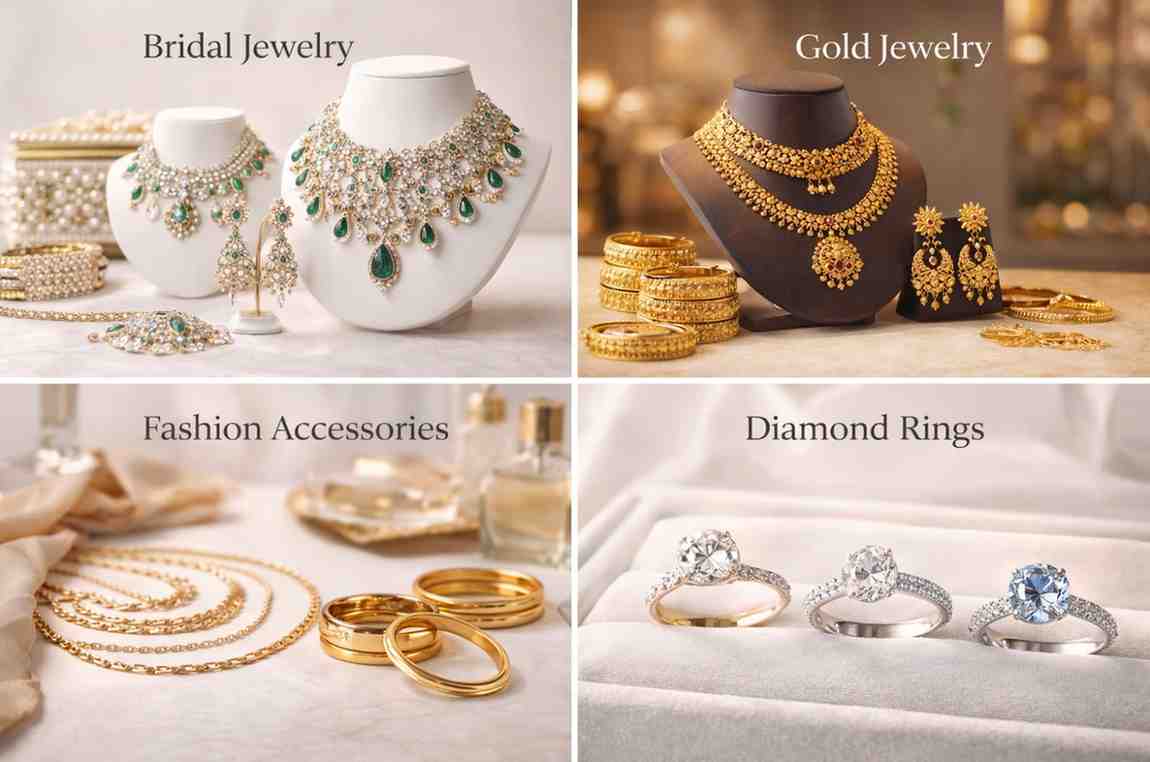
1. Custom & Handmade Jewelry Designers
This segment thrives because uniqueness converts.
- No dependency on physical retail
- Strong storytelling appeal
- High-margin direct-to-consumer model
👉 Especially powerful for creators in smaller cities scaling nationally.
2. Bridal Jewelry Specialists
The bridal journey is now digitally influenced.
- Brides research extensively before store visits
- Online comparison drives decision-making
- Visual content and try-ons reduce hesitation
👉 If you’re not visible online, you’re excluded from the shortlist.
3. Gold & Diamond Retailers
High-value purchases are shifting online—but only for brands that build trust.
Critical factors:
- Certification transparency
- Clear pricing breakdowns
- Strong brand authority
- Flexible return policies
👉 Educational content (buying guides, purity explanations) significantly increases conversions.
4. Fashion & Costume Jewelry Brands
This is the fastest-moving ecommerce segment.
- Lower price points → quick decisions
- High repeat purchase cycles
- Trend-driven demand via social media
👉 Ideal for aggressive performance marketing and influencer campaigns.
5. Luxury & Designer Brands
For premium brands, your website defines perception.
- Digital-first impressions matter
- Experience outweighs discounts
- Visual storytelling builds aspiration
👉 A basic site can damage brand value—custom is essential.
6. Religious & Temple Jewelry Sellers
A niche with high intent and emotional buying.
- Strong demand from diaspora markets
- Limited availability offline
- Cultural connection drives purchases
👉 Ecommerce removes geographic barriers completely.
2026 SEO Perspective: What Actually Works Now
Ranking a jewellery ecommerce website in 2026 requires a multi-layered SEO approach. Keywords alone won’t get you there.
1. Topical Authority
Google prioritizes expertise.
- Buying guides (gold vs diamond, purity levels)
- Occasion-based content (weddings, festivals)
- Trend-based blogs
2. Search Intent Alignment
Your content must match user intent:
- Informational (guides, comparisons)
- Commercial (product pages, collections)
- Transactional (optimized checkout flow)
3. Core Web Vitals
Speed is no longer optional.
- Fast loading improves rankings
- Direct impact on conversion rates
4. Structured Data
Schema markup helps search engines understand your site.
- Product schema
- Reviews
- Pricing
- Availability
5. Visual SEO
Jewelry is a visual category.
- High-quality images
- Optimized alt text
- Image compression for speed
6. AI & Voice Search Optimization
Search behavior is evolving.
- Conversational queries
- Natural language content
- FAQ-rich pages
👉 Reality:
SEO in 2026 is a combination of content + UX + technical performance.
Conversion Psychology: The Missing Layer
Most cost discussions ignore this—but it’s where revenue is made.
What actually increases conversions:
- Clear pricing transparency
- Social proof (reviews, testimonials)
- Urgency triggers (limited stock, offers)
- Easy navigation and filtering
- Trust badges and certifications
- Smooth checkout experience
👉 A high-converting jewellery ecommerce website is engineered—not designed randomly.
Cost vs Capability: The Real Comparison
Let’s simplify this:
- ₹50K site → Presence
- ₹5L site → Performance
- ₹20L+ platform → Market dominance
The difference isn’t just features—it’s business impact.
Final Strategic Insight
If you’re serious about building a long-term brand, stop thinking in terms of:
❌ “What’s the cheapest way to build a website?”
Start thinking in terms of:
✅ “What digital system will generate consistent revenue, scale with my business, and position me as a leader?”
Because in 2026, your website is not an expense.
It’s your most powerful sales channel.
And choosing the right jewellery website development company—one that understands performance, branding, and SEO—is what separates average brands from those leading the Top Jewellery website development in India space.