


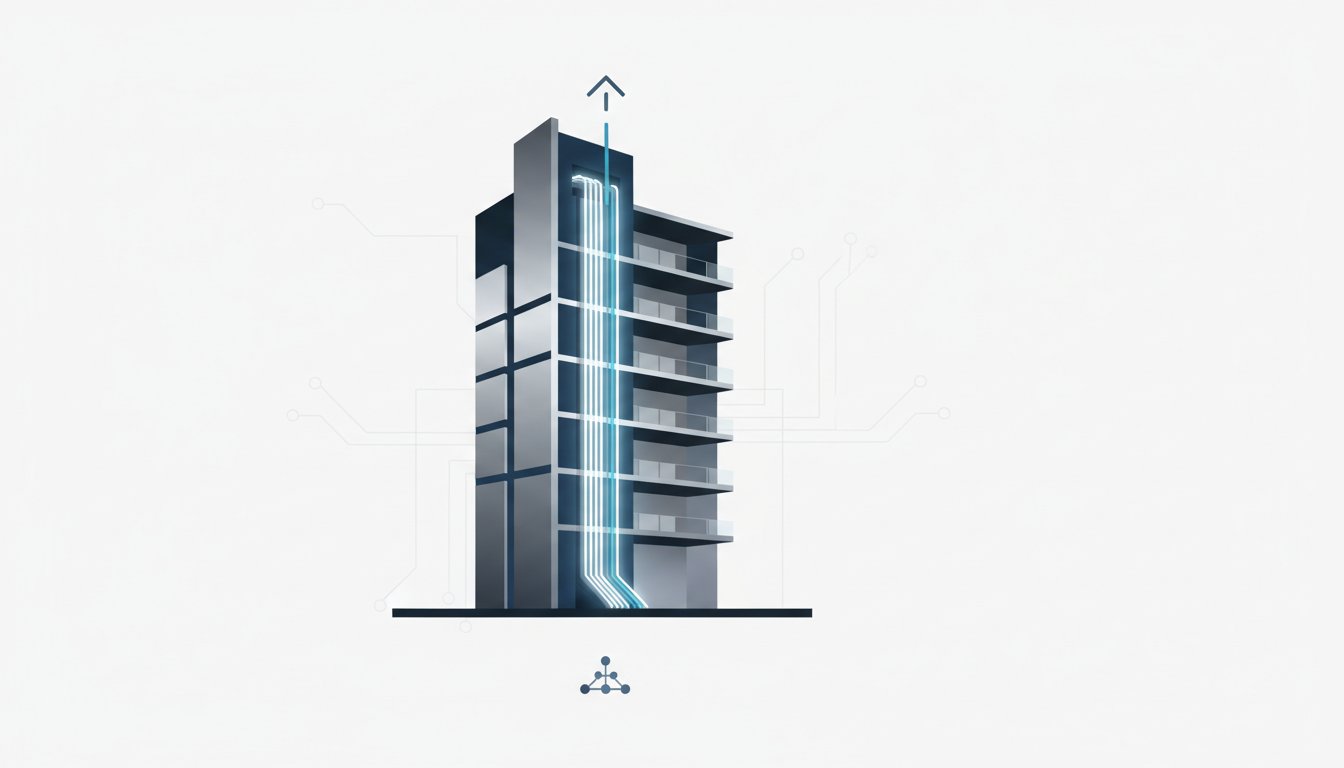
Modern multi-story buildings demand sophisticated infrastructure to support ever-increasing connectivity requirements. As organizations expand their operations across multiple floors, the backbone connecting these levels—vertical riser cabling—becomes a critical component of network performance and reliability. Optimizing this infrastructure isn’t just about running cables between floors; it’s about creating an efficient, scalable, and future-proof system that serves the building’s needs for years to come.
Vertical riser cabling forms the primary pathway for data, voice, and video signals traveling between floors in commercial buildings, residential complexes, and industrial facilities. These cables run through dedicated shafts, conduits, or designated pathways, creating the vertical backbone that connects horizontal distribution systems on each floor. The complexity of these installations increases exponentially with building height, making optimization essential for both performance and cost-effectiveness.
The selection of appropriate riser-rated cables is the foundation of any successful vertical cabling project. These specialized cables must meet stringent fire safety standards, particularly the NFPA 262 flame test requirements. Riser cables feature flame-retardant jackets that prevent fire from spreading between floors through cable pathways—a critical safety consideration that cannot be compromised regardless of other optimization efforts.
Understanding the distinction between riser-rated and plenum-rated cables helps optimize costs without sacrificing safety. While plenum cables offer superior fire resistance for air-handling spaces, riser cables provide adequate protection for vertical pathways at lower cost. Strategic deployment of each cable type based on specific pathway requirements maximizes budget efficiency while maintaining full code compliance.
Effective optimization begins during the design phase, long before the first cable is pulled. Building architects and network engineers must collaborate to identify optimal riser locations that minimize cable runs while providing convenient access points on each floor. Centrally located risers reduce horizontal cable distances, improving signal quality and reducing installation costs.
The physical pathways themselves require careful consideration. Traditional enclosed shafts offer excellent fire protection and security but may limit future expansion. Open cable trays provide easier access and modification capabilities but demand more rigorous fire safety measures. Hybrid approaches using both methods at different building sections often deliver the best balance between accessibility, safety, and scalability.
Capacity planning at this stage prevents costly retrofits later. Oversizing conduits by 40-50% beyond immediate needs accommodates future cable additions without requiring new pathways. This forward-thinking approach proves particularly valuable as bandwidth requirements continue their relentless upward trajectory. Industry experts recommend calculating current needs, then doubling that capacity to account for technology evolution over the next decade.
Multiple riser locations distributed throughout larger buildings provide redundancy and reduce single points of failure. While this approach increases initial installation costs, it delivers substantial benefits in system reliability and maintenance flexibility. If one riser requires service, operations continue through alternate pathways with minimal disruption.
Choosing the right cable categories directly impacts both current performance and future capabilities. While Cat6 cabling remains popular for many installations, Cat6A and fiber optic solutions offer superior bandwidth and distance capabilities essential for demanding applications. High-quality structured cabling solutions provide the performance headroom necessary to support emerging technologies without premature infrastructure obsolescence.
Cat6A cables support 10 Gigabit Ethernet over the full 100-meter distance specification, making them ideal for buildings where future bandwidth demands remain uncertain. The additional shielding in Cat6A cables also provides superior protection against alien crosstalk—interference between adjacent cables—which becomes increasingly important in densely packed vertical pathways.
Fiber optic cables deserve special consideration in vertical riser applications. Their immunity to electromagnetic interference, virtually unlimited bandwidth potential, and reduced size make them ideal for inter-floor connectivity. A hybrid approach combining copper for shorter connections and fiber for the vertical backbone often delivers optimal results, balancing performance requirements with budget constraints.
Single-mode fiber offers the longest distance capabilities and highest bandwidth potential, making it the preferred choice for tall buildings or those anticipating significant future growth. Multi-mode fiber provides excellent performance at lower cost for shorter vertical runs, typically sufficient for buildings under 20 stories. Cost-benefit analysis considering both immediate needs and ten-year projections guides the optimal fiber selection.
Cable bundling strategies significantly impact installation efficiency and future maintenance. Organizing cables into logical groups based on function—data, voice, building systems—simplifies troubleshooting and modifications. Color-coding systems and comprehensive labeling transform cable management from a chaotic challenge into a manageable process.
The physical installation process demands meticulous attention to detail. Proper support spacing prevents cable sag and strain, which can degrade performance over time. Industry standards typically recommend support intervals of 4-5 feet for vertical runs, though specific requirements vary based on cable type and weight. Heavier cables and larger bundles require more frequent support points to maintain integrity.
Fire stopping at floor penetrations represents both a safety requirement and an optimization opportunity. Modern fire-stopping systems seal cable pathways against fire spread while allowing for cable additions without complete reinstallation. Investing in high-quality fire-stopping solutions pays dividends in both safety compliance and future modification costs. Intumescent materials that expand when exposed to heat provide superior protection while maintaining flexibility for future cable installations.
Cable pulling techniques significantly impact installation quality and speed. Using appropriate lubricants reduces friction and prevents jacket damage during pulls. Calculating pulling tension ensures forces remain within manufacturer specifications—excessive tension stretches conductors and degrades performance. For particularly long or complex runs, intermediate pull points reduce tension and improve installation success rates.
Technology evolution demands infrastructure that adapts rather than becomes obsolete. Implementing modular patch panel systems at each floor creates flexibility for technology transitions. As new equipment emerges, connections can be reconfigured without disturbing the vertical backbone infrastructure. Modular systems also simplify maintenance by allowing individual component replacement rather than wholesale system disruption.
Testing and certification upon installation establishes performance baselines and identifies issues before they impact operations. Comprehensive testing of every cable link verifies compliance with performance standards and provides documentation for warranty purposes. Certification testing using calibrated equipment generates reports demonstrating adherence to industry standards—documentation increasingly required by building codes and insurance policies.
Implementing cable management infrastructure that exceeds current needs provides growth capacity without requiring pathway expansion. Oversized cable trays, ladder racks, and J-hooks accommodate additional cables as requirements evolve. This approach costs marginally more during initial installation but prevents expensive retrofits when capacity additions become necessary.
Regular inspection schedules catch developing problems before they cause outages. Visual inspections identify physical damage, while performance testing detects degradation requiring remediation. Proactive maintenance costs far less than emergency repairs during critical business operations. Establishing quarterly visual inspections and annual performance testing creates a maintenance rhythm that maximizes system longevity.
Cable management audits verify that installations maintain proper organization and support. Over time, additions and modifications can create disorganized conditions that complicate troubleshooting and increase failure risk. Periodic reorganization and documentation updates keep systems manageable and maintainable.
Thermal imaging surveys identify hot spots indicating excessive current loads or poor connections. These non-invasive diagnostic techniques detect problems invisible to visual inspection, enabling corrective action before failures occur. Integrating thermal surveys into annual maintenance programs provides early warning of developing issues.
Planning for lifecycle replacement ensures smooth transitions as cables reach end-of-life. Most structured cabling systems provide 15-20 years of reliable service before requiring replacement. Developing replacement schedules and budgets well in advance prevents emergency replacements under crisis conditions. Phased replacement approaches minimize disruption by updating sections sequentially rather than attempting complete system replacement simultaneously.
Adhering to relevant building codes and industry standards ensures safety, performance, and legal compliance. The National Electrical Code (NEC) establishes fundamental requirements for cable installations, including fire ratings, pathway specifications, and separation requirements from power cabling. Professional-grade cabling products meeting or exceeding these standards provide confidence in long-term reliability and code compliance.
TIA/EIA standards define performance requirements and installation practices for structured cabling systems. Following these guidelines ensures interoperability with equipment from different manufacturers and provides a framework for system design and installation. TIA-568 standards particularly address commercial building cabling, offering detailed specifications for everything from cable performance to connector configurations.
Local building codes may impose additional requirements beyond national standards, particularly regarding fire safety and seismic protection. Consulting with local authorities during the planning phase identifies jurisdiction-specific requirements that must be incorporated into system design. This proactive approach prevents costly modifications discovered during inspections.
Vertical riser cabling optimization represents a significant investment in building infrastructure that pays continuous dividends through reliable connectivity, reduced operational costs, and adaptation capability. By implementing thoughtful design, quality materials, and professional installation practices, building owners create communication backbones that serve occupants efficiently for decades while accommodating the technological innovations that tomorrow will bring.
The complexity of modern multi-story buildings demands expertise at every stage from initial planning through ongoing maintenance. Partnering with experienced professionals and utilizing proven products ensures that vertical riser cabling systems deliver the performance, reliability, and flexibility that contemporary organizations require. In an increasingly connected world, optimized vertical infrastructure isn’t merely a technical necessity—it’s a strategic asset that enhances property value and operational capability for years to come.

© 2025 Crivva - Hosted by Airy Hosting Managed Website Hosting.