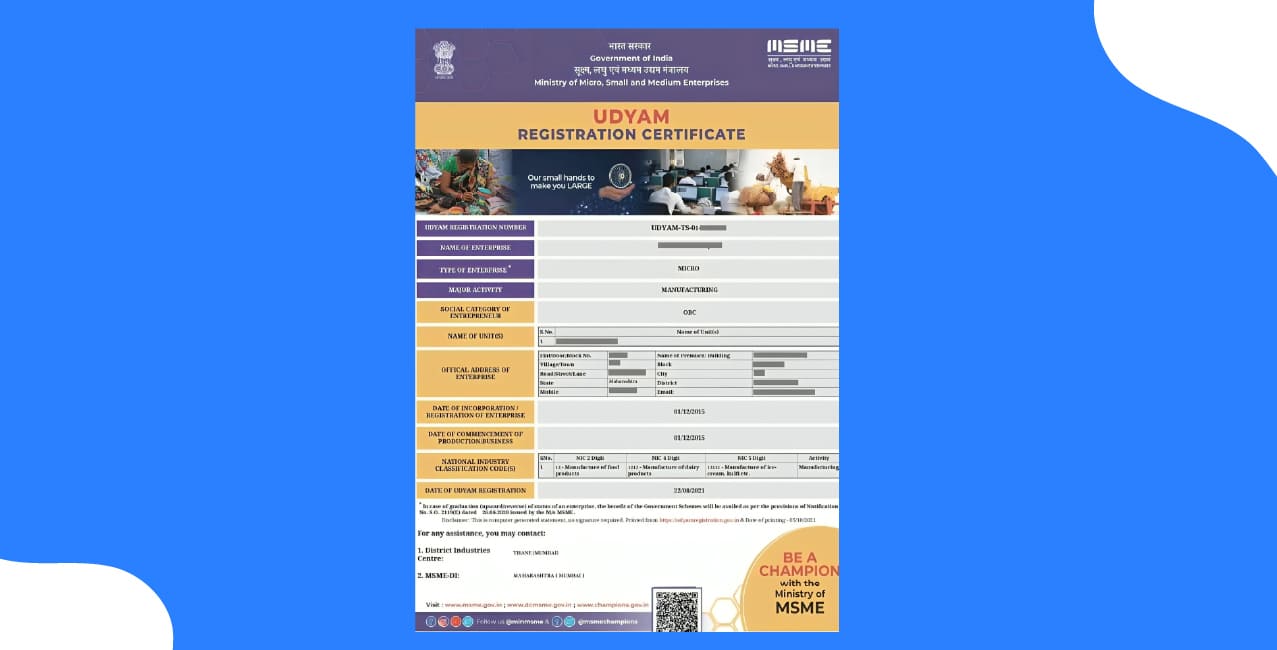
Micro, Small, and Medium Enterprises (MSMEs) form the backbone of India’s economic structure. They contribute significantly to employment generation, industrial output, exports, and balanced regional development. To support, regulate, and accurately identify these enterprises, the Government of India introduced a formal registration framework known as udyam registration. This system replaced earlier mechanisms and brought a structured, digital, and transparent approach to MSME identification.
Over time, the MSME registration framework has evolved to meet the demands of a modern, data-driven economy. One of the most important reforms in this journey was the transition from udyog aadhar to udyam registration, which strengthened data accuracy and improved governance.
Udyam registration is an official process through which enterprises engaged in manufacturing or service activities are recognized as micro, small, or medium enterprises. This registration provides a unique identity to each enterprise and helps classify it based on financial parameters such as investment and turnover.
The purpose of udyam registration is not merely procedural. It serves as a foundation for policy planning, enterprise tracking, and integration of MSMEs into the formal economic system. By maintaining a centralized database, the government can better understand the scale, distribution, and needs of the MSME sector.
Before the introduction of udyam registration, MSMEs were identified through earlier systems such as Small Scale Industries (SSI) Registration and later Udyog Aadhaar. Udyog Aadhaar simplified the registration process by relying on self-declared information. While this approach encouraged participation, it also resulted in inconsistencies and data duplication.
To address these limitations, the government launched a new framework that led to the transition from udyog aadhar to udyam registration. This reform introduced greater accountability by linking enterprise data with PAN and GST databases, ensuring that classification is based on verified information rather than estimates.
The primary objectives of udyam registration include:
Creating a reliable and centralized MSME database
Ensuring accurate classification of enterprises
Simplifying the registration and compliance process
Supporting data-driven policymaking
Enhancing transparency and digital governance
By achieving these objectives, udyam registration strengthens the institutional framework supporting MSMEs and promotes inclusive economic growth.
Udyam registration is open to a wide range of business entities engaged in manufacturing or service activities. Eligible entities include proprietorships, Hindu Undivided Families (HUFs), partnership firms, limited liability partnerships (LLPs), private limited companies, cooperative societies, and trusts involved in economic activities.
Both new and existing enterprises can apply. There are no geographic restrictions, making udyam registration accessible to businesses across urban, semi-urban, and rural regions.
Enterprises registered under the udyam framework are classified based on two parameters: investment in plant and machinery or equipment, and annual turnover. This dual-criteria approach provides a balanced view of an enterprise’s operational scale.
Enterprises are categorized as micro, small, or medium. The classification is dynamic, meaning it is updated automatically when financial data changes. This ensures that enterprises are neither prematurely excluded nor unfairly categorized as they grow.
One of the defining features of udyam registration is its fully digital structure. The entire process is conducted online, eliminating the need for physical documentation. This digital approach reduces administrative burden and promotes ease of doing business.
Integration with income tax and GST databases allows real-time verification of financial details. This improves accuracy and reduces the scope for manual errors. Digital registration also enables enterprises to access and manage their information independently.
Since udyam registration relies on integrated government databases, maintaining accurate statutory records is essential. Investment and turnover data are sourced directly from income tax and GST filings. Any inconsistency in these records can affect enterprise classification.
Regular review and timely updates help ensure that enterprise information remains correct and aligned with regulatory requirements. This improves the reliability of the MSME database and supports effective governance.
The transition from udyog aadhar to udyam registration represented a major shift in MSME governance. Existing Udyog Aadhaar holders were required to migrate their data to the new udyam platform. This migration process helped clean and standardize enterprise records.
The new system eliminated duplication and improved data quality by validating enterprise details against official databases. This transition also aligned MSME registration with broader digital governance initiatives.
Udyam registration plays a crucial role in data-driven policymaking. A centralized and verified MSME database enables the government to analyze sector-specific trends, regional distribution, and employment patterns.
This information supports the design of targeted policies and helps authorities respond effectively during economic disruptions. Accurate data ensures that policy interventions reach the intended beneficiaries.
Financial institutions rely on Udyam registration data to understand the MSME landscape. A structured database reduces information asymmetry and improves transparency between lenders and borrowers.
This integration strengthens the financial ecosystem by enabling better risk assessment and encouraging financial inclusion. It also helps standardize enterprise identification across institutions.
The modernization of MSME registration through the udyam framework reflects a long-term vision for sustainable economic growth. By balancing ease of registration with data accuracy, the system supports enterprise development without imposing excessive compliance burdens.
The transition from udyog aadhar to udyam registration has strengthened trust in MSME data and improved coordination between government departments. This modern framework ensures that MSMEs remain integral to India’s economic progress.
Udyam registration supports enterprise growth by providing a stable and predictable classification system. As enterprises expand, their classification adjusts automatically based on updated financial data. This dynamic approach allows businesses to plan growth without sudden regulatory disruptions.
The system encourages gradual scaling while maintaining continuity within the MSME framework.
Udyam registration is a cornerstone of India’s MSME governance structure. It provides formal recognition, ensures accurate classification, and integrates enterprises into a transparent digital system. The evolution of this framework, particularly the transition from udyog aadhar to udyam registration, highlights the government’s commitment to simplicity, accountability, and data integrity.
For enterprises, understanding udyam registration is essential for maintaining accurate records and participating effectively in the formal economy. As MSMEs continue to drive employment, innovation, and regional development, a robust and reliable registration system remains vital to India’s long-term economic sustainability.

© 2025 Crivva - Hosted by Airy Hosting Managed Website Hosting.