


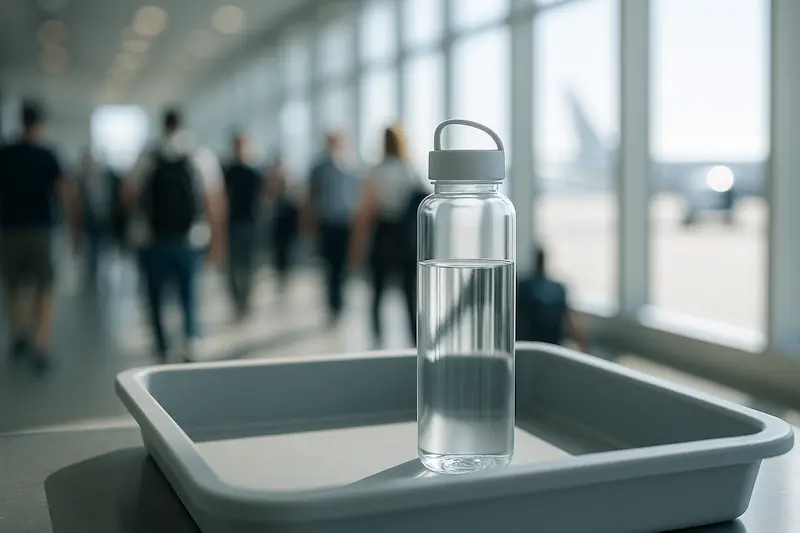
If you’ve ever stood in an airport security line with your favorite water bottle, wondering if you can bring it on the plane, you’re not alone. Travelers ask this question every day, and the answer isn’t as complicated as it seems. In fact, bringing a reusable water bottle with you when you fly is one of the easiest ways to stay hydrated, save money, and reduce waste — once you understand how the rules work.
This guide breaks down everything you need to know about traveling with a water bottle. It covers TSA regulations, how to prepare your bottle before security, what to expect on international flights, and even a few tips to make flying more comfortable.
Yes—as long as it’s empty.
Airport security around the world, including the TSA in the United States, focuses on the liquid inside a container, not the container itself. An empty water bottle—whether metal, plastic, silicone, insulated, or collapsible—can pass through security without issue.
The 100 ml (3.4 oz) liquid restriction only applies to liquids, gels, and creams. Since an empty bottle contains none of these items, it’s treated like any other harmless personal item.
For many travelers, this is great news. You won’t need to buy overpriced bottled water at the airport or rely on small cups of water during a long flight. You can bring your own bottle, walk it through security empty, and refill it once you’re past the checkpoint.
A common concern is whether metal bottles or double-wall insulated bottles are treated differently. The short answer: they’re allowed too, as long as they’re empty.
Security officers may ask you to:
These quick checks are routine and help confirm there’s no liquid hidden inside.
Most of the time, traveling with an empty water bottle is easy. But there are a few situations to be aware of, especially on international routes.
Some airports and flight routes implement an additional layer of security just before boarding. This is more common in:
During these checks, you may be asked to empty your bottle again, even if you already filled it after security. These rules vary by route and destination, so it’s always wise to refill only after you reach the gate area—or refill once onboard, if permitted.
Connecting through certain international airports may mean passing through another security checkpoint. If this checkpoint is before your next gate, you’ll need to empty your bottle again.
Occasionally, security officers select travelers for random screening. If your bottle contains any liquid over 100 ml at that moment, you’ll have to throw it out.
These exceptions can be inconvenient but are usually quick and straightforward.
Once you’re on the plane, you’re free to use your bottle just like any other personal item. Many travelers prefer bringing their own because:
If you’re on a long-haul flight, having your own bottle can make a surprisingly big difference in how you feel throughout the journey.
Some flight attendants even offer to refill your bottle directly, though this can depend on airline policies. When in doubt, you can request water in cups and pour it into your bottle.
Everyone has their preference, but a few types work especially well for flying:
Easy to carry, durable, and simple to clean.
Perfect if you’re short on space. These fold flat in your bag when empty.
Keep drinks cold for hours—especially useful if you’re traveling to a warm destination.
Sturdy and reliable, great for daily use beyond the airport.
The most important thing is not the material but whether the bottle is easy to empty, easy to open, and leak-proof.
Here are a few simple tips to make the process smooth:
Even a small amount of liquid can require extra screening.
Some travelers prefer to keep the cap open—this shows immediately that it’s empty.
Most major airports now offer filtered water stations near restrooms or gates. They’re usually cleaner than drinking fountains and designed for bottles.
Carrying it in your hand or side pocket makes it easier to show security officers if asked.
If you’re unsure whether your boarding gate has extra screening, wait to refill until you’re certain.
Many travelers use this moment to wonder: If an empty bottle is allowed, what about snacks? What about toiletries? Small tools? Medications?
TSA maintains a clear and searchable list here:
https://www.tsa.gov/travel/security-screening/whatcanibring/all
But here are a few items people are often surprised to learn you can bring:
You’ll still need to follow liquid rules and remove electronics during screening, but overall, many daily items are fully allowed.
Traveling with your own reusable water bottle is simple and practical. It saves money, keeps you hydrated, and reduces waste. It also helps you stay comfortable, especially on long travel days when you may spend hours sitting, waiting, or walking between terminals.
Whether you use a lightweight bottle for your daily commute or an insulated one for overnight flights, having your own bottle provides a sense of routine and convenience while traveling.
And best of all: It’s completely allowed—as long as you walk through security with an empty bottle.
View more about reusable plastic water bottle: https://mountopbottle.com/plastic-water-bottles/

© 2025 Crivva - Hosted by Airy Hosting Managed Website Hosting.