


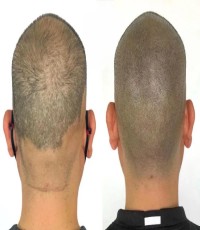
Thinning hair can slowly make you feel less confident. You might notice that your scalp is more visible, that hairstyles don’t stay in place, or that certain types of lighting make hair loss more obvious. Many people are disappointed with the results of products, supplements, and styling tips that promise to make things better. Luckily, modern aesthetic treatments now offer a safe, non-surgical way to make hair look thicker again. Micropigmentation for hair density is one of the best options.
This advanced cosmetic procedure makes hair look fuller by putting tiny pigment impressions into the scalp that blend in perfectly with the hair that is already there. The result is immediate visual density, coverage that looks natural, and a boost in confidence.
Hair density micropigmentation is a type of scalp micropigmentation that is made just for people who still have hair but want their scalp to look fuller. This method doesn’t try to make hair follicles look like they were shaved. Instead, it adds depth between existing strands, which makes the scalp and hair less different from each other.
A trained professional uses ultra-fine needles and carefully chosen pigments to make thousands of tiny impressions that look like natural hair shadows. These impressions are put on in layers to make your hair look thicker without changing the length or hairline.
People often use traditional scalp micropigmentation to make their hair look like a buzz cut or shave. Density-focused treatments, on the other hand, don’t change the look of your hair; they work with what you already have.
Some of the main differences are:
Made to make hair thinner, not completely bald
Mixes in with hair that grows naturally
Makes soft shadows instead of stubble that can be seen
Keeps your hair style the same
For people who are losing hair slowly or moderately, hair density micropigmentation is a great option.
This treatment is effective for both men and women with thinning hair in various regions of the scalp.
You might be a good candidate if you have:
Thinning that spreads out on the crown or top
Part lines that are getting wider
Less volume at the temples
Pattern hair loss in its early stages
Stress or hormonal changes can cause hair loss.
You need to talk to a trained professional to find out if this method is right for your hair type, skin tone, and how thin it is.
Reducing contrast makes hair look thicker. When the color of the scalp is very close to the color of the hair, thinning is much less obvious.
The steps are as follows:
Custom pigment that matches the color of your hair
Placing it strategically between existing strands
Layered application for depth
Blend softly to avoid sharp edges.
After it’s done, light doesn’t bounce off the exposed scalp as easily, making the hair look fuller and thicker.
It’s important to know that this treatment doesn’t make hair grow. Instead, it makes things look better right away. Many clients say the effect is like having hair fibers that are always perfectly applied, without the mess or upkeep.
Micropigmentation hairline treatment can be added to a density procedure for people whose thinning hair is most noticeable at the front.
Adding fine pigment impressions along the front zone of the hairline subtly strengthens and improves its appearance. When you add density work behind the hairline, it gives you a balanced, youthful look that doesn’t look sharp or fake.
A professional practitioner adheres to particular design principles:
A little bit of irregularity to make it look like natural growth
A gradual buildup of density instead of a solid line
Color tones that go with the hair around them
Facial structure symmetry
The goal is to improve, not to make it look like a redraw.
Knowing what happens during treatment can make you feel better about your choice.
Your provider looks at your scalp, hair pattern, and goals. You talk about what worries you and what you want to happen.
Pigments are mixed to match your hair and skin tone so that they blend in perfectly.
Lightly apply the first layers of pigment to create a base.
More sessions add depth, density, and polish.
Most clients need two to three sessions, each one about a week apart.
This solution has become more and more popular because it has so many benefits.
Not needing surgery and only needing a small amount of work
Immediate improvement in appearance
Works with hair that is already there
Not much work to do
Results that last a long time
Good for both men and women
These benefits make it a good choice over more invasive procedures.
Results usually last for a few years. Over time, skin regeneration and sun exposure may cause pigment to slowly fade. Touch-ups every now and then help keep things looking their best.
Many clients get consistent results for three to five years with the right care before they think about getting a new one.
Following the aftercare instructions is very important for staying healthy.
Some common rules are:
Don’t sweat a lot for a few days.
At first, keep your scalp dry.
For now, stay away from swimming and saunas.
Use cleansers that are soft
Use the moisturizers that are suggested.
Wearing sunscreen or a hat in strong sunlight can help keep colors from fading over time.
People try a lot of different things to fix thinning hair. This is how this treatment stacks up.
Need to be used every day
Results are very different
Often not obvious
Short-term coverage
Can move or wash away
Need to be reapplied all the time
Could slow down hair loss
Possible side effects
A long-term commitment
Intrusive
More expensive
Needs hair from a donor
Micropigmentation for hair density stands out because it makes things look better right away and doesn’t need surgery or daily care.
The procedure is safe as long as a trained and licensed professional does it with sterile tools and medical-grade pigments. Reputable clinics follow strict hygiene rules and have long consultations.
The skill and experience of your provider have a big impact on how good your results are.
Search for:
SMP training that is specific
Photos that show the results before and after
Good reviews from clients
Clear process for consultation
A custom approach instead of a one-size-fits-all one
Don’t just choose based on price, because expertise affects how real something is.
Some clients choose to have both hair density micropigmentation and micropigmentation hairline treatment done at the same time for even better results. This combination can help with both thinning hair all over the scalp and hair loss in the front of the head.
The result is a look that frames the face and makes the hair look thicker all over.
Most clients notice the following, even though individual outcomes differ:
Less visible scalp
Hair that looks fuller
Better hairstyle options
More self-assurance
When done right, the results look natural in different kinds of light.
Your hair doesn’t have to be thin to look or feel good. Modern aesthetic improvements now make it possible to restore the look of density and volume without surgery.
People who want their hair to look fuller without surgery, downtime, or ongoing maintenance can get a quick, natural-looking fix with hair density micropigmentation. When used correctly and with careful planning, it can make thinning areas look much better. It can also work well with micropigmentation hairline treatment when needed.
If you’re looking for ways to fix your thinning hair, the best thing to do next is to talk to a professional. Getting thicker, healthier hair is very possible with the right doctor and a plan that is made just for you.
Hair density micropigmentation is a non-surgical cosmetic procedure that creates the appearance of thicker hair by placing tiny pigment impressions between existing strands. These micro-impressions reduce the contrast between the scalp and hair, making thinning areas look fuller and more natural without changing your hairstyle.
Hair density micropigmentation is suitable for men and women experiencing mild to moderate thinning, widening part lines, or reduced volume on the crown or top of the scalp. A professional consultation is recommended to determine if your hair type, skin tone, and level of thinning are appropriate for this treatment.
Micropigmentation hairline treatment helps enhance and refine the front hairline, making it look more defined and balanced. When combined with density micropigmentation, it creates a cohesive, natural-looking result that improves both overall thickness and the appearance of the hairline.
Results typically last several years, with gradual fading over time due to skin regeneration and sun exposure. Most clients choose to schedule touch-up sessions every few years to maintain optimal color, depth, and natural-looking density.

© 2025 Crivva - Hosted by Airy Hosting Managed Website Hosting.