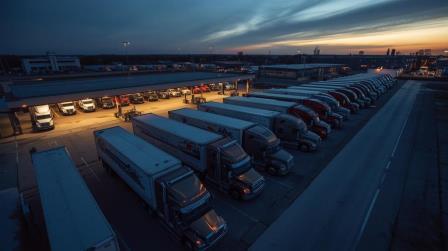
The shortage of safe and accessible truck parking is one of the most persistent challenges in the logistics industry. For every eleven trucks on the road, there is only one available parking space, creating a daily struggle for drivers that impacts safety, efficiency, and the supply chain itself. While the problem is significant, the industry is not sitting idle. A new wave of technology, innovative business models, and forward-thinking policies are beginning to reshape the landscape of truck parking.
This post will explore the future of truck parking, moving beyond the problem to focus on the tangible solutions on the horizon. From smart systems to collaborative public-private partnerships, these advancements offer a glimpse into a more secure and efficient future for the backbone of our economy.
Technology is leading the charge in making the existing parking infrastructure work smarter. By providing real-time data and predictive analytics, new tools are empowering drivers and fleet managers to make better, safer decisions.
The days of driving from one full truck stop to the next may soon be over. A growing number of mobile applications are providing drivers with real-time visibility into parking availability. These platforms allow drivers to find, reserve, and pay for a parking spot hours or even days in advance.
This “reserve-ahead” model offers several key benefits:
State Departments of Transportation (DOTs) are investing in smart infrastructure to guide drivers. Known as Truck Parking Information Management Systems (TPIMS), these networks use sensors, cameras, and data networks to monitor public rest areas.
Information on available spaces is then broadcasted on dynamic message signs along highways and fed directly into in-cab navigation systems and driver apps. This allows drivers to make informed decisions well before they reach a crowded exit, preventing dangerous last-minute maneuvers and unnecessary detours. States like Florida, Michigan, and Iowa have already seen success with these systems, proving their value in managing traffic flow and improving driver safety.
Solving the parking deficit isn’t just about building more traditional truck stops. Entrepreneurs are finding creative ways to unlock new parking capacity by re-imagining how we use existing land.
One of the most promising trends is the emergence of marketplace platforms that connect property owners with truckers in need of parking. These services allow businesses with underutilized lots—such as industrial parks, warehouses, shopping malls, or even farms—to list their space for short-term or long-term truck parking.
This model is a win-win. Property owners generate a new revenue stream from otherwise empty asphalt, while drivers gain access to secure, often conveniently located, parking options that were previously hidden. These pop-up lots often feature security amenities like fencing, lighting, and camera surveillance, providing a safe alternative to highway shoulders.
Building new public rest areas is expensive and slow. To accelerate development, many governments are turning to public-private partnerships. In a P3 model, a state might provide the land or offer tax incentives, while a private company finances, builds, and operates the truck parking facility.
This collaboration allows for faster construction and brings the operational expertise of the private sector to public infrastructure. These modern facilities often include enhanced amenities like repair services, healthier food options, and exercise areas, directly addressing driver comfort and well-being.
Technology and business innovation alone cannot solve the crisis. Supportive government policies and smarter urban planning are essential to creating a sustainable parking infrastructure for the long term.
A major barrier to new truck stop development has been restrictive local zoning laws, often driven by “Not In My Backyard” (NIMBY) sentiment. However, municipalities are starting to recognize that if they want the economic benefits of warehouses and distribution centers, they must also accommodate the trucks that serve them.
Progressive local governments are now updating their zoning codes to streamline the approval process for truck parking facilities, especially in industrial and commercial zones. Some are even mandating that new large-scale logistics developments include a certain number of dedicated truck parking spaces as a condition of approval.
Legislation like Jason’s Law has successfully elevated the parking shortage to a national priority, unlocking federal funding for states to invest in parking projects. Continued advocacy is crucial to ensure this funding grows and is allocated effectively. Groups representing drivers, carriers, and shippers are working together to lobby for more robust federal investment in the National Highway Freight Program.
The future of truck parking depends on collective action. Here is how different stakeholders can contribute:
The truck parking crisis will not be solved overnight, but the path forward is becoming clearer. The convergence of smart technology, innovative business models, and more supportive policies is creating a multi-faceted solution. By transforming parking from a source of anxiety into a predictable part of the journey, these advancements promise to improve driver quality of life, enhance road safety, and strengthen the entire supply chain.
Investing in the future of truck parking is an investment in the people and systems that keep our country moving. The journey ahead is long, but for the first time in a long while, the destination—a safe and secure spot for every driver—is in sight.

© 2025 Crivva - Hosted by Airy Hosting Managed Website Hosting.