


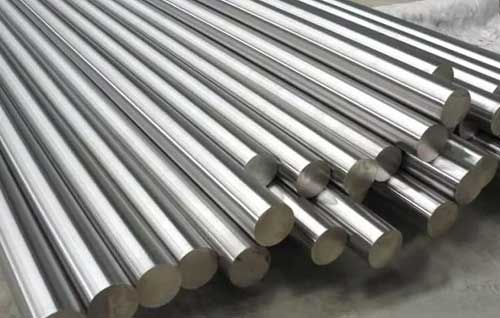
Nickel chromium superalloy fasteners lined up under ASTM B637 find extensive use in high temperature bolting for turbines, pressure vessels, and heat exchangers where not only creep resistance but also oxidation stability are the key requirements. Within this specification, ASTM B637 Uns N07752 stands for precipitation hardening Inconel X-750 grade components usually manufactured as studs, bolts, and threaded rods in solution annealed plus age hardened conditions. Standard product dimensions are from M6 to M100 or 1/4 to 4 inches diameter with length exceeding 3 meters depending on forging or bar stock availability. Engineering procurement teams sourcing such alloys around major industrial hubs like Riyadh or Dammam often compare the mechanical properties such as 0.2 percent yield strength, hardness class and stability of grains before vendor qualification.
Nickel alloy bolting and special fasteners mainly intended for high-temperature environments are primarily covered by the ASTM B637 specification. These alloys are chosen because they can maintain mechanical strength at temperatures much higher than those which standard carbon steel or stainless steel fasteners can endure. For instance, in the petrochemical processing, gas compression, and thermal power generation sectors, bolting assemblies are normally running at the temperature continuously between 500°C and 800°C. Besides, standard alloys may suffer from creep deformation, stress relaxation, or quick oxidation at these temperatures, resulting in possible compromises of flange integrity and equipment safety. That’s why precipitation hardened nickel alloys like Inconel X-750 have been commonly used materials for critical fastening applications.
In practical engineering supply chains, ASTM B637 fasteners are commonly produced in several forms including heavy hex bolts, double end studs, tap end studs, threaded rods, socket head cap screws, and specialized turbine bolts. Manufacturing begins with forged bars or rolled bars that meet strict chemical composition limits for nickel, chromium, iron, titanium, aluminum, and trace elements that support precipitation hardening. Heat treatment cycles play a significant role in determining final mechanical performance. Typical processing includes solution annealing followed by controlled aging treatments to achieve the required hardness class and yield strength values.
Material traceability, heat treatment records, and ASTM B637 class identification are amongst the items that inspection agencies scrutinize most often because X-750 fasteners are being used very close to 700 to 800°C in gas processing and petrochemical equipment. Documentation normally includes mill test certificates, spectrochemical analysis results, heat numbers, and hardness verification reports. Third party inspection authorities frequently verify ultrasonic testing of bars, dimensional inspection of threads, and surface integrity through dye penetrant testing when these fasteners are intended for safety critical joints.
Stockists shown on pipingmaterial.sa provide a consolidated and verified list of distributors with mill test certificates, bar dimensions, and forging routes from worldwide mills, which enables contractors in Jeddah to avoid relying on scattered trading channels. The platform functions primarily as a B2B sourcing interface where procurement engineers, project contractors, and maintenance teams can locate approved suppliers that maintain inventory of nickel alloy fasteners. This approach simplifies the otherwise fragmented global trade in superalloy bolting products, particularly when project timelines require rapid sourcing of non-standard stud lengths or special thread profiles.
Another technical factor that engineers evaluate when selecting ASTM B637 nickel alloy fasteners is resistance to relaxation under sustained load. In high temperature flanged joints, bolting must maintain clamping force for extended operating cycles. Superalloy grades such as X-750 are designed to resist loss of preload even after long service exposure. This property is critical in turbine casings, boiler assemblies, and pressure vessel closures where bolt relaxation could lead to leakage or mechanical instability.
Dimensional tolerances are not only a consideration but a critical factor for the performance of high temperature fasteners. Typically, bolts and studs are made in line with the standards such as ASME B18.2.1 restricting heavy hex bolts or ASME B1.1 for unified threads. Things like surface finish, thread engagement, and pitch accuracy affect load distribution in the bolted assembly directly. Large diameter studs, especially those above M64 or 2-1/2 inches, are generally forged bars machined to ensure both uniform grain flow and the greatest fatigue resistance.
Superalloy fasteners made of nickel alloys and similar compositions are very frequently installed in refineries and gas processing plants, especially in piping and equipment packages for reformers, catalytic cracking units, and turbine driven compressors. Procurement teams working in Riyadh, Dammam, and Jeddah among other cities leverage centralized sourcing platforms to locate distributors who can supply certified nickel alloy bolts. As the manufacture of these materials mainly takes place in specialized mills which are located outside the region, supply verification becomes crucial for ensuring traceability and compliance with ASTM requirements.
Bolting programs with high temperature in refinery plants as well as power projects have also been able to compare the performance of different grades in terms of creep rupture lifetime and relaxation resistance within the same specification. Procurement documents may mention either solution treated or precipitation hardened variants depending on service exposure, and market listings are increasingly showcasing ASTM B637 Uns N07750 for heavy-duty studs, hex bolts, and threaded rods used in turbine casings and flanged joints, which is very helpful for regional buyers through the pipingmaterial.sa network.
UNS N07750 which is sometimes related with Inconel X-750 is a grade of nickel-based superalloy that is notable for the retention of tensile strength and oxidation resistance after long exposures. Typically, after proper heat treating the alloy has yield strengths rating higher than 690 MPa, along with the ability of stress corrosion cracking resistance in environments containing chlorides. Such features enable the use of this material to a wide extent in chemical reactors, jet engine components, and industrial gas turbines.
As superalloy fasteners are sold at a significantly higher price than standard alloy steel bolting products, their spec and sourcing must be done wisely. Engineering departments habitually cross check chemical composition limits, hardness ranges, heat treatment classes, and dimensional standards when selecting suppliers. Online industry portals such as pipingmaterial.sa make this task easier by giving buyers the possibility of comparing verified suppliers, checking certifications, and contacting distributors who are able to supply ASTM compliant fasteners for industrial projects throughout the Saudi Arabian market.

© 2025 Crivva - Hosted by Airy Hosting Managed Website Hosting.