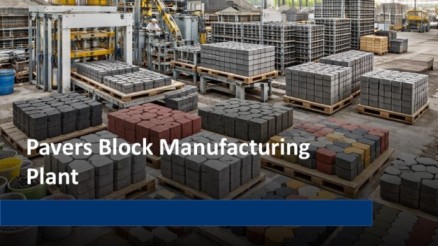
IMARC Group’s “Pavers Block Manufacturing Plant Project Report 2026: Industry Trends, Plant Setup, Machinery, Raw Materials, Investment Opportunities, Cost and Revenue” report provides a comprehensive and structured guide on how to successfully set up a pavers block manufacturing plant. The report offers detailed clarifications on several critical aspects, such as unit operations, raw material requirements, utility supply, infrastructural needs, machinery specifications, labour requirements, transportation logistics, packaging considerations, and distribution strategies. It serves as a valuable resource for entrepreneurs, investors, and industry stakeholders looking to establish a profitable manufacturing business in the construction materials sector.
In addition to covering operational components, the report also provides in-depth insights into the pavers block manufacturing process, project economics, and plant cost for pavers block manufacturing, encompassing key financial aspects such as capital investments, funding requirements, operating expenses, income projections, fixed and variable costs, direct and indirect expenditures, expected return on investment (ROI), net present value (NPV), profit and loss account, and comprehensive financial analysis. With a clear roadmap and actionable insights, this report enables stakeholders to make informed business decisions and successfully enter the pavers block manufacturing industry.
Pavers blocks are precast concrete units widely used for surface paving applications such as roads, pavements, driveways, parking areas, footpaths, and landscaping projects. These blocks are manufactured using a combination of cement, fine aggregates (sand), coarse aggregates, water, and color pigments, which are molded into various shapes and sizes. Known for their high compressive strength, durability, and resistance to environmental stress, pavers blocks are an ideal solution for both heavy-duty and decorative applications.
One of the key advantages of pavers blocks is their interlocking design, which enhances structural stability and load distribution. Unlike traditional concrete surfaces, pavers blocks allow for easy installation, repair, and replacement without disturbing the entire surface. This makes them highly cost-effective over the long term. Additionally, they offer superior resistance to cracking, abrasion, and weathering, ensuring long-lasting performance even under heavy traffic conditions.
With growing emphasis on sustainable construction practices, pavers blocks are also gaining popularity due to their eco-friendly characteristics. They allow for better water drainage, reduce surface runoff, and can be manufactured using recycled materials. Their versatility, aesthetic appeal, and functional benefits make them a preferred choice in modern infrastructure development.
The pavers block market is experiencing consistent growth, driven by rapid urbanization, increasing infrastructure development, and rising demand for durable and visually appealing construction materials. Governments and private developers across the globe are investing heavily in road construction, smart city initiatives, urban landscaping, and residential development projects, all of which contribute to the growing demand for pavers blocks.
The expansion of commercial spaces, shopping complexes, industrial zones, and public infrastructure such as parks and walkways is further boosting market growth. Additionally, the rising focus on sustainable construction solutions is encouraging the adoption of pavers blocks, as they offer better water permeability and reduced environmental impact compared to conventional paving methods.
Technological advancements in manufacturing processes, such as automated block-making machines and improved curing techniques, are enhancing product quality and production efficiency. Moreover, the increasing availability of customized designs, colors, and textures is attracting consumers and developers looking for aesthetically pleasing construction materials.
Another key driver is the cost-effectiveness and low maintenance associated with pavers blocks. Their modular nature allows for easy repair and replacement, reducing long-term maintenance costs. As infrastructure development continues to expand across emerging economies and urban centers, the demand for pavers blocks is expected to remain strong, creating significant opportunities for manufacturers and investors.
Key Aspects for Pavers Block Plant:
1 .How has the pavers block market performed so far and how will it perform in the coming years?
The pavers block market has shown steady growth due to infrastructure expansion and urbanization. Future growth is expected to remain strong as governments continue investing in roads, smart cities, and sustainable construction solutions. Increasing demand for durable and cost-effective materials will further drive market expansion globally.
2. What is the market segmentation of the global pavers block market?
The market is segmented based on product type, application, and end-use industries. Common segments include residential, commercial, and industrial applications. Product variations include different shapes, sizes, and materials, catering to specific construction needs and aesthetic preferences across diverse infrastructure and landscaping projects.
3. What is the regional breakup of the global pavers block market?
The market is geographically divided into regions such as North America, Europe, Asia-Pacific, Latin America, and the Middle East & Africa. Asia-Pacific leads due to rapid urbanization, while other regions are growing steadily due to infrastructure upgrades and increasing adoption of modern construction techniques.
4. What are the price trends of various feedstocks in the pavers block industry?
Feedstock prices such as cement, sand, and aggregates fluctuate based on supply-demand dynamics, transportation costs, and raw material availability. These variations directly impact production costs and pricing strategies. Monitoring these trends is essential for maintaining profitability and ensuring efficient cost management in manufacturing operations.
5. What is the structure of the pavers block industry and who are the key players?
The industry consists of both small-scale manufacturers and large-scale organized players. It includes raw material suppliers, manufacturers, distributors, and end-users. Key players focus on product quality, innovation, and pricing strategies to maintain competitiveness and expand their presence in regional and global markets.
6. What are the various unit operations involved in a pavers block manufacturing plant?
The manufacturing process involves raw material mixing, batching, molding, vibration, curing, and finishing. Each stage ensures the strength, durability, and quality of the final product. Proper control of these operations is crucial for maintaining consistency and meeting industry standards in production.
7. What is the total size of land required for setting up a pavers block manufacturing plant?
The land requirement depends on production capacity, machinery setup, storage needs, and operational space. It includes areas for raw material storage, manufacturing units, curing zones, and finished goods storage. Efficient layout planning helps optimize space utilization and improves workflow efficiency.
8. What is the layout of a pavers block manufacturing plant?
The plant layout is designed to ensure smooth workflow and efficient production. It includes designated areas for raw material handling, mixing, molding, curing, and storage. A well-planned layout minimizes material movement, reduces operational delays, and enhances overall productivity.
9. What are the machinery requirements for setting up a pavers block manufacturing plant?
Machinery includes mixers, hydraulic press machines, molds, conveyors, and curing systems. These machines are essential for producing high-quality pavers blocks with consistent strength and finish. Advanced automation can further improve production efficiency and reduce manual labor dependency.
10. What are the raw material requirements for setting up a pavers block manufacturing plant?
Key raw materials include cement, sand, aggregates, water, and additives. These materials determine the strength, durability, and quality of the final product. Proper selection and quality control of raw materials are essential for ensuring consistent production standards.
IMARC Group is a global management consulting firm that helps the world’s most ambitious changemakers create a lasting impact. The company provides a comprehensive suite of services including market entry strategies, feasibility studies, company incorporation assistance, plant setup support, regulatory approvals and licensing guidance, branding and marketing strategies, competitive analysis, and cost research. These services are designed to help businesses establish a strong market presence and achieve sustainable growth.
IMARC Group
134 N 4th St. Brooklyn, NY 11249, USA
Email: [email protected]
Tel No:(D) +91 120 433 0800
United States: (+1-201971-6302)

© 2025 Crivva - Hosted by Airy Hosting Managed Website Hosting.