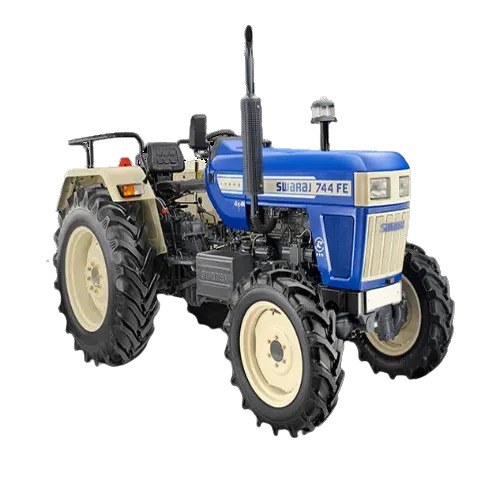
Record Tractor Sales in 2025: Key Growth Drivers and What Lies Ahead for 2026
The Indian tractor industry created history in 2025 by recording its highest-ever annual sales volume, marking a landmark moment for the agricultural machinery sector. This achievement was not the result of a single trend or seasonal spike but the outcome of multiple structural and economic factors working together. Strong rural fundamentals, improved farm incomes, stable government policies, supportive GST structures, pricing discipline by manufacturers, and smooth implementation of emission norms collectively powered this growth.
As the industry steps into 2026, these same drivers are expected to continue shaping demand patterns, buyer behaviour, and innovation strategies. However, the coming year will also test how effectively manufacturers balance regulatory compliance, cost pressures, and farmer affordability in an increasingly competitive market.
Strong Rural Economy and Improved Farm Income
One of the most important drivers behind record tractor sales in 2025 was the improvement in farm income across many regions of India. Favourable monsoon conditions supported healthy crop output, while stable to strong crop prices ensured better realisation for farmers. Minimum Support Price (MSP) revisions for key crops further strengthened income security, especially for wheat, paddy, and pulses growers.
Higher disposable income gave farmers the confidence to invest in capital assets such as tractors. Unlike earlier years, purchases were not driven only by replacement demand but also by first-time buyers, particularly among small and marginal farmers. The growing awareness that mechanisation can reduce labour dependency, improve productivity, and lower long-term costs significantly contributed to this trend.
Custom hiring models and shared ownership concepts also helped farmers justify tractor investments even with limited landholdings, expanding the addressable market for manufacturers.
Growing Focus on Agricultural Mechanisation
The push towards mechanisation gained strong momentum in 2025. Rising labour shortages, increasing rural wages, and time-bound farming requirements encouraged farmers to adopt tractors and compatible implements. Tractors are no longer viewed only as ploughing machines but as multi-purpose power units used for haulage, sowing, harvesting support, and post-harvest activities.
Government initiatives promoting farm mechanisation played a critical role in this shift. Subsidies on implements, promotion of custom hiring centres, and targeted schemes for small farmers helped reduce the entry barrier. As mechanisation awareness increased, tractor ownership became a productivity-driven decision rather than a status purchase.
This structural shift is expected to sustain demand well beyond 2025, creating a strong base for the industry in 2026 and beyond.
Easy Access to Institutional Credit
Another key contributor to record tractor sales was the availability of affordable and timely credit. Banks, NBFCs, and cooperative institutions expanded their rural lending portfolios in 2025. Lower interest rates on agricultural loans, flexible repayment options, and faster approvals made tractor financing more accessible.
Manufacturers and dealers also strengthened tie-ups with financial institutions, enabling on-the-spot loan approvals in rural markets. For many buyers, the monthly EMI became more important than the upfront tractor price, allowing them to upgrade to higher horsepower models or replace ageing tractors earlier than planned.
The smoother credit environment significantly reduced purchase hesitation, particularly during peak agricultural seasons.
Pricing Stability Amid Rising Input Costs
Despite rising raw material and logistics costs, tractor manufacturers managed to maintain pricing stability in 2025. Any tractor price increases were moderate and staggered, preventing sudden shocks to demand. This discipline played a crucial role in sustaining sales momentum throughout the year.
Brands that focused on value engineering, localisation of components, and supply chain efficiency were able to protect margins without passing excessive costs to farmers. As a result, affordability across entry-level and mid-range segments remained intact.
In rural markets, transparent pricing and predictable costs built trust, helping farmers plan purchases with confidence. Competitive positioning around tractor price became a decisive factor in brand selection.
Role of GST and Policy Stability
The GST framework for tractors, which classifies them as essential agricultural equipment, continued to support demand growth in 2025. The relatively lower tax burden compared to other vehicle categories helped keep ownership costs under control. Stability in GST rates also gave manufacturers clarity to plan production, inventory, and dealer expansion.
Any clarity or marginal relief related to GST on components and implements further strengthened the ecosystem. Dealers benefited from smoother input credit flows, while manufacturers focused on expanding rural reach rather than navigating policy uncertainty.
This stable policy environment allowed farmers to compare models transparently based on features, performance, and tractor price, leading to more informed buying decisions.
Smooth Transition to New Emission Norms
The introduction of updated emission norms could have disrupted the market, as seen in previous regulatory transitions. However, in 2025, the industry demonstrated strong preparedness. Manufacturers introduced compliant engines well in advance, ensuring uninterrupted supply and minimal impact on pricing.
Importantly, emission compliance was often combined with improvements in fuel efficiency and engine performance, making the transition more acceptable to farmers. Buyers did not postpone purchases due to regulatory uncertainty, which helped maintain steady sales throughout the year.
This smooth transition reflected the growing maturity of the Indian tractor industry and its ability to adapt to regulatory changes without compromising growth.
Changing Buyer Preferences and Value-Based Decisions
Farmers in 2025 emerged as more informed and discerning buyers. While tractor price remained a critical consideration, decision-making increasingly factored in fuel efficiency, durability, resale value, and service network strength. Long-term ownership costs began to matter more than just initial purchase price.
Brands with a strong rural presence, reliable after-sales service, and proven performance records gained an edge. For instance, steady interest in the sonalika tractor price range highlighted the demand for powerful yet cost-effective tractors suitable for diverse farming conditions. Such brands benefited from a reputation built on reliability, ease of maintenance, and wide service coverage.
Digital platforms and word-of-mouth reviews further empowered farmers to compare options before purchasing, increasing competition among manufacturers.
Outlook for the Tractor Industry in 2026
As the industry moves into 2026, tractor demand is expected to remain healthy, supported by continued government focus on rural development, irrigation projects, road connectivity, and mechanisation. However, growth may moderate from the exceptional highs of 2025, making competitive differentiation more important.
Manufacturers will need to balance feature upgrades, emission compliance, and cost pressures while keeping tractor price increases under control. Increased localisation, technology sharing, and operational efficiency will play a crucial role in sustaining profitability.
At the same time, buyers are likely to evaluate tractors based on total cost of ownership, including fuel consumption, maintenance expenses, and resale potential. This shift will encourage manufacturers to invest more in quality, efficiency, and after-sales support rather than aggressive discounting.
Conclusion
The record tractor sales achieved in 2025 were the result of a rare alignment of strong rural incomes, supportive GST policies, accessible credit, pricing discipline, and smooth emission norm implementation. Together, these factors created a stable and confidence-driven market environment for farmers and manufacturers alike.
As the tractor industry enters 2026, sustained growth will depend on maintaining this balance between affordability, compliance, and innovation. With thoughtful tractor price strategies, continued policy support, and trusted brands offering reliable performance, the Indian tractor industry is well positioned to build on its historic momentum and move confidently into the next phase of growth.

© 2025 Crivva - Hosted by Airy Hosting Managed Website Hosting.