

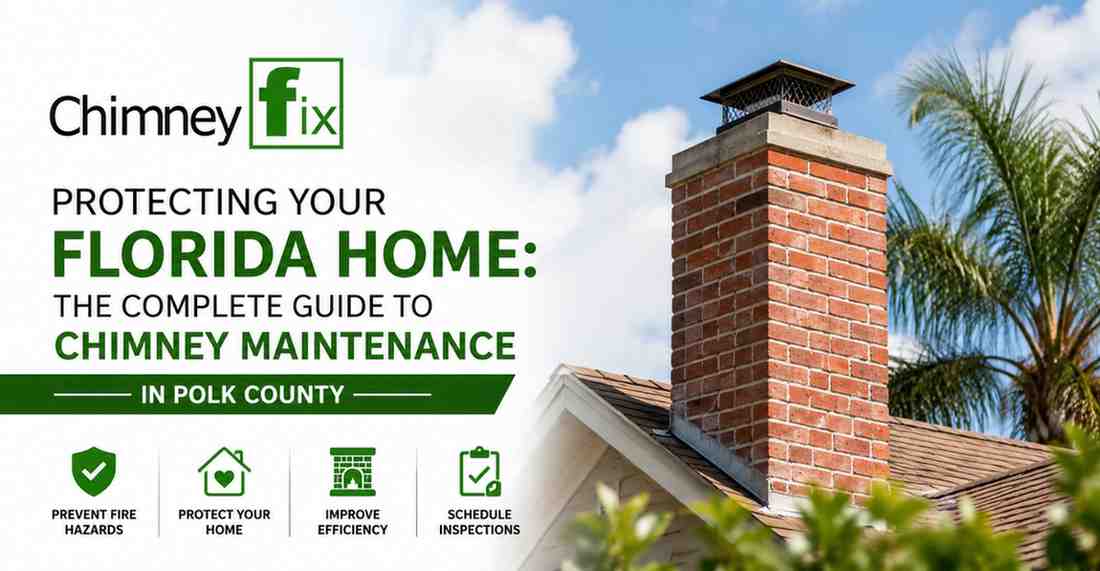
If you live in Central Florida, your chimney faces a vastly different set of environmental stressors than a home in the Northeast or Midwest. Instead of the brutal freeze-thaw cycles that crack masonry in colder climates, chimneys in Lakeland and the surrounding Polk County area degrade due to extreme year-round humidity, torrential summer downpours, and infrequent use.
To prevent structural water damage, pest infestations, and indoor air hazards, the National Fire Protection Association (NFPA) mandates an annual chimney inspection—even if you only light your fireplace two or three times during the brief Florida winter.
Masonry is fundamentally porous. Bricks and mortar act like rigid sponges, and in a climate that averages over 50 inches of rain annually alongside high humidity, that porosity becomes a structural liability.
When moisture penetrates brickwork and bakes in the 90-degree Florida sun, the water evaporates, leaving behind crystallized mineral salts on the surface of the brick. This white, powdery staining is called efflorescence. While it might look like a simple cosmetic issue, it is a glaring red flag indicating that water is actively traveling through your chimney structure.
Over time, this trapped moisture breaks down the binding agents in the mortar. If left unchecked, the face of the bricks will begin to peel or pop off—a destructive process known as spalling. Once a chimney begins to spall, structural integrity is severely compromised, often requiring a complete rebuild rather than a simple repair.
During hurricane season, wind-driven rain attacks the weakest point of your roofing system: the chimney flashing. Flashing is the custom-bent sheet metal that seals the seam between your roof deck and the chimney base. When UV rays dry out the waterproof sealant, or severe winds lift the metal, water funnels directly into your attic and wall cavities.
When conducting routine chimney inspections Lakeland homeowners need, certified technicians often find that what a resident assumed was a “roof leak” is actually a failed chimney flashing system. Catching this early prevents thousands of dollars in drywall rot and mold remediation.
In Florida, fireplaces sit dormant for 90% of the year. Counterintuitively, this lack of use actually accelerates certain types of chimney damage.
When you do light a fire on a chilly January evening, the relatively mild outside temperature can prevent the chimney flue from drawing properly. Sluggish draft speeds allow the smoke to linger in the flue longer. As the smoke cools, it condenses on the interior walls as creosote—a highly combustible, tar-like substance. Even a few poorly drafting fires a year can build up enough Stage 2 or Stage 3 creosote to spark a dangerous chimney fire.
An unused, uncapped chimney is essentially a luxury high-rise for local wildlife. Raccoons, bats, and Chimney Swifts (a federally protected bird species) frequently use open flues as nesting grounds.
Beyond the noise and the smell, these animals bring highly flammable nesting materials directly into your exhaust system. A proper inspection will identify these blockages and ensure a custom-fitted, stainless-steel chimney cap is installed to keep the ecosystem outside where it belongs.
Not all chimney checks are created equal. The NFPA 211 standard categorizes inspections into three distinct levels, and knowing which one you need prevents you from overpaying—or under-protecting—your home.
Level 1 (Routine): This is your standard annual checkup. The technician will visually examine the accessible interior and exterior of the chimney, checking for basic soundness, flue blockages, and the structural integrity of the firebox.
Level 2 (Real Estate & Damage): If you are buying or selling a home, or if the property recently survived a severe weather event like a hurricane, a Level 2 is required. This involves everything in a Level 1, plus a specialized video camera routed up the flue to inspect the joints of the terracotta or steel liner for hidden cracks.
Level 3 (Invasive): Rarely required unless severe hidden damage is suspected. This involves opening up walls or removing masonry to access the concealed areas of the chimney.
When evaluating options for thorough chimney inspections Lakeland property owners should always ensure the provider uses modern video scanning equipment. Without a camera, a technician is simply guessing at the condition of the upper flue.
Lakeland is home to beautiful historic districts like Dixieland and Lake Morton, featuring stunning bungalows and Tudor-style homes built in the 1920s and 30s.
If you own a historic property, your chimney requires highly specialized care. These older structures were often built without modern clay tile flue liners, meaning the brick itself takes the brunt of the heat and corrosive exhaust gases. Over decades, the original lime-based mortar turns to dust.
Maintaining these vintage chimneys involves a process called tuckpointing, where deteriorated mortar is carefully routed out and replaced with a historically accurate, color-matched compound. Furthermore, historical fireboxes often need to be resurfaced with refractory cement to ensure they meet modern safety codes without losing their original aesthetic charm.
A safe fireplace extends beyond the brick and mortar. Before the burning season begins, the immediate area surrounding the hearth must be cleared of combustible clutter. It is highly common for homeowners to use the hearth as a storage space for books, old electronics, and general household clutter during the summer months.
Proper fire safety requires a minimum 36-inch clearance zone around the firebox. If your home has accumulated heavy storm debris, old furniture, or bulk waste near the fireplace or exterior chimney base, scheduling a professional junk removal service alongside your chimney sweep ensures your entire living space is code-compliant, safe, and ready for use.
Your chimney is the heaviest, most structurally complex system attached to your home. It breathes, shifts, and weathers the elements 365 days a year. Ignoring it because it only gets used on holidays is a fast track to expensive masonry repairs and dangerous fire hazards.
By prioritizing an annual sweep and thorough waterproofing, you are actively preserving the structural integrity of your roofline and the safety of your living room.
Author Bio ChimneyFix is a premier masonry, sweep, and restoration company led by certified chimney professionals. With years of hands-on experience navigating Florida’s unique climate challenges, the team specializes in structural masonry repair, safe junk removal, and comprehensive chimney inspections Lakeland homeowners rely on to keep their properties code-compliant and fire-safe. Committed to NFPA standards and white-glove customer service, ChimneyFix ensures every hearth is ready for the season.

© 2025 Crivva - Hosted by Airy Hosting Managed Website Hosting.