


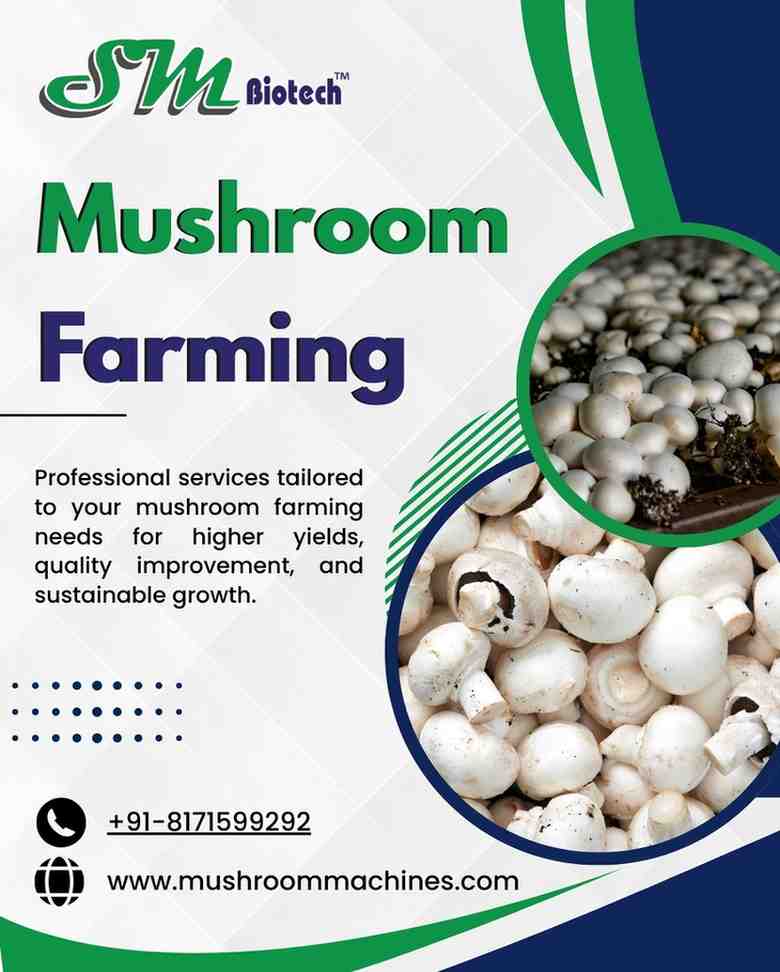
Mushroom farming has emerged as one of the most profitable and sustainable agribusiness opportunities in recent years. With increasing demand for healthy and organic food, mushrooms have gained immense popularity due to their nutritional value, medicinal properties, and versatility in cooking. Entrepreneurs and farmers alike are now turning towards mushroom cultivation as a low-investment, high-return business model.
Unlike traditional farming, mushroom cultivation does not require large agricultural land. It can be started indoors, making it ideal for both rural and urban setups. With proper planning, technology, and management, mushroom farming can generate consistent income throughout the year.
Mushroom farming offers several advantages that make it an attractive business option. Firstly, it requires minimal space and can be carried out in sheds, rooms, or even containers. Secondly, the growth cycle of mushrooms is relatively short, allowing multiple harvests in a year. Thirdly, the demand for mushrooms is consistently rising in domestic as well as international markets.
Additionally, mushrooms are rich in proteins, vitamins, and minerals, making them a preferred choice for health-conscious consumers. The growing trend of vegan and organic diets has further boosted the demand for mushrooms.
Before starting a mushroom farming business, it is important to select the right type of mushroom. Some popular varieties include:
Each variety has its own cultivation requirements, including temperature, humidity, and substrate.
To start mushroom farming, you need to understand the basic requirements:
A controlled environment is essential for successful mushroom cultivation. You can set up a mushroom growing room or shed with proper ventilation, temperature control, and humidity management.
The primary raw materials include:
Different mushrooms require different environmental conditions. For example, button mushrooms grow well in cooler temperatures, while oyster mushrooms thrive in moderate climates.
Maintaining cleanliness is crucial to prevent contamination and diseases. Regular disinfection of the growing area is necessary.
The substrate is the growing medium for mushrooms. It can be made from wheat straw, paddy straw, or compost. The substrate is treated and sterilized to eliminate harmful microorganisms.
Spawning involves mixing mushroom spawn with the prepared substrate. This step initiates the growth of mycelium, which later develops into mushrooms.
After spawning, the bags or trays are kept in a dark room with controlled temperature and humidity. During this phase, the mycelium spreads throughout the substrate.
Once the mycelium fully colonizes the substrate, the environment is adjusted to trigger mushroom growth. Light, fresh air, and humidity play a key role in this stage.
Mushrooms are ready for harvest within a few weeks. They should be harvested carefully to avoid damage and maintain quality.
One of the biggest advantages of mushroom farming is its low initial investment. A small-scale unit can be started with minimal capital. The major expenses include:
With proper management, farmers can recover their investment within a short period and start generating profits.
Mushroom farming offers high profit margins due to its fast growth cycle and increasing demand. Farmers can earn consistent income by supplying mushrooms to:
Value-added products like dried mushrooms, mushroom powder, and pickles can further increase profitability.
While mushroom farming is profitable, it also comes with certain challenges:
However, these challenges can be overcome with proper training, modern equipment, and expert guidance.
With advancements in technology, mushroom farming has become more efficient and scalable. Automation plays a crucial role in improving productivity and reducing labor costs. Some modern solutions include:
Using advanced machinery ensures consistency in production and better quality mushrooms.
To succeed in mushroom farming, effective marketing is essential. Here are some strategies:
Packaging and presentation also play a significant role in attracting customers.
In many regions, governments provide support and subsidies for mushroom farming. Farmers can benefit from training programs, financial assistance, and technical guidance. This makes it easier for beginners to start their journey in mushroom cultivation.
Consistency and patience are key to achieving long-term success in this business.
The future of mushroom farming looks promising due to increasing awareness about healthy eating and sustainable agriculture. With the rise in demand for organic food, mushrooms are becoming a staple in modern diets.
Urban farming and vertical farming concepts are also boosting mushroom production. Entrepreneurs are exploring innovative ways to expand this business and tap into global markets.
Mushroom farming is a highly profitable and sustainable agribusiness that offers immense opportunities for farmers and entrepreneurs. With low investment, quick returns, and growing demand, it is an ideal choice for those looking to start a new venture in agriculture.
By adopting modern techniques, maintaining quality standards, and implementing effective marketing strategies, anyone can build a successful mushroom farming business. Whether you are a beginner or an experienced farmer, this industry holds great potential for growth and profitability.
For more information, advanced machinery, and expert guidance, visit MushroomMachines.com and take your mushroom farming business to the next level.
#MushroomFarming #MushroomMachines #OrganicFarming #AgriBusiness #MushroomCultivation #FarmingBusiness #ModernFarming #IndoorFarming #AgricultureIndia #ProfitableFarming #MushroomBusiness #SustainableFarming

© 2025 Crivva - Hosted by Airy Hosting Managed Website Hosting.