

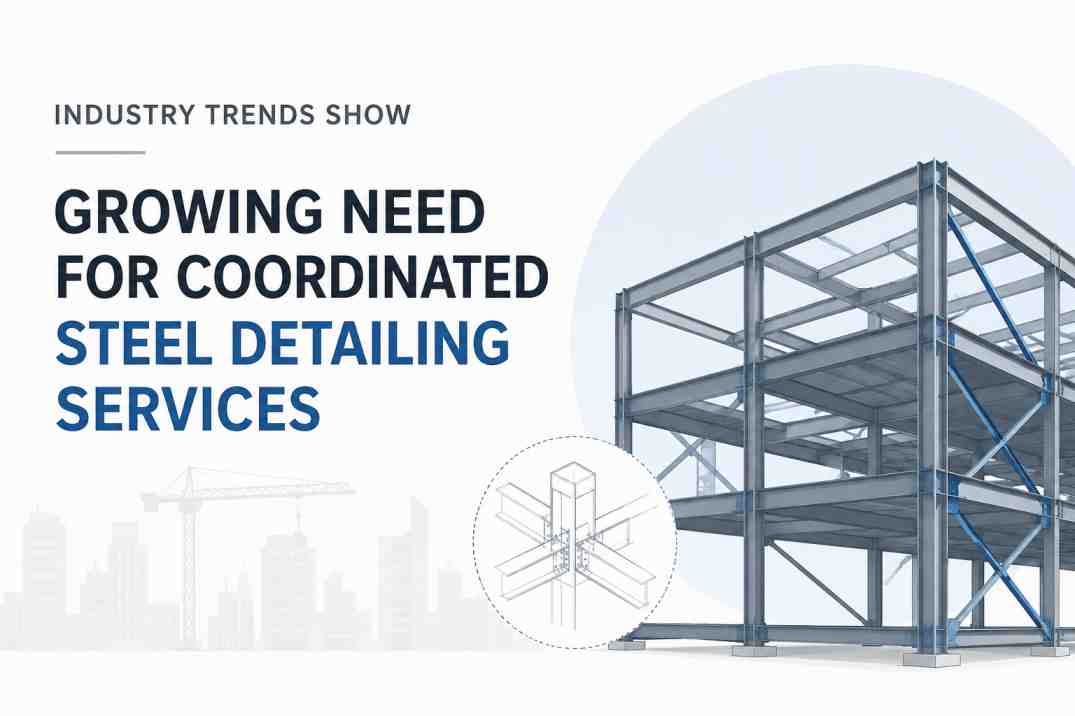
As project delivery expectations continue changing across the architecture, engineering, and construction sectors, project teams are placing greater importance on documentation quality and coordinated execution strategies. Structural systems are becoming more interconnected, delivery schedules are becoming tighter, and stakeholders expect stronger alignment between design, fabrication, and installation activities. In response to these changing demands, coordinated Steel Detailing Services are receiving increased industry attention for their role in supporting fabrication readiness, project communication, and more organized project outcomes.
Silicon Engineering Consultants continues supporting evolving project requirements through Steel Detailing Services developed to strengthen coordination, improve fabrication planning, and support project execution through organized documentation. As modern projects become increasingly multidisciplinary and schedule-driven, coordinated steel detailing has become an important resource for helping teams convert structural concepts into fabrication-ready deliverables.
Historically, steel detailing was viewed primarily as a technical process that followed structural engineering and preceded fabrication. Today, the role of steel detailing extends much further into project coordination, communication, and delivery planning. Coordinated detailing supports not only production requirements but also project alignment across multiple stakeholders operating within complex workflows.
Steel detailing services involve developing documentation that supports the fabrication and installation of structural steel systems. These deliverables may include steel shop drawings, fabrication drawings, erection drawings, steel connection detailing, assembly drawings, anchor bolt layouts, member schedules, structural coordination documentation, and installation references. Together, these outputs create practical information that supports execution beyond conceptual design intent.
Across the industry, there is growing recognition that project success is influenced long before fabrication begins. Documentation decisions affect communication quality, procurement sequencing, fabrication schedules, and installation efficiency. Coordinated steel detailing helps establish stronger project readiness by organizing information into formats that teams can apply confidently during execution.
One of the strongest industry trends contributing to increased demand is project complexity. Modern developments involve multiple disciplines operating simultaneously within limited timelines and constrained physical environments. Structural steel systems frequently interact with architectural requirements, MEP layouts, façade systems, prefabricated assemblies, and installation sequencing.
Without coordinated detailing processes, these interactions can become difficult to manage. Misalignment between structural requirements and surrounding systems often creates delays, revisions, or additional field adjustments. Coordinated detailing helps reduce these issues by creating documentation that reflects project conditions more effectively.
Coordinated Steel Shop Drawing Services provide teams with structured project information that improves communication between engineers, fabricators, contractors, and installers. Drawings developed through coordinated workflows create greater visibility into dimensions, assembly requirements, member locations, sequencing expectations, and fabrication details.
Fabrication readiness continues to emerge as another major industry priority. Fabricators increasingly require documentation that minimizes uncertainty and supports production planning. Drawings that contain organized steel information help production teams move into manufacturing activities with fewer interruptions.
Fabrication drawings are no longer viewed simply as technical outputs. They have become operational tools that support workflow continuity and production planning. Coordinated detailing contributes directly to fabrication efficiency by helping teams interpret requirements more consistently.
Another factor increasing demand is schedule compression across project environments. Teams are expected to complete increasingly complex projects while maintaining quality and controlling project timelines. Documentation gaps can create delays that affect procurement activities, fabrication schedules, installation planning, and coordination across disciplines.
Coordinated detailing supports schedule management by helping teams identify concerns before fabrication begins. Reviewing connection requirements, member arrangements, fabrication constraints, and structural interfaces earlier often reduces downstream disruptions.
Constructability has also become a larger focus across project planning discussions. Project teams increasingly evaluate whether designs can be fabricated and installed efficiently before execution begins.
Steel detailing contributes to constructability reviews by translating design information into execution-oriented documentation. Coordinated detailing allows teams to evaluate assembly conditions, installation access, structural relationships, and sequencing requirements more effectively.
This process creates opportunities to resolve concerns before production activities begin. Earlier coordination often contributes to smoother workflows and more predictable project progression.
Digital transformation is another trend influencing demand for coordinated detailing. Many project teams now operate within environments supported by BIM coordination, digital review processes, and integrated documentation systems.
As these workflows continue evolving, steel detailing remains essential because fabrication and installation still depend on structured project information. Digital coordination supports collaboration, but detailed steel documentation remains necessary for practical execution.
Structural BIM workflows and coordinated steel models continue expanding the role of detailing across project stages. Coordinated BIM environments improve visibility, while steel detailing converts coordinated information into fabrication-ready outputs.
Another emerging industry trend is the increased use of prefabrication and modular approaches. These methods require higher levels of planning and documentation accuracy before production begins.
Steel detailing supports prefabrication by organizing assembly information, fabrication requirements, and installation conditions into coordinated deliverables. Clear documentation allows teams to prepare components more effectively before arriving at the project site.
Cost awareness is also reshaping expectations around documentation practices. Project teams increasingly understand that documentation quality directly influences project performance.
Poorly coordinated drawings can contribute to duplicated work, unnecessary material use, field modifications, and production delays. These issues often create indirect project costs that become visible later during execution.
Coordinated steel detailing helps reduce uncertainty and supports more controlled workflows by improving information quality before fabrication and installation activities begin.
Material planning benefits from coordinated detailing as well. Fabrication teams depend on drawing accuracy when preparing procurement lists, assembly schedules, and production workflows.
Detailed steel documentation helps reduce interpretation-related errors and supports more efficient use of project resources.
Communication remains another major factor contributing to increased industry adoption. Large projects require ongoing interaction between architects, structural engineers, consultants, fabricators, contractors, and installation teams.
When documentation lacks coordination, communication often becomes fragmented across revisions, markups, meetings, and clarification requests.
Coordinated steel detailing creates a structured technical reference that supports communication throughout project development. Better information flow contributes to faster decision-making and stronger alignment between project participants.
Quality management expectations are also influencing how organizations approach steel detailing.
Structured detailing packages create consistency across approvals, fabrication activities, and installation planning. Documentation quality supports stronger review processes and contributes to improved continuity throughout execution.
Project teams are also placing greater emphasis on early-stage issue identification. Coordinated detailing supports this shift by allowing stakeholders to review project requirements before physical work begins.
Early coordination supports informed decisions and creates opportunities to manage changes more efficiently.
As industry expectations continue evolving, steel detailing is becoming increasingly connected to broader project priorities including structural coordination, fabrication planning, BIM integration, shop drawing development, steel connection detailing, constructability review, erection planning, and execution readiness.
Organizations adopting coordinated detailing workflows are often better positioned to manage changing project requirements while maintaining organized communication and stronger project visibility.
The increasing demand for coordinated Steel Detailing Services reflects broader industry movement toward structured execution, stronger coordination practices, and improved documentation standards.
Rather than serving as isolated technical outputs, coordinated steel drawings are becoming an active contributor to project performance by supporting fabrication accuracy, communication quality, schedule continuity, and installation readiness.
Silicon Engineering Consultants continues supporting these evolving project expectations through Steel Detailing Services focused on coordination, fabrication preparation, and organized documentation workflows. Through Steel Shop Drawing Services, steel fabrication drawings, structural coordination support, BIM-based detailing processes, and execution-oriented documentation, the firm continues helping project teams move from structural intent to practical, buildable, and organized project outcomes across every stage of delivery.

© 2025 Crivva - Hosted by Airy Hosting Managed Website Hosting.