Modern web application users expect more than just functionality—they expect speed, reliability, intuitive design, and consistent performance. Any delay, error, or confusing interaction can quickly reduce user trust, and once trust is lost, it is difficult to regain. In today’s competitive digital landscape, organizations are no longer competing solely on innovative ideas; they are competing on how effectively and efficiently those ideas are implemented. Execution has become the true differentiator.
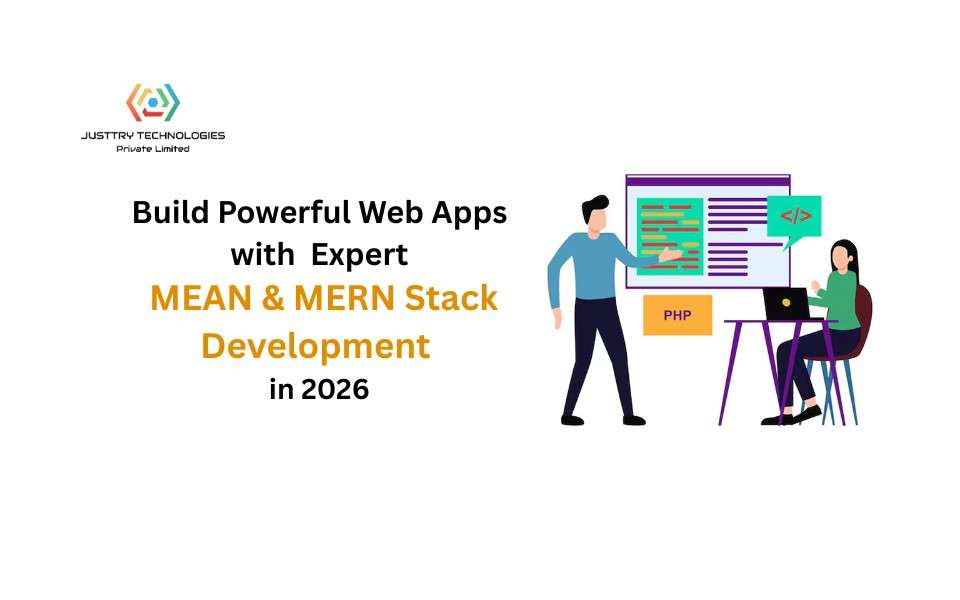
In this context, MEAN and MERN Stack Development Services have emerged as practical, result-oriented solutions rather than merely technological trends. These stacks are not adopted just because they are modern, but because they enable businesses to build scalable, high-performance, and user-centric applications that align closely with real-world business goals. By focusing on speed, flexibility, and maintainability, MEAN and MERN stacks empower organizations to deliver value faster while maintaining long-term sustainability.
One of the strongest advantages of both MEAN and MERN stacks is their unified JavaScript ecosystem. In these stacks, JavaScript is used consistently across all layers of application development—from the database and server to the client-side interface. MEAN typically includes MongoDB, Express.js, Angular, and Node.js, while MERN replaces Angular with React. Despite this difference, the architectural philosophy remains the same.
This single-language approach significantly reduces complexity in development. Developers do not need to switch between multiple programming languages to handle frontend and backend logic, which minimizes context switching and reduces the likelihood of integration errors. Using JavaScript throughout the application lifecycle ensures code consistency, improves collaboration among development teams, and accelerates development timelines.
Additionally, the unified ecosystem promotes better code reuse and cleaner architecture. Shared libraries, common data models, and consistent syntax across layers help maintain harmony in the codebase. As a result, development teams can focus more on solving business problems rather than managing technical inconsistencies.
Both MEAN and MERN stacks are designed with flexibility and performance at their core. They are particularly well-suited for applications that need to handle real-time data, dynamic user interactions, and frequent updates. Thanks to their non-blocking, event-driven architecture—primarily powered by Node.js—these stacks can efficiently manage multiple simultaneous requests without compromising performance.
The modular design of MEAN and MERN applications allows developers to update or enhance specific components without disrupting the entire system. This modularity is critical in fast-paced digital environments, where applications must continuously evolve to meet changing user expectations and market demands. Instead of rebuilding systems from scratch, businesses can incrementally improve features and performance.
Furthermore, the frontend frameworks used in these stacks—Angular in MEAN and React in MERN—are optimized for building highly responsive and interactive user interfaces. They support component-based development, which improves rendering efficiency and ensures a smoother user experience, even in complex applications.
Full stack development plays a vital role in aligning business strategy with technical implementation. By managing both frontend and backend development within a unified framework, organizations can ensure that their applications reflect business objectives accurately and consistently.
This holistic approach eliminates communication gaps that often occur when frontend and backend teams work in isolation. With full stack development, design decisions, data structures, and business logic are closely aligned, resulting in fewer integration issues and faster iteration cycles. This alignment leads to improved transparency throughout the development process—from initial concept to final deployment.
Another major benefit is reduced time-to-market. Full stack development enables quicker prototyping, faster testing, and smoother deployments, allowing businesses to respond rapidly to market opportunities without sacrificing quality. In industries where speed and adaptability are critical, this advantage can be a decisive factor in achieving competitive success.
Successful MEAN and MERN implementations require more than basic knowledge of frameworks. An experienced MEAN or MERN Stack Developer must possess a deep understanding of system architecture, database design, and performance optimization. They need to be skilled in managing data flow, ensuring security, and designing scalable systems that can grow alongside business requirements.
Beyond technical proficiency, expert developers approach application development from a user-centric perspective. They consider how users interact with the system, how quickly data is delivered, and how seamlessly the interface responds to user actions. This mindset helps create applications that are not only technically sound but also intuitive and engaging.
Moreover, experienced developers anticipate future challenges. They design systems with extensibility in mind, ensuring that new features can be added without introducing instability or excessive technical debt. This foresight is essential for building applications that remain reliable and relevant over the long term.
Scalability is one of the most significant advantages of MEAN and MERN stack development. Applications built using these full stack technologies are inherently designed for horizontal scaling, making them ideal for growing businesses and high-traffic platforms. Their compatibility with cloud infrastructure and microservices architecture ensures that applications can handle increased workloads efficiently.
Asynchronous programming capabilities allow these applications to process multiple requests simultaneously, reducing response times and improving overall performance. Whether dealing with sudden traffic spikes or steady growth, MEAN and MERN applications maintain stability and speed.
Key advantages include:
These benefits translate directly into improved operational efficiency and better user satisfaction.
Long-term maintainability is a critical consideration for any business investing in digital solutions. MEAN and MERN stacks emphasize clean architecture, proper separation of concerns, and reusable components. This structure makes applications easier to maintain, debug, and enhance over time.
By reducing code duplication and promoting modular design, businesses can avoid the accumulation of technical debt. Updates and upgrades can be implemented smoothly, ensuring that the application remains aligned with evolving business needs and technological advancements.
Additionally, the strong community support behind MEAN and MERN technologies ensures continuous improvements, regular updates, and access to a wide range of tools and libraries. This ecosystem support further enhances the sustainability and future-readiness of applications built on these stacks.
MEAN and MERN stack development company practices at Justtry Technologies prioritize simplicity in design, robust security, and result-driven implementation rather than focusing solely on technology for its own sake. Successful web applications are never built by chance. They are the outcome of intelligent technology choices, thoughtful engineering, and a deep understanding of user expectations.
By leveraging MEAN and MERN stack development services, businesses can build scalable, high-performance, and maintainable applications that deliver real value. These stacks empower organizations to move quickly, adapt to change, and maintain consistency in an ever-evolving digital marketplace. Ultimately, they provide the foundation for sustainable digital growth and long-term success.

© 2025 Crivva - Hosted by Airy Hosting Managed Website Hosting.