Construction projects run on tight schedules. Delays raise costs and stress teams. One major cause is slow concrete supply. Mixing and transporting concrete takes many steps and workers. A self loading concrete machine offers a better way.
It combines loading, mixing, and pouring in one process. This cuts steps, labor, and waiting time. It also brings mixing to where you need it. In this blog, we show why picking this machine saves time and labor.
We link each point to real job needs. We focus on self loading concrete machine and concrete mixer machine types. Our aim is clear facts, not hype, for smart decisions.
Time is money on any site. Every hour lost adds to overheads. Labor is another big cost. Many crews spend hours moving materials and managing equipment.
Concrete work often drives the schedule. If mixing lags, crews wait and tasks pile up. Traditional mixing needs a loader, mixer operator, and water handler. Each person must coordinate moves.
Mistakes or delays in any step slow the next. This hurts daily output. A machine that reduces steps helps crews stay on track. It also lowers payroll and fatigue.
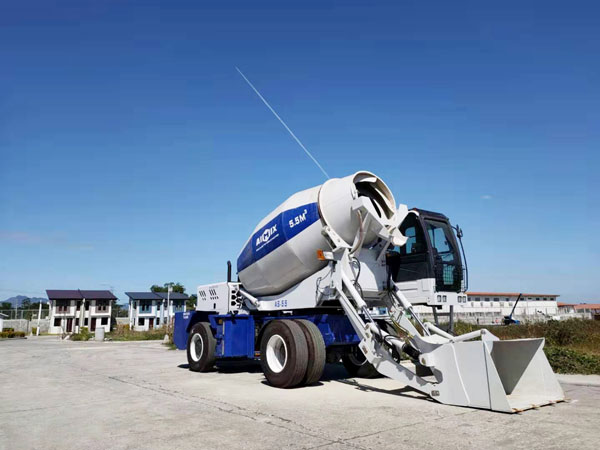
A self loading concrete machine is built to work with little help. It loads sand, gravel, and cement by itself. The operator drives to material piles and starts the loading process.
Water comes from an onboard tank. Mixing happens during or after loading. When ready, the machine unloads at the pour spot. No separate loader or transit truck is needed.
This is different from a basic concrete mixer machine. Standard mixers need materials delivered or loaded by hand or loader. They cannot gather raw ingredients alone.
The self loading type is mobile. You move it between pours without extra transport. It works on rough ground, slopes, or tight paths where larger trucks struggle.
First, it removes waiting for deliveries. You mix on site, so there is no traffic or plant delay. Second, it cuts loading time. The machine does it in minutes, not with multiple machines.
Third, it shortens the path from material to finished mix. You avoid moving mixed concrete between vehicles. Pouring happens right after mixing. This keeps concrete fresh and workable.
Also, batch cycles are faster. One operator manages the whole step. There is less handover between workers. This means more concrete per hour and fewer idle periods.
For large pours, the time saved adds up quickly. Crews finish sooner and move to the next task. Projects stay on schedule and avoid penalties.
A traditional mixing setup often needs three roles. Loader operator, mixer operator, and water manager. With a self loading concrete machine, one trained person can do all.
This halves or cuts labor costs. You need fewer hires and less coordination. Smaller crews face less miscommunication. Tasks pass smoothly from one step to the next.
Also, training time drops. New operators learn the control panel and loading arm quickly. They spend less effort on manual tasks and more on monitoring quality.
Fewer workers also mean less supervision. Managers focus on overall progress, not micromanaging material moves. This lifts site efficiency and safety.
A standard concrete mixer machine may be stationary or mobile. It mixes well but relies on external loading. You need a loader or workers to fill materials. This adds steps and labor.
A truck mixer carries ready-mix from a plant. It saves on-site mixing but depends on plant access and delivery timing. In remote areas, this fails. It also risks early setting during transit.
A self loading concrete machine removes those limits. It works off-grid and on scattered sites. It adapts to changing pour points without extra equipment.
For jobs far from plants or with limited labor, it is often the most practical choice. It balances mixing quality, mobility, and workforce needs.
Load sensors ensure correct material weights. This avoids remixing or weak batches. Water meters control water-cement ratio precisely. Operators get consistent mix quality with less guesswork.
Variable drum speed adjusts to mix design. Stiff mixes need slower blending. Loose mixes need faster rotation. Controls are simple, so changes take seconds.
Four-wheel drive and strong frames help on slopes and soft ground. You do not waste time clearing paths or waiting for access roads. The machine goes where the work is.
Onboard water tanks remove the need for hose connections. This speeds setup and avoids water shortages on site. Refill happens from tanks or nearby sources.
For road repairs, a self loading concrete machine moves along the route. It mixes and fills potholes or patches without waiting for trucks. This keeps traffic control periods short.
In building foundations, it pours slab after slab with fewer crew members. Material piles stay near the site, so loading is fast. Output stays steady across the job.
For rural or remote builds, it removes plant dependency. You work off-grid with diesel models. This opens jobs previously hard to reach.
Even in urban sites with space limits, it helps. It parks close to pour zones and unloads directly. There is no need for long chutes or hose runs.
Plan material piles close to work areas. This shortens loading travel. Check material quality before starting. Wet or dirty aggregates slow mixing and weaken concrete.
Train operators in all controls, including loading arm and water flow. Skilled operators avoid small errors that cause rework.
Clean the drum after each use. Hardened mix damages blades and slows future batches. This keeps cycle times consistent.
Match machine size to daily pour volume. Too small, and you run extra cycles. Too large, and you risk waste or high fuel use.
Do routine checks. Inspect tires, brakes, and hydraulic parts. Fix small faults early to avoid downtime. Keep spare parts for remote jobs.
List your typical job sizes and site access needs. Remote or plant-less sites gain most from a self loading concrete machine. Urban sites with space limits also benefit from its compact movement.
Think about pour frequency. Regular pours justify owning one. Occasional jobs may use rental to test before buying.
Check engine type. Diesel suits off-grid sites. Electric suits stable power areas. Review after-sales support and parts availability. Fast repairs mean less lost time.
Compare total cost, not just purchase price. Lower labor and faster pours cut project expenses. A reliable machine pays back through steady work output.
Picking a self loading concrete machine saves time and labor in clear ways. It loads, mixes, and pours without extra equipment or workers. This cuts steps, speeds cycles, and lowers payroll.
Compared to a standard concrete mixer machine, it offers more independence and mobility. It adapts to remote, tight, or scattered sites. It keeps concrete fresh and quality high.
By choosing the right model and using it well, you boost daily output and cut stress. Your crews work faster, and projects stay on track. Take time to match machine specs to your jobs. This way, you gain steady efficiency and reliable results every day.

© 2025 Crivva - Hosted by Airy Hosting Managed Website Hosting.