


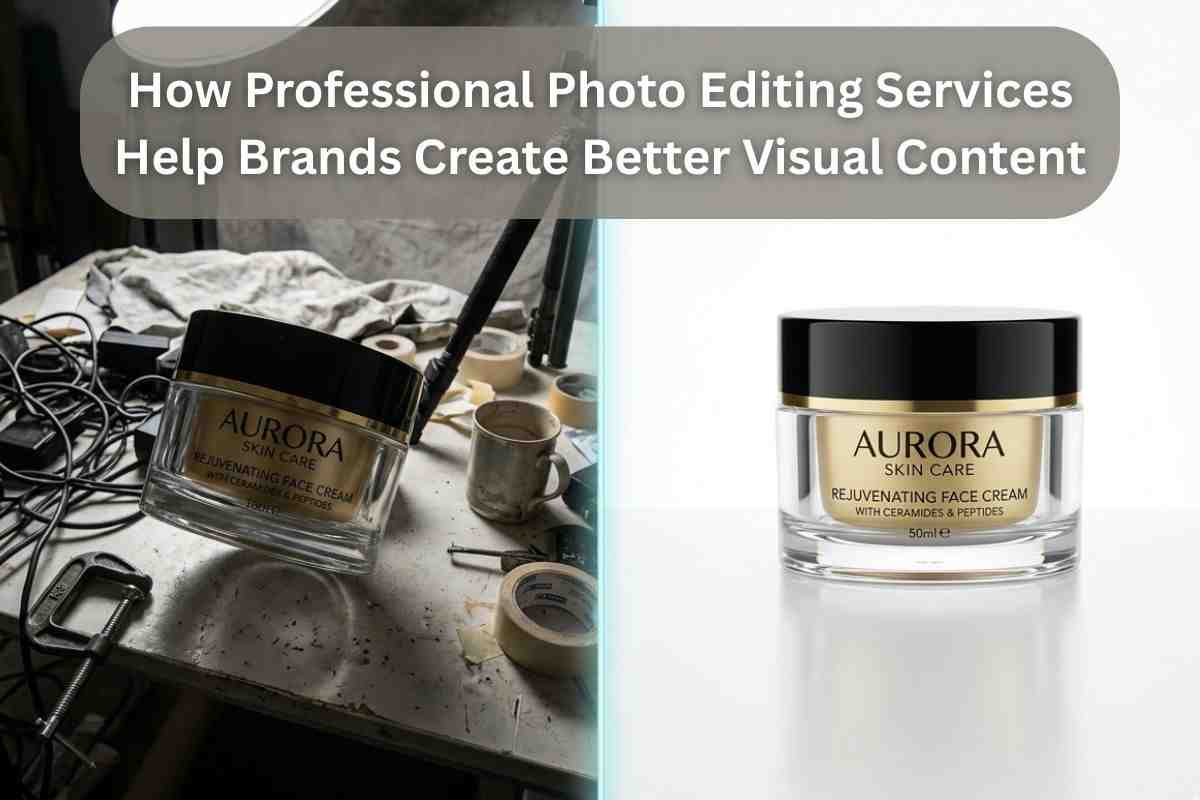
Today, in the world of digital marketing, consumers make their brand decisions in milliseconds. They don’t need to read a single line of promotional text before looking at a spec sheet or even a price tag—they already have an opinion on the visual presentation. The conventional method of developing these essential images over the last few decades has been to spend a lot of money on a complex photoshoot and have creative directors believe that the camera will do the rest. But this tedious approach is soon to be history. The first picture now is only a raw digital drawing board that needs to be refined, manipulated and perfected. Modern businesses are overhauling their creative processes to keep up with the high-volume, high-demand need for perfect imagery on various media. One of the key elements behind this change is the use of a professional photo editing service, which has completely redefined how marketers think, create, and scale their visual content.
Traditional photo shoots used to be a serious game of high-stakes, inflexible shoot. The entire project can be jeopardized if the lighting in the studio wasn’t quite right, if a product label reflected an unwanted light, or if an outdoor location shoot was interrupted by bad weather. This frequently resulted in expensive delays, budget overspending and aggravating reshoots. The attitude of the industry has changed from “getting it perfect on set” to “capturing the best possible raw data.
Photographers can now feel free to pay close attention to composition, framing and focusing, with the knowledge that specific retouchers will be looking after atmospheric corrections. With a professional photo editing service, brands can salvage poor images and transform good ones into great works of art. The shoot is no longer tied to the final product, and thus the production team doesn’t have to stop filming a multi-thousand-dollar studio session to adjust a slight shadow or fix a wisp of hair. They can get on set quicker with a complete sense of ease because all the heavy lifting of lighting corrections, blemish corrections and background cleaning will happen in post.
Today’s modern brand needs a ton of content, and a ton of visual content. “One product, one hero” is no longer the rule for a catalogue. This same release requires high resolution banners on the website home page, square images for Instagram, vertical layouts for TikTok and Pinterest, and sharp, white background cutouts for marketplaces such as Amazon.
It’s a logistical nightmare to create and format all these different variations, and in-house creative teams will soon run out of steam. The new and speedy method is to create a large batch of quality photos at a central location, and then send them off to a professional photo editing company for manipulation. These special crews have the infrastructure and software skills needed to quickly crop, resize, color-match and optimize thousands of images for different platforms according to the exact technical requirements of dozens of different platforms. Whether it’s on a giant billboard or on a mobile app while taking the bus to work, the brand’s visual story remains consistent and professionally crafted.
One of the most significant shifts in the creation of visual content is the advent of virtual variations and digital manipulation. Imagine a fashion house, a home retailer or an electronic company, coming up with a new item in fifteen different colors. The traditional approach to making this a reality was to make all 15 physical prototypes, which was very expensive, wasteful and time consuming, and then photograph each one separately.
Nowadays, designers can create and take a picture of just one base design. The master file can then be sent out to a professional photo editing service, and the file can be digitally recolored to exactly match the other fourteen SKUs and be photorealistic. They can create an extensive, varied catalog from a small portion of the real inventory, can map complex textures, and can adjust digital shadows to fit in with the new colors naturally. Not only does this improve the production budget and time of the studio but it also gives brands the opportunity to market test new colours and designs on the computer before manufacturing them, which is very cost and time intensive.
Online shoppers have a sensory shortcoming, as they have no chance to feel the weight of the hardware, touch the fabric or get up close and personal with the craftsmanship of a product. The digital photo will fill this in completely. Many high quality products may not have the same level of quality in standard, unaltered photos.
These subtle elements have to be realised using advanced post-production techniques. A professional photo editing service brings hyper-realistic images that help gain the trust of the consumer instantly. Editors use techniques such as focus stacking, high-end ghost mannequin editing for clothing and advanced clipping paths to produce images that truly pop. These images capture the product in detail, free from any distracting background, which can help to improve its conversion rate. Once you’ve got a product that’s obviously high-quality and the detail is presented perfectly, customers are much more likely to click the “add to cart” button and, crucially, much less likely to return the product once it arrives.
Stunning visual content has become a basic element of digital marketing, and it has been proven that it is a powerful tool for engagement, trust and revenue. Brands simply cannot afford to see post production as a ‘nice to have’ or a low priority at the end of the process. It’s the foundation technology that enables scalable content, brand consistency, and stunning quality across all consumer touchpoints. Overhauling the production process and opting into the digital retouching techniques will have a significant impact on the reduction of overheads while at the same time bolstering the market presence and speed to launch of the company. In the end, outsourcing this critical job guarantees that a brand’s imaginative and prescient will by no means be sacrificed to internal technical constraints or bandwidth limitations. An industry leader such as Visuals Clipping can offer technical expertise and creative agility that empowers businesses with the capacity to transform every capture into a captivating, lucrative brand statement.

© 2025 Crivva - Hosted by Airy Hosting Managed Website Hosting.