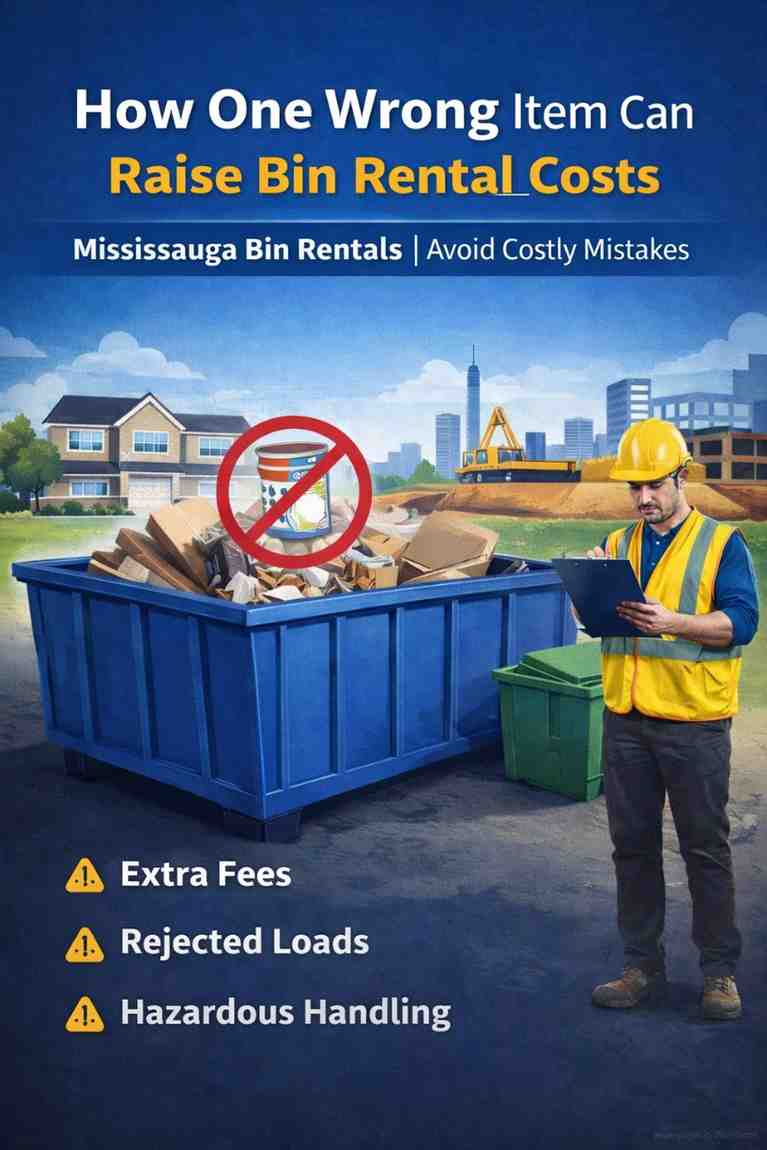
When renting a waste bin for a home renovation, cleanup, or construction project, most people focus on choosing the right size and rental duration. What often gets overlooked is what actually goes into the bin. Surprisingly, just one wrong item can significantly increase your final bill—or even cause delays in pickup.
If you’re planning a mississauga bin rental, understanding how improper items impact disposal costs can help you avoid unnecessary charges, project slowdowns, and compliance issues. This guide explains how a single prohibited or restricted item can drive up costs and what you can do to prevent it.
Waste disposal is not priced solely by volume. Disposal facilities sort, process, and charge based on material type, weight, and handling requirements. When a bin contains an item that doesn’t belong, it disrupts the disposal process.
Even one incorrect item can:
Trigger additional sorting fees
Require special handling
Cause overweight penalties
Result in bin rejection
Delay pickup or replacement
These issues often lead to unexpected charges that could have been easily avoided.
Many customers unintentionally place restricted materials in their bin, assuming everything can be thrown away together. Here are some of the most common cost-increasing items.
Items like paint cans, chemicals, solvents, automotive fluids, and pesticides are not accepted in standard bins. These materials require specialized disposal methods.
Cost impact:
Environmental handling fees
Additional transport charges
Possible refusal by disposal facilities
Televisions, computers, lithium batteries, and power tools contain components that require separate recycling.
Cost impact:
Sorting penalties
Recycling surcharges
Pickup delays
Mattresses and large upholstered items take up significant space and require extra processing.
Cost impact:
Special item surcharges
Reduced usable bin capacity
Tires cannot be processed with regular construction or household waste due to recycling regulations.
Cost impact:
Separate disposal fees
Rejected loads
Concrete, soil, bricks, or asphalt mixed into a general waste bin can quickly exceed weight limits.
Cost impact:
Overweight charges
Load redistribution fees
Disposal facilities often process bins as a single load. If even one prohibited item is found, the entire bin may be classified differently.
This can result in:
The full load being charged at a higher rate
Manual sorting costs passed back to the customer
Additional landfill or recycling fees
Delays while issues are resolved
In some cases, bins may be returned without being emptied, causing project disruptions.
Most bin rentals include a weight allowance. One heavy or dense item—such as concrete chunks or wet soil—can push the bin over that limit.
Examples:
One wheelbarrow of soil can weigh more than expected
Old roofing shingles absorb moisture and become heavier
Appliances add significant weight quickly
Exceeding weight limits leads to per-ton overage charges, increasing the final invoice.
Waste disposal regulations aren’t arbitrary. They are designed to:
Protect landfill infrastructure
Ensure environmental compliance
Prevent contamination of recyclable materials
Keep workers and equipment safe
Following these rules helps keep costs predictable for everyone involved.
Preventing added costs is easier than dealing with them later. Here’s how to protect your budget.
If you’re unsure about an item, confirm whether it’s allowed before placing it in the bin.
Set aside electronics, hazardous materials, and specialty items for proper disposal.
Some projects benefit from multiple bins—one for general waste and one for heavy materials.
Place heavier materials evenly and avoid mixing them with light debris.
Bins filled above the rim can lead to rejected pickups and extra fees.
Local disposal requirements can vary. Working with a provider familiar with Mississauga waste regulations ensures smoother processing and fewer surprises.
All Stars Disposal Inc. helps customers understand acceptable materials, weight limits, and best loading practices—reducing the risk of unexpected costs during a mississauga bin rental.
A homeowner completing a basement renovation places leftover paint cans into a general waste bin. During disposal, the load is flagged due to hazardous material contamination.
Result:
Manual sorting fee
Hazardous waste processing charge
Pickup delay
Additional disposal invoice
What seemed like a small oversight ended up costing far more than proper disposal would have.
Another often-overlooked cost trigger is cross-contamination of recyclable materials. When recyclable items such as clean wood, metal, or cardboard are mixed with food waste, liquids, or prohibited materials, disposal facilities may no longer be able to process them as recyclables. Instead, the entire load may be redirected to landfill disposal, which carries higher tipping fees. This not only increases your final cost but also eliminates potential environmental benefits that come from proper sorting. Simple steps like keeping recyclables dry and separating materials can prevent unnecessary reclassification fees.
Even a single prohibited item can cause the entire load to be reclassified, resulting in higher disposal fees or rejected pickup.
Yes. If identified early, removing the item can prevent additional charges.
No. Some heavy materials require specific bin types due to weight and disposal regulations.
Most rental providers supply a list of accepted and prohibited items. When unsure, always ask.
For mixed projects, using separate bins for different materials can reduce overweight and contamination fees.
One wrong item may seem insignificant, but when it comes to waste disposal, it can have a major financial impact. Understanding what belongs in your bin—and what doesn’t—protects your project timeline, keeps disposal compliant, and prevents unexpected charges.
When planning a mississauga bin rental, taking a few extra minutes to sort materials properly can save time, money, and frustration. Responsible disposal isn’t just about following rules—it’s about making your project more efficient from start to finish.

© 2025 Crivva - Hosted by Airy Hosting Managed Website Hosting.