Introduction
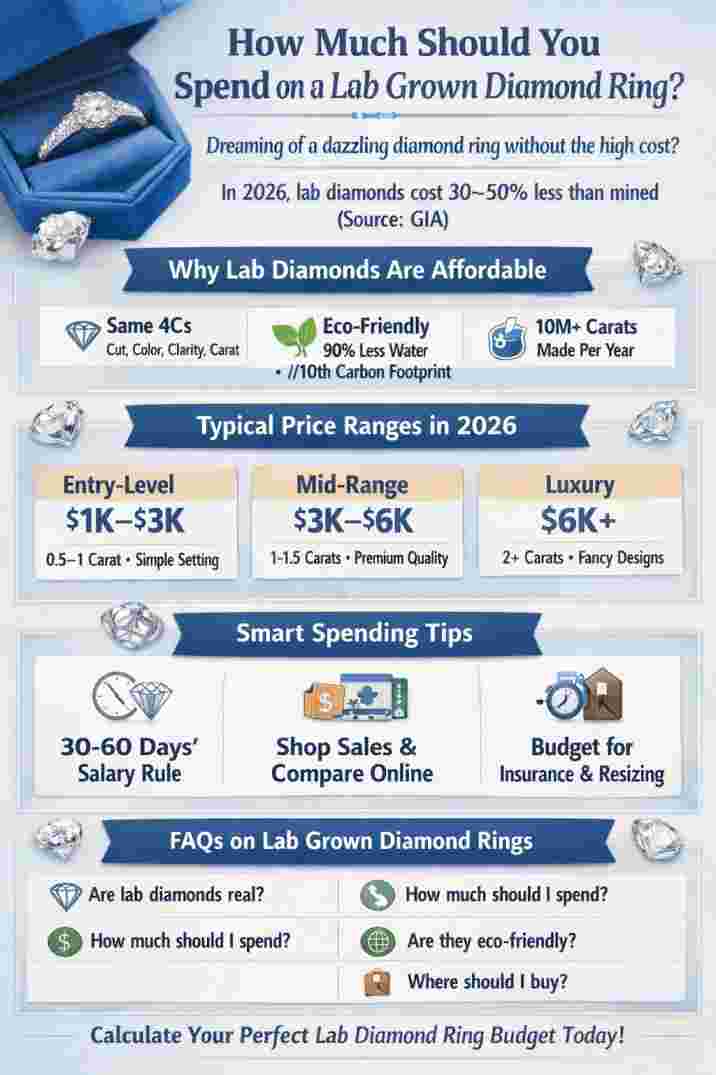
Dream of a sparkling diamond ring without breaking the bank? You’re not alone. In 2026, more couples than ever are choosing a lab grown diamond ring because it looks identical to a mined diamond—but costs far less. According to GIA data, lab grown diamonds are 30–50% cheaper than natural diamonds this year, making dream rings suddenly realistic instead of “maybe someday.”
But here’s the big question: how much should you actually spend?
Is ₹1 lakh enough? Is ₹3 lakh too much? And how do you avoid overpaying?
In this guide, we’ll break down:
-
What makes lab grown diamond rings affordable
-
The real factors that drive prices
-
Typical budgets in 2026
-
Smart strategies to spend wisely
By the end, you’ll walk away with a clear, confident spending plan—no guesswork, no regret.
What Makes Lab Grown Diamonds Affordable?
Production Process Basics
Lab grown diamonds aren’t “fake” or “synthetic.” They’re real diamonds, created in controlled labs using advanced technology instead of mined from the earth.
Two main methods are used:
-
CVD (Chemical Vapor Deposition)
-
HPHT (High Pressure High Temperature)
These methods replicate natural diamond formation—but in weeks instead of billions of years. By 2026, labs worldwide produce over 10 million carats annually, which increases supply and keeps prices competitive.
Key takeaway:
Same chemical, physical, and optical properties as mined diamonds—just without the inflated rarity pricing.
Quality Grades Explained (The 4Cs)
Lab grown diamonds are graded using the same 4Cs as mined diamonds:
-
Cut – how well the diamond reflects light
-
Colour – how white or colorless it appears
-
Clarity – internal or surface imperfections
-
Carat – weight and size
For example:
-
A 1-carat, E-color, VS1 clarity lab grown diamond ring may cost around $2,500
-
The same specs in a mined diamond can cost $6,000 or more
As gem expert Sarah Lee puts it:
“Lab diamonds match nature perfectly—only the origin is different.”
Environmental Wins
Beyond price, lab grown diamonds are popular for ethical reasons:
-
❌ No destructive mining
-
💧 90% less water usage
-
🌍 Carbon footprint is nearly 1/10th of mined diamonds (EPA report, 2026)
Action step:
Look for certifications like IGI or GIA reports that verify quality and responsible sourcing.
Key Factors That Drive Ring Prices
Diamond Size and Specs
Carat weight has the biggest impact on price.
Typical 2026 lab grown diamond price ranges:
-
0.5 carat: $1,000–$2,000
-
1 carat: $2,000–$3,000
-
2 carats: $5,000+
💡 Pro tip:
Always prioritize cut quality over carat size. A well-cut 1.1-carat diamond often looks larger and brighter than a poorly cut 1.3-carat stone.
Real example:
A budget-conscious bride chose a 1.2-carat lab grown diamond ring for under $3,000, and it outshone larger but duller stones.
Setting and Metal Choices
The diamond isn’t the only cost—your setting matters too.
Common options:
-
Platinum: Adds ~$1,000 (durable, premium feel)
-
14K/18K Gold: Saves ~$500 compared to platinum
-
Solitaire settings: Reduce total cost by ~20%
Jeweler Mike Chen advises:
“Match the metal to the stone size—bigger diamonds look best with simple, clean settings.”
Retailer and Customization Impact
Where you buy matters—a lot.
-
Online retailers: ~$2,500
-
Traditional stores: ~$4,000 for the same ring
Customization also affects pricing:
-
Custom halos or pavé bands can increase costs by 15–25%
Actionable tip:
Use comparison tools from platforms like James Allen or Brilliant Earth to track fair pricing before buying.
Typical Price Ranges in 2026
Entry-Level Budgets ($1,000–$3,000)
What you get:
-
0.5–1 carat diamond
-
Good clarity and cut
-
Simple gold or solitaire setting
Example:
A couple bought a $2,200 lab grown diamond ring for daily wear—ethical, durable, and timeless.
Best for:
-
First-time buyers
-
Practical couples
-
Everyday elegance
Mid-Range Picks ($3,000–$6,000)
This is the sweet spot for most buyers.
What you get:
-
1–1.5 carats
-
Excellent cut, high color grades
-
Premium settings
📊 Stat:
About 60% of buyers choose this range (2026 Jewelers Board Survey).
Takeaway:
If you want the best balance of size, sparkle, and value—this is it.
Luxury Options ($6,000+)
For those who want serious wow-factor:
Features:
-
2+ carats
-
Fancy shapes (oval, emerald, pear)
-
Designer or custom settings
Real story:
A social media influencer showcased a 3-carat lab grown diamond ring for $8,500, gaining thousands of likes at half the mined diamond cost.
Designer Anna Ruiz says:
“Splurge smart—focus on standout specs, not hype.”
Smart Budgeting Strategies
Set Your Spending Limits
Forget outdated rules. Instead, use a flexible framework:
-
1–2 months’ salary as a reference—not a rule
-
Allocate:
-
60% to the ring
-
40% to band, insurance, and future resizing
-
Checklist:
-
Must-haves (size, shape, budget)
-
Nice-to-haves (brand, custom design)
-
Non-negotiables (certification, return policy)
Where to Shop and Save
Top lab grown diamond retailers in 2026:
-
VRAI
-
Lightbox
-
Clean Origin
💡 Money-saving hacks:
-
Shop during Black Friday or festive sales (up to 20% off)
-
Compare prices across platforms
-
Avoid unnecessary add-ons at checkout
Example:
One shopper saved $1,000 simply by using comparison tools before buying.
Hidden Costs to Watch
Many buyers forget these extras:
-
Insurance: ~$100/year
-
Resizing: ~$200
-
Extended warranties
📊 Stat:
About 25% of buyers overspend due to hidden costs (2026 Consumer Jewelry Report).
Action steps:
-
Ask for all costs upfront
-
Choose lifetime resizing if available
-
Read warranty terms carefully
So, How Much Should You Spend?
Here’s the honest answer:
Most lab grown diamond rings start around $1,000, with the average buyer spending about $3,500 in 2026.
Key Takeaways
-
Prioritize the 4Cs, especially cut
-
Match your ring to your real budget, not social pressure
-
Shop certified online retailers for the best deals
-
Always test comfort and wearability before finalizing
A lab grown diamond ring lets you spend smarter—not smaller.
Frequently Asked Questions (FAQs) About Lab Grown Diamond Rings
1. Are lab grown diamonds real diamonds?
Yes. Lab grown diamonds have the same chemical, physical, and optical properties as mined diamonds. The only difference is their origin—they’re made in a lab instead of in the earth.
2. Why are lab grown diamonds cheaper than mined diamonds?
They’re less expensive because lab production is faster, more controlled, and avoids costly mining, transportation, and middlemen. Prices are typically 30–50% lower in 2026.
3. How should I set my budget for a lab grown diamond ring?
A good approach: allocate 60% for the diamond and 40% for the setting, insurance, and resizing. Most buyers spend between $1,000–$6,000, depending on size and specs.
4. Do lab grown diamonds come with certifications?
Yes. Reputable labs like IGI, GIA, and GCAL certify lab grown diamonds, verifying the 4Cs (cut, color, clarity, carat) and confirming ethical sourcing.
5. Can I get a large carat lab grown diamond ring without overspending?
Absolutely. Because lab grown diamonds are cheaper than mined ones, you can afford 2+ carats or fancy shapes at a fraction of the cost. Prioritize cut and clarity for maximum sparkle.
6. Are lab grown diamonds eco-friendly?
Yes. They use 90% less water and have a carbon footprint one-tenth that of mined diamonds, making them a greener, ethical choice.
7. Where’s the best place to buy a lab grown diamond ring?
Certified online retailers like VRAI, Lightbox, Clean Origin, James Allen, or Brilliant Earth offer competitive pricing, customization options, and verified quality.
8. Are there any hidden costs I should watch for?
Yes. Insurance, resizing, and warranties can add a few hundred dollars. Always get a full quote before purchasing.