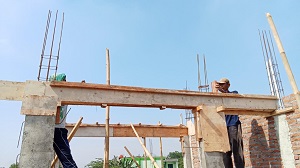
Concrete is everywhere. It forms the foundations of skyscrapers, the arches of bridges, and the walls of the buildings we work and live in every day. Yet behind every concrete structure lies a complex process of engineering, planning, and regulatory compliance that most people never see.
At Integra, we’ve spent years mastering this process—helping clients across the UAE bring their visions to life with precision and confidence. From initial concept to final sign-off, our team navigates every technical and regulatory challenge so you don’t have to.
This post breaks down what goes into the design of concrete structures, why compliance with Dubai Municipality standards is non-negotiable, and how Integra delivers both with consistency and expertise.
Before getting into the design process, it’s worth understanding why concrete remains the material of choice for construction projects worldwide. It’s strong, durable, fire-resistant, and relatively cost-effective. When reinforced with steel—commonly known as reinforced concrete or RC—it becomes capable of handling enormous loads and withstanding significant environmental stress.
But these strengths only hold when the structure is designed correctly. Poor design decisions, inadequate load calculations, or substandard material specifications can compromise a building’s safety and longevity. That’s why the Design of Concrete Structures is a discipline that demands both technical expertise and careful attention to detail.
The design of concrete structures is a multi-stage engineering process that transforms an architectural vision into a safe, buildable reality. At its core, it involves calculating how a structure will behave under various loads—dead loads, live loads, wind, seismic activity, and more—and then specifying concrete mixes, reinforcement layouts, and structural dimensions accordingly.
Here are the key stages Integra follows:
Structural Analysis
Before a single column or beam is designed, engineers must understand how forces will travel through the structure. This involves modeling the building using advanced software to simulate load paths, deflections, and stress concentrations.
Material Specification
Not all concrete is created equal. The right mix depends on the project’s location, environmental exposure, and structural requirements. In high-humidity environments like Dubai, for example, concrete mixes must resist sulfate attack and chloride penetration to prevent premature deterioration.
Reinforcement Design
Steel reinforcement compensates for concrete’s low tensile strength. Engineers calculate the required bar sizes, spacing, and placement to ensure the structure can handle bending, shear, and torsion safely.
Detailing and Drawings
Once the calculations are complete, the design is translated into detailed construction drawings. These drawings guide the site team and form part of the documentation submitted for regulatory approval.
Peer Review and Quality Assurance
At Integra, every structural design undergoes an internal peer review before submission. This step catches errors early and ensures the design meets both client requirements and applicable codes.
The codes most commonly applied in UAE projects include ACI 318 (American Concrete Institute), BS 8110 (British Standard), and Eurocode 2—each with slightly different methodologies and safety factors. Selecting the appropriate code depends on the client’s preference, the nature of the project, and the requirements of the approving authority.
Designing a structurally sound building is only half the battle. In Dubai, all construction projects must comply with the regulations set by Dubai Municipality—the government body responsible for overseeing urban planning, construction standards, and public safety across the emirate.
Dubai Municipality enforces a comprehensive set of building codes and technical guidelines that govern everything from structural design and fire safety to sustainability and accessibility. For structural engineers, the most relevant of these are the Dubai Building Code (DBC) and the associated technical circulars that specify loading standards, material requirements, and inspection protocols.
Getting a project approved by Dubai Municipality involves multiple stages:
Navigating this process requires more than just technical knowledge. It demands experience with the specific documentation formats, submission portals, and reviewer expectations of Dubai Municipality. Delays in approval can have significant knock-on effects for project timelines and budgets—making it critical to get submissions right the first time.
Integra has built strong working relationships with Dubai Municipality reviewers over many years of practice. We understand what they look for, how they interpret the codes, and how to present complex structural systems in a way that’s clear and easy to review. The result is faster approvals and fewer costly revisions for our clients.
Even experienced teams encounter challenges when designing and building concrete structures. Here are some of the most common issues Integra helps clients navigate:
Foundation Conditions
Dubai’s coastal geography means that many sites have sandy, compressible soils or high groundwater tables. These conditions require specialized foundation designs—such as piled foundations or raft slabs—that can add complexity and cost if not anticipated early.
Thermal Expansion
Extreme heat is a fact of life in the UAE. Concrete expands and contracts with temperature changes, and structures that don’t account for this can develop cracks over time. Integra incorporates expansion joints and appropriate material specifications to manage this risk.
Coordination with Other Disciplines
A structural design doesn’t exist in isolation. It must coordinate with the architectural, mechanical, electrical, and plumbing disciplines to ensure that penetrations, service routes, and finishes don’t conflict with structural elements. At Integra, we use Building Information Modeling (BIM) to manage this coordination efficiently.
Sustainability Requirements
Dubai has set ambitious sustainability targets, and buildings are increasingly expected to meet green building standards such as Al Sa’fat—Dubai’s own green building rating system. Structural engineers can contribute to sustainability goals by specifying low-carbon concrete mixes, minimizing material waste through efficient design, and supporting the integration of renewable energy systems.
Integra has a proven track record delivering structural engineering services across Dubai and the wider UAE. Our team combines deep technical expertise with practical construction knowledge, allowing us to design structures that are not only safe and code-compliant but also efficient to build.
We’ve worked on a wide range of project types—residential towers, commercial buildings, industrial facilities, and infrastructure projects—giving us the versatility to handle whatever challenges your project presents.
Our approach is collaborative. We work closely with architects, contractors, and clients from the earliest stages of design, ensuring that structural decisions support the overall project vision rather than constrain it. And when it comes to regulatory submissions, our familiarity with Dubai Municipality processes means we handle the paperwork so your team can focus on delivery.
The design of concrete structures is a discipline that sits at the intersection of science, engineering judgment, and practical experience. Getting it right requires more than just running the numbers—it requires understanding the local environment, navigating the regulatory landscape, and coordinating effectively across disciplines.
At Integra, we bring all of that to every project we take on. If you’re planning a construction project in Dubai and need a structural engineering partner you can trust, we’d love to hear from you. Reach out to the Integra team today to discuss how we can support your next build.

© 2025 Crivva - Hosted by Airy Hosting Managed Website Hosting.