

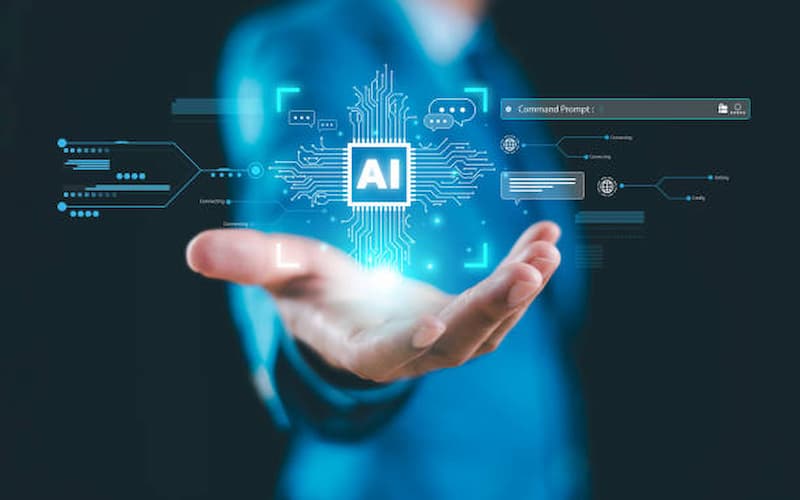
Artificial Intelligence (AI) is transforming nearly every aspect of modern business, and IT infrastructure consulting is no exception. What was once a heavily manual, experience-driven discipline is now evolving into a data-driven, automated, and predictive function powered by advanced AI systems. Organizations today are no longer just building infrastructure—they are designing intelligent ecosystems that continuously adapt and improve.
In this evolving landscape, IT infrastructure consulting for businesses in Saudi Arabia is experiencing a major shift. As enterprises across the region accelerate digital transformation, AI is becoming a core enabler for designing scalable, secure, and cost-efficient infrastructure environments that align with national digital growth ambitions and enterprise modernization goals.
This transformation is not incremental—it is structural. AI is redefining how infrastructure is planned, deployed, monitored, optimized, and governed.

Traditionally, infrastructure consulting focused on designing IT environments based on fixed requirements. Consultants would assess business needs, recommend hardware and software, and help organizations build data centers, networks, and system architectures.
The process was largely:
While this model worked for years, it is no longer sufficient in an environment where businesses demand real-time responsiveness, scalability, and continuous optimization.
AI has introduced a completely new consulting paradigm—one where infrastructure is not only built but continuously optimized through intelligent systems.
AI has become the core engine behind modern infrastructure consulting. Instead of relying solely on human expertise and static reports, consultants now leverage AI-powered platforms to analyze, predict, and optimize infrastructure performance.
The result is a shift from traditional consulting to intelligent infrastructure advisory, where decisions are guided by real-time data, predictive models, and machine learning insights.
Key capabilities AI brings into infrastructure consulting include:
This fundamentally changes the speed and accuracy of infrastructure decision-making.
One of the most impactful changes AI brings is predictive capability. Instead of waiting for systems to fail or degrade, AI models analyze usage patterns, traffic loads, and system health indicators to forecast potential issues.
This enables businesses to:
Predictive infrastructure management is shifting consulting from “fixing problems” to “preventing problems.”
AI is enabling widespread automation across infrastructure environments. Tasks that previously required manual intervention are now executed automatically, including:
This automation significantly reduces operational overhead and allows IT teams to focus on strategic initiatives rather than repetitive maintenance tasks.
Infrastructure consulting is no longer just about deploying systems—it is about designing intelligent ecosystems. AI tools analyze business goals, application usage, and workload patterns to recommend optimized infrastructure architectures.
This leads to:
Instead of static blueprints, businesses now get adaptive infrastructure models that evolve with demand.
Security is a critical component of infrastructure consulting, and AI has dramatically improved how threats are detected and mitigated.
AI-powered security systems can:
This proactive security approach is essential in protecting complex enterprise infrastructures, especially in cloud-heavy environments.
As cloud adoption grows, managing cloud resources efficiently has become a major challenge. AI helps infrastructure consultants optimize cloud environments by:
This ensures businesses get maximum value from their cloud investments while maintaining performance and cost efficiency.
With AI handling much of the technical optimization, the role of infrastructure consultants is evolving significantly. They are no longer just system architects—they are becoming strategic advisors and transformation enablers.
Modern infrastructure consultants now focus on:
This shift requires consultants to combine technical expertise with strategic business insight, making the role more complex and more valuable.
The integration of AI into infrastructure consulting delivers significant advantages for businesses:
Automation reduces manual effort and accelerates IT operations.
AI optimizes resource usage and eliminates unnecessary infrastructure spending.
Predictive monitoring reduces downtime and improves system stability.
Real-time insights enable quicker infrastructure and business decisions.
AI ensures infrastructure can expand seamlessly with business growth.
Despite its advantages, AI adoption is not without challenges:
Integrating AI systems into existing infrastructure can be technically demanding.
Many organizations lack professionals experienced in AI-driven infrastructure management.
AI systems require high-quality, structured data to function effectively.
Increased automation and data usage introduce new security and privacy considerations.
Addressing these challenges requires careful planning, skilled consulting support, and phased implementation strategies.
The future of infrastructure consulting is moving toward fully intelligent and autonomous systems. Over time, businesses will see the rise of:
In this future, infrastructure will no longer be static or manually controlled. Instead, it will function as a dynamic, self-optimizing ecosystem that continuously aligns with business goals.
AI is fundamentally redefining infrastructure consulting by transforming it from a reactive technical service into a proactive, intelligent, and strategic discipline. Businesses now have the ability to build infrastructure systems that not only support operations but actively improve performance over time.
As digital transformation accelerates globally, the role of AI in infrastructure consulting will only continue to grow. Organizations that adopt these capabilities early will benefit from improved efficiency, reduced costs, stronger security, and greater agility in an increasingly competitive environment.

© 2025 Crivva - Hosted by Airy Hosting Managed Website Hosting.