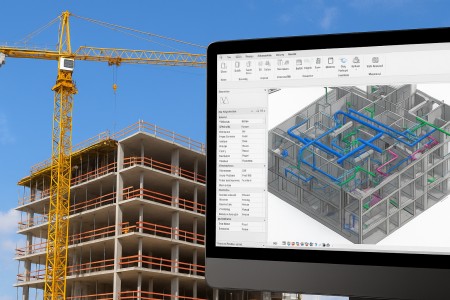
In the modern construction and engineering world, project demands are evolving faster than ever. Tight deadlines, rising project complexity, and the need for precise coordination have pushed companies to adopt smarter workflows. One of the most effective strategies that businesses now rely on is BIM and CAD outsourcing. By partnering with experienced engineering service providers, companies can reduce workload pressure, improve accuracy, and deliver projects faster—without compromising quality.
Today, BIM and CAD outsourcing is not just a trend. It has become a valuable tool for construction companies, architects, MEP engineers, contractors, and design consultants who want to streamline their operations and focus on core project goals. Here’s how outsourcing transforms the way engineering projects are delivered—and why it continues to grow in demand across the globe.
Finding skilled BIM modellers, CAD drafters, and MEP engineers is a challenge for many organisations. Recruiting, training, and retaining in-house technical teams is expensive and time-consuming. Outsourcing solves this problem instantly. Companies get immediate access to trained professionals who are experienced in tools like Revit, AutoCAD, Navisworks, Recap, SolidWorks, and BIM 360.
This expert support ensures that your project is handled by people who understand global standards, industry codes, and best practices. Instead of spending months building an in-house team, you can start design and modelling work quickly and confidently.
One of the biggest advantages of BIM and CAD outsourcing is its cost efficiency. Setting up internal infrastructure—software licenses, high-performance computers, and training programs—requires a large investment. Outsourcing removes these expenses entirely.
Companies pay only for the services they need, whether it’s:
2D drafting
3D BIM modelling
Revit family creation
MEP coordination
Clash detection
HVAC design
As-built documentation
Point cloud to BIM conversion
This flexible approach helps businesses save up to 40–60% in operational costs, all while maintaining a high level of quality. For growing companies or those handling multiple projects, outsourcing becomes a financially sustainable solution.
Today’s construction projects rely heavily on precise digital models. BIM outsourcing teams work with advanced workflows that ensure models are detailed, clash-free, and fully coordinated. Whether it’s architectural, structural, or MEP modelling, outsourcing helps eliminate design inconsistencies early in the project.
Accurate BIM models allow teams to:
Identify clashes before construction
Avoid rework and costly site delays
Improve coordination between different disciplines
Visualize the project clearly using 3D environments
This reduces uncertainties and gives project stakeholders a reliable digital foundation to make informed decisions.
Project workloads often change unexpectedly. Some weeks are slow, while others demand intense design and documentation work. Outsourcing provides the flexibility to scale up or down depending on project needs.
When a company needs a quick turnaround, outsourcing partners can assign additional modellers or engineers to speed up delivery. When the workload decreases, the company can simply pause or reduce outsourcing without any financial burden.
This scalability is especially beneficial for:
Large commercial buildings
Residential developments
Hospitals and schools
Industrial projects
Renovation and retrofit works
With the right outsourcing team, even tight deadlines become manageable.
BIM outsourcing partners have teams that include architects, structural engineers, MEP engineers, and CAD specialists. This multi-disciplinary support improves project coordination significantly.
For example:
Architectural and structural models can be aligned precisely
MEP systems can be coordinated to avoid clashes
HVAC layouts can be optimized for performance
Plumbing and electrical systems can be planned accurately
Fabrication drawings can be produced faster
This unified workflow helps avoid site conflicts, change orders, and confusion between project teams.
Design mistakes, missing details, and outdated documentation can lead to serious delays and budget overruns. Outsourcing reduces these risks by ensuring that every model and drawing is reviewed, quality-checked, and produced according to project specifications.
Professional BIM teams follow strict QA/QC workflows, including:
Clash detection reports
Model consistency checks
Compliance with international standards
Version control and audit trails
Detailed documentation
This reduces errors and helps maintain a smooth project flow from planning to completion.
Technology evolves quickly, especially in the BIM and CAD world. Outsourcing gives companies access to the latest tools and software without investing in expensive upgrades.
Outsourcing teams typically use:
Autodesk Revit for 3D modelling
Navisworks Manage for clash detection
AutoCAD for 2D drafting
Recap for point-cloud processing
BIM 360 for cloud collaboration
This ensures that your projects are developed using the most efficient tools in the industry.
By outsourcing repetitive and time-consuming tasks like drafting, detailing, and 3D modelling, companies can shift their focus to activities that help them grow—such as project planning, client communication, concept development, and site coordination.
It also reduces stress on internal teams, allowing them to perform better and contribute more creatively to the overall project vision.
Whether you’re a startup architecture firm or a well-established engineering company, outsourcing provides benefits across all levels. Small firms gain the ability to take on more projects without hiring additional staff, while large companies can handle massive workloads smoothly.
Outsourcing is especially beneficial for companies working across different countries and time zones. It enables 24/7 production cycles, reducing project duration dramatically.
Outsourcing BIM and CAD services helps project teams overcome one of the biggest challenges in construction—handling complex design tasks while maintaining accuracy and speed. By partnering with experienced outsourcing providers, firms gain access to specialists who work exclusively with advanced tools like Revit, AutoCAD, Navisworks, and BIM 360. This eliminates the pressure on in-house teams, reduces human errors, and creates a smoother workflow from concept to execution. With experts managing detailed modelling, clash detection, and documentation, companies can focus on core decisions and deliver better results without overstretching resources.
Another major advantage of outsourcing is its ability to support scalability. As projects grow in size and complexity, outsourced BIM and CAD teams can easily expand their efforts—whether it’s producing detailed LOD models, generating coordinated drawings, or supporting on-site teams with real-time updates. This flexibility ensures that construction schedules stay on track and design conflicts are identified early, reducing costly rework. By combining global expertise with cutting-edge digital workflows, BIM and CAD outsourcing significantly improves project quality while ensuring timely, cost-effective, and highly coordinated project delivery.
BIM and CAD outsourcing has become a powerful strategy for companies that want to deliver high-quality engineering projects efficiently. With expert support, advanced technology, and flexible service models, outsourcing ensures faster delivery, accurate designs, lower costs, and improved coordination.
As the construction industry continues to evolve, outsourcing provides the competitive advantage needed to stay ahead, making it a smart choice for engineering and construction firms worldwide.
visit us :https://cadeosys.com/
Email us : [email protected]
Contact us : 8281131222

© 2025 Crivva - Hosted by Airy Hosting Managed Website Hosting.