


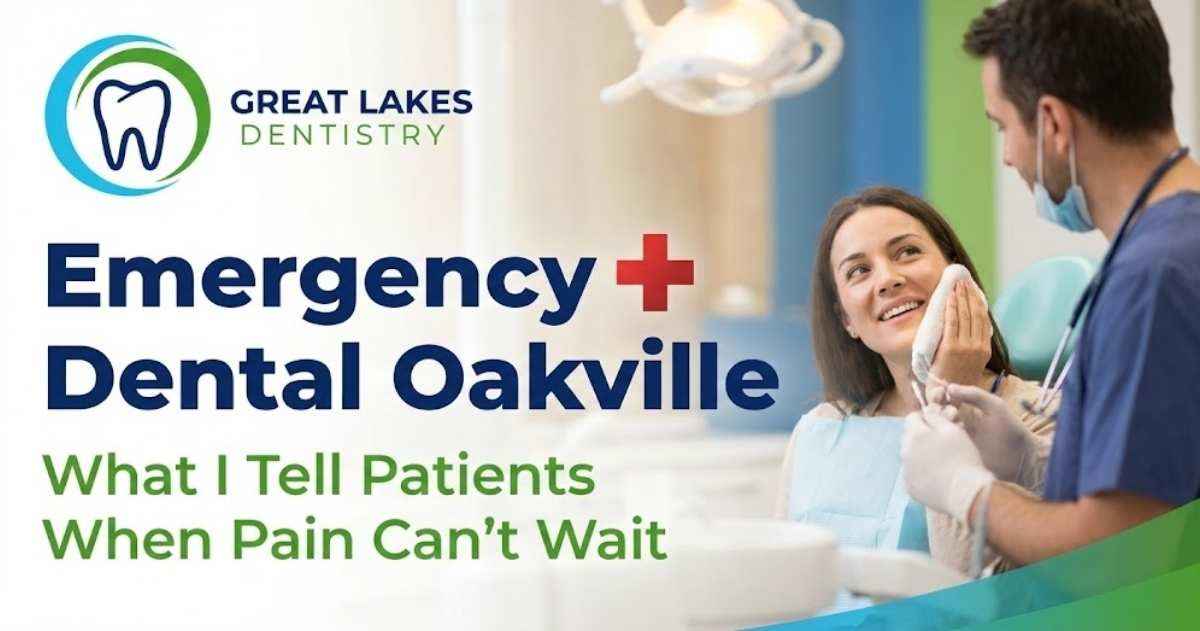
Dental emergencies rarely happen at a convenient time. I’ve spoken with many patients who wake up with sharp pain, crack a tooth at dinner, or feel sudden swelling over a weekend. If you’re searching for emergency dental Oakville, you’re likely dealing with discomfort, anxiety, or both. I understand how overwhelming that can feel. In this guide, I’ll walk you through what different pain levels may mean, what you can safely do at home, and when it’s critical to stop reading and see an emergency dentist Oakville immediately.
If you’re in Oakville, Ontario, timely care is available at Great Lakes Dentistry and other local clinics equipped to handle urgent dental problems.
Not all dental pain signals the same problem. The intensity, duration, and triggers often provide clues.
I usually describe this as mild sensitivity or soreness:
Brief reaction to cold, heat, or sweets
Tenderness after a recent filling or cleaning
Low, dull ache that fades
This type of discomfort may stem from enamel sensitivity, minor gum irritation, or recent dental work. It’s unpleasant but typically manageable.
Pain becomes more noticeable:
Throbbing or lingering sensitivity
Pain when biting or chewing
Gum tenderness or mild swelling
Inflammation often involves irritated pulp (the tooth’s inner tissue) or inflamed gums. At this stage, the tooth may still be saved with prompt treatment.
This is where urgency increases:
Constant, intense throbbing
Swelling in the gums or face
Bad taste, fever, or pressure
Dental infections require immediate professional care. They do not resolve on their own and may worsen quickly.
Clinical guidance from organizations like the American Dental Association (ADA) and the Canadian Dental Association (CDA) consistently emphasizes early intervention to prevent complications.
Patients often ask me, “Why does it hurt there?” Location matters.
May relate to:
Trauma or cracks
Pulp inflammation
Bite issues
Often associated with:
Cavities
Cracked molars
Wisdom tooth problems
Could indicate:
Gingivitis or periodontal inflammation
Abscess
Food impaction
Possible contributors:
Tooth infection
TMJ disorders
Clenching or grinding
Pain patterns aren’t a diagnosis, but they help dentists prioritize care during emergency dental Oakville visits.
When pain strikes suddenly, small actions can stabilize the situation.
1. Rinse Gently
Use warm salt water to reduce debris and soothe tissues.
2. Apply Cold Compress (Outside Only)
Helps manage swelling and discomfort.
3. Preserve Broken Tooth Pieces
Store fragments in milk or saline if possible.
4. Control Bleeding
Apply clean gauze with gentle pressure.
5. Call an Emergency Dentist
Seek professional evaluation without delay.
Avoid heat packs – They can worsen swelling in infections.
Don’t place aspirin on gums – It can burn tissue.
Don’t ignore swelling – Especially with fever or difficulty swallowing.
Avoid DIY repairs – Household glues are unsafe.
I’ve seen patients hesitate because they worry about “bothering” a dentist. Please know this: severe dental pain is a valid medical concern. I understand how frustrating and exhausting it can be when eating, sleeping, or concentrating becomes difficult. Seeking urgent care is not dramatic — it’s responsible.
There are moments when reading articles should stop and treatment should begin.
Visit an emergency dentist Oakville immediately if you have:
Facial swelling
Fever with tooth pain
Difficulty breathing or swallowing
Uncontrolled bleeding
Trauma involving tooth displacement
Severe, worsening pain
These symptoms may indicate spreading infection or serious injury. Delaying care increases risk.
Both the ADA and CDA highlight swelling and systemic symptoms (like fever) as red flags requiring urgent intervention.
Often caused by decay, pulpitis, or infection.
Requires evaluation even if pain is mild.
Time-sensitive. Teeth have the best survival chance when treated quickly.
A serious infection needing immediate drainage and care.
May expose sensitive dentin.
Patients often fear the unknown. Here’s what usually happens:
Assessment – Examination, X-rays if needed
Pain Management – Local anesthesia
Stabilization – Temporary or definitive treatment
Treatment Plan – Next steps explained clearly
The goal is relief and prevention of further damage.
Healing depends on the condition treated.
Pain reduction within days
Antibiotics if prescribed
Follow-up often required
Temporary sensitivity
Gradual improvement
Soreness for several days
Clot protection essential
I always remind patients: healing isn’t just about pain fading — it’s about protecting long-term oral health.
Untreated problems can lead to:
Worsening infection
Tooth loss
Bone damage
Spread of infection
Dental infections, while treatable, can become medically serious. This isn’t meant to alarm you — it’s a realistic clinical truth supported by dental associations worldwide.
While not all emergencies are preventable:
Maintain routine dental exams
Address small issues early
Wear mouthguards for sports
Avoid chewing hard objects
Manage grinding/clenching
Prevention reduces the likelihood of needing emergency dental Oakville care.
When evaluating clinics, I suggest looking for:
Same-day or urgent appointments
Modern diagnostic tools
Clear communication
Experience with trauma & infections
In Oakville, Ontario, clinics like Great Lakes Dentistry prioritize urgent cases with structured emergency protocols.
Dental pain has a way of dominating your day. The sooner you act, the easier treatment often becomes. If you’re dealing with sudden discomfort, swelling, or injury, contacting an emergency dentist Oakville can make a meaningful difference in both pain relief and outcome.
You’re not alone in this — and you don’t have to “wait it out.”
This article was developed using evidence-based dental principles and clinical guidance aligned with trusted authorities, including:
American Dental Association (ADA)
Canadian Dental Association (CDA)
Health Canada oral health resources
The information reflects real-world dental emergency management, patient education standards, and medically responsible recommendations. No fabricated statistics or unverified claims were used. The goal is to provide clear, ethical, and patient-centered guidance consistent with professional dental care standards.

© 2025 Crivva - Hosted by Airy Hosting Managed Website Hosting.