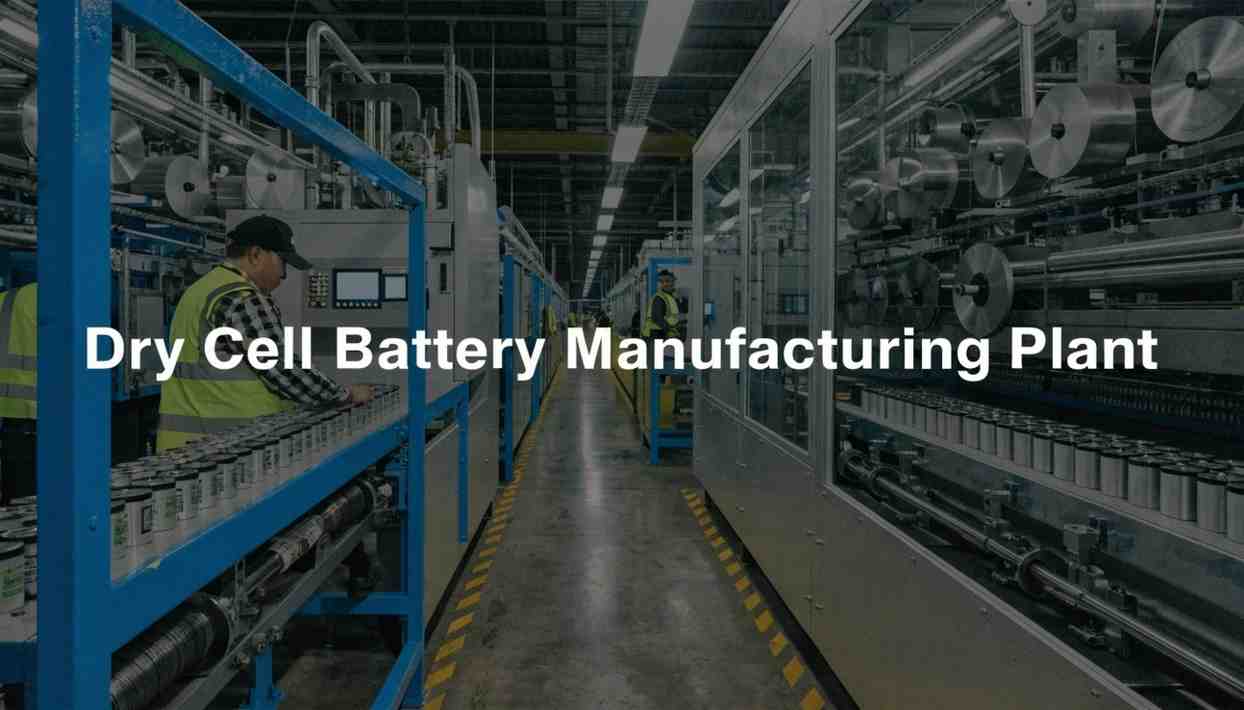
IMARC Group’s “Dry Cell Battery Manufacturing Plant Project Report 2026: Industry Trends, Plant Setup, Machinery, Raw Materials, Investment Opportunities, Cost and Revenue” report provides a comprehensive guide on how to successfully set up a dry cell battery manufacturing plant. The report offers clarifications on various aspects, such as unit operations, raw material requirements, utility supply, infrastructural needs, machinery models, labour necessities, transportation timelines, packaging costs, etc.
In addition to the operational aspects, the report also provides in-depth insights into dry cell battery manufacturing plant cost, process, project economics, encompassing vital aspects such as capital investments, project funding, operating expenses, income and expenditure projections, fixed and variable costs, direct and indirect expenses, expected ROI, net present value (NPV), profit and loss account, and thorough financial analysis, among other crucial metrics. With this comprehensive roadmap, entrepreneurs and stakeholders can make informed decisions and venture into a successful dry cell battery manufacturing unit.
What is a Dry Cell Battery?
A dry cell battery is a type of electrochemical battery that generates electrical energy through a chemical reaction between its internal components, while using a paste electrolyte instead of a liquid one. This design prevents leakage and makes the battery portable, compact, and easy to handle. The most common dry cell battery is the zinc-carbon battery, though alkaline variants are also widely used for better performance and longer shelf life. A typical dry cell consists of a zinc anode, a carbon cathode surrounded by manganese dioxide, and an electrolyte paste that facilitates the chemical reaction. When connected to a device, the reaction between these materials produces direct current (DC) electricity. Dry cell batteries are commonly used in everyday devices such as remote controls, flashlights, clocks, toys, and portable radios. Dry cell batteries are known for their convenience and portability, as they are less prone to leakage and spillage compared to wet cell batteries. The key components of a dry cell battery include a cathode (positive terminal), an anode (negative terminal), and an electrolyte paste. Chemical reactions between the cathode, anode, and electrolyte generate electrical energy.
There are multiple types of dry cell batteries, such as zinc-carbon batteries, alkaline batteries, and lithium batteries, each with specific characteristics and performance levels. At present, dry cell batteries find extensive applications in various portable electronic devices, including smartphones, remote controls, and digital cameras across the globe.
Market Trend and Drivers of Dry Cell Battery:
The dry cell battery market is primarily driven by rising demand for portable electronic devices and household gadgets that require reliable, low-cost power sources. Increasing usage of remote controls, wireless keyboards, toys, flashlights, wall clocks, and battery-operated medical devices continues to fuel consistent consumption worldwide. Rapid urbanization and growing middle-class populations in emerging economies are further contributing to higher demand for consumer electronics, thereby supporting battery sales. Additionally, the expansion of the retail sector and e-commerce platforms has improved product accessibility and distribution reach. Emergency preparedness trends and the need for backup power solutions in regions with unstable electricity supply also sustain market growth. Technological improvements, such as enhanced alkaline battery efficiency and longer shelf life, are attracting consumers seeking durability and value for money.
Moreover, the heightening awareness of environmental sustainability and the escalating need for eco-friendly battery options are stimulating the market growth, as dry cell batteries are considered more environmentally friendly compared to some other battery types. Furthermore, the increasing focus on remote and off-grid applications, such as in rural areas and renewable energy systems, has accelerated the adoption of dry cell batteries as backup and storage solutions, thereby contributing to market growth.
Request a Sample Report: https://www.imarcgroup.com/dry-cell-battery-manufacturing-plant-project-report/requestsample
Key Aspects to Setup a Dry Cell Battery Plant:
Requirements to Setup a Facility:
Types of Costs to Setup a Factory:
Project Economics:
Key Questions Answered in the Report:
Key Features:
| Customization Scope | The report can also be customized based on the requirement of the customer |
| Post-Sale Analyst Support | 10-12 Weeks |
| Report Delivery Format | PDF and Excel through email (We can also provide the editable version of the report in PPT/Word format on special request) |
How IMARC Can Help?
IMARC Group is a global management consulting firm that helps the world’s most ambitious changemakers to create a lasting impact. The company provide a comprehensive suite of market entry and expansion services. IMARC offerings include thorough market assessment, feasibility studies, company incorporation assistance, factory setup support, regulatory approvals and licensing navigation, branding, marketing and sales strategies, competitive landscape and benchmarking analyses, pricing and cost research, and procurement research.
Services:
Contact Us:
IMARC Group
134 N 4th St. Brooklyn, NY 11249, USA
Email: [email protected]
Tel No:(D) +91 120 433 0800
United States: (+1-201971-6302)

© 2025 Crivva - Hosted by Airy Hosting Managed Website Hosting.