


Losing a tooth changes more than your smile. It can affect how you chew, speak, and even how confident you feel in everyday conversations. As a dental professional working with patients seeking dental implants Cambridge, I’ve had countless discussions with people who felt unsure, anxious, or overwhelmed by the idea of replacing a missing tooth.
If you’re researching a tooth implant Cambridge, I want to walk you through this journey in a clear, honest, and clinically grounded way. No hype. No exaggerated promises. Just practical guidance based on modern dental principles and established clinical recommendations.
Most people don’t start their search casually. They usually come to me after:
Losing a tooth due to decay or fracture
Trauma or accident
Advanced gum disease
Failing bridge or denture
Long-standing gaps affecting chewing
Beyond appearance, missing teeth can lead to bone loss in the jaw. This biological process is well documented by the American Dental Association and the Canadian Dental Association.
Dental implants help replace both the visible tooth and the root structure, which plays a crucial role in maintaining bone health.
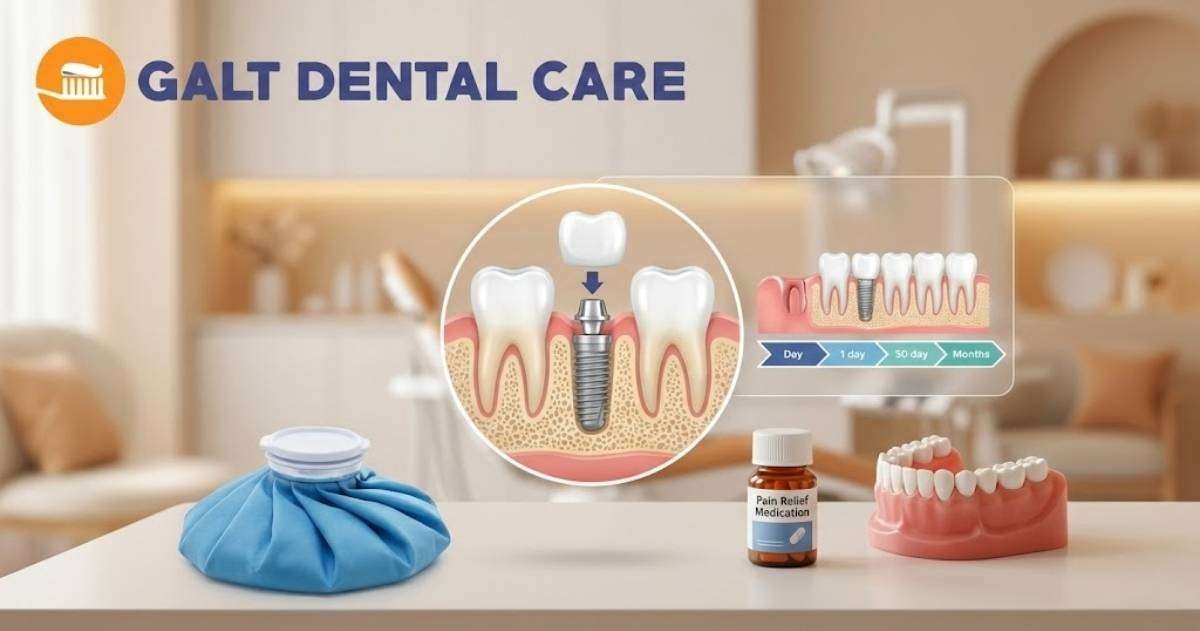
A dental implant is a small titanium post placed into the jawbone. It functions as an artificial tooth root. Once healing occurs, we attach a crown that looks and feels like a natural tooth.
Unlike removable dentures, implants stay fixed in place.
One of the first questions patients ask me:
“Will it hurt?”
Pain experiences vary, but we can break them into predictable categories.
After implant placement, mild soreness is expected.
What patients usually feel:
Tenderness at the surgical site
Slight swelling
Minor bruising
Pressure sensation
Typical duration:
A few days to about a week.
Why it happens:
Your body initiates a natural healing response.
Sometimes tissues become irritated.
Possible causes:
Excessive chewing on the area
Poor oral hygiene during healing
Minor trauma
Temporary bite imbalance
What it feels like:
Persistent dull ache
Localized gum tenderness
Mild throbbing
This usually improves with professional evaluation and minor adjustments.
This is less common but important.
Warning signs:
Increasing pain after initial improvement
Swelling that worsens
Pus discharge
Bad taste
Fever
According to clinical guidance from the ADA and Health Canada, post-surgical infections require prompt dental care.
Pain location provides valuable clues.
Often normal during early healing.
If worsening → possible inflammation or infection.
May suggest:
Bite pressure imbalance
Healing bone sensitivity
Crown adjustment needed
Possible reasons:
Tissue irritation
Plaque accumulation
Early peri-implant inflammation
May relate to:
Clenching or grinding
Muscle tension
TMJ stress
Could indicate:
Infection
Nerve irritation
Adjacent tooth issue
This is why self-diagnosis can be misleading.
If discomfort appears after your tooth implant Cambridge, stay calm and systematic.
Ask yourself:
Improving or worsening?
Triggered by chewing?
Constant or occasional?
Brush carefully
Use dentist-recommended rinse
Avoid aggressive scrubbing
Clean tissues heal better.
Avoid heavy pressure on the implant side during early healing.
Only take medications recommended by your dentist or physician.
Persistent or worsening pain deserves evaluation.
At Galt Dental Care in Cambridge Ontario, I often reassure patients that many concerns turn out to be minor and easily correctable.
I frequently caution patients against:
Ignoring escalating pain
Googling worst-case scenarios late at night
Poking the site with sharp objects
Applying heat
Stopping oral hygiene
These actions can delay healing or worsen inflammation.
Dental procedures, especially surgical ones, can trigger anxiety. When pain enters the picture, fear often follows.
Many patients tell me:
“I thought something went terribly wrong.”
In reality, most post-implant discomfort falls within normal healing responses. Open communication with your dentist reduces unnecessary worry.
Please stop online searching and contact a dentist urgently if you notice:
Rapid swelling
Severe, worsening pain
Bleeding that doesn’t stop
Fever
Pus discharge
Numbness that persists
These symptoms require professional assessment.
Healing after dental implants Cambridge occurs in phases.
Normal experiences:
Mild swelling
Tenderness
Slight discomfort
Soft tissue healing improves.
Most soreness fades.
Osseointegration occurs — the implant bonds with bone.
This stage is critical for long-term stability.
The implant functions like a natural tooth.
While uncommon, complications may include:
Infection
Implant mobility
Delayed integration
Gum inflammation (peri-implantitis)
Early detection significantly improves outcomes.
Ignoring symptoms may lead to:
Bone loss around implant
Implant failure
Need for revision surgery
Spread of infection
Prompt care protects both oral and systemic health.
When properly placed and maintained, implants offer:
Stable chewing function
Natural appearance
Bone preservation benefits
No reliance on adjacent teeth
Success depends heavily on:
Oral hygiene
Regular dental visits
Gum health
Lifestyle factors (e.g., smoking)
The CDA and ADA emphasize that implants require the same — or better — care as natural teeth.
After your tooth implant Cambridge, I recommend:
Brush twice daily
Floss or use interdental aids
Clean around implant carefully
Routine checkups
Professional dental cleaning
Periodic radiographs when indicated
Address grinding/clenching
Monitor gum disease
Maintain overall health
Tooth loss can feel deeply personal. Some patients feel embarrassed. Others feel frustrated or regretful about delayed care.
If this resonates with you, please know:
There is no judgment in dentistry — only solutions.
If you’ve gone through tooth loss, implant treatment, or recovery challenges, consider sharing your experience. Your story might comfort someone who feels nervous or uncertain about starting treatment.
Patient experiences often provide reassurance that clinical explanations cannot.
Implants have decades of clinical research supporting their use. Safety depends on proper case selection, planning, and execution.
Most patients report that implants feel very natural once healing completes.
Yes, though failure rates are generally low when treatment follows established protocols. Maintenance and systemic health play important roles.
This article aligns with educational principles and clinical considerations from:
American Dental Association (ADA)
Canadian Dental Association (CDA)
Health Canada
These organizations provide trusted, research-supported dental health guidance.
This content was developed using:
Recognized dental clinical guidelines
ADA and CDA educational resources
Health Canada safety recommendations
Real-world patient interactions in implant dentistry
No artificial statistics, inflated claims, or unverified medical data were included. The purpose is to deliver ethical, accurate, patient-centered information consistent with modern evidence-based dentistry.
Choosing dental implants Cambridge is both a functional and emotional decision. My goal is always to help patients feel informed, comfortable, and confident — not pressured.
If you’re exploring a tooth implant Cambridge in Cambridge Ontario, a personalized consultation provides clarity that online research simply cannot replace.
Your comfort, safety, and long-term oral health deserve thoughtful, professional care.

© 2025 Crivva - Hosted by Airy Hosting Managed Website Hosting.