Have you ever looked at your driveway, garage floor, or patio and noticed cracks, holes, or crumbling edges? You’re not alone. Concrete damage is one of the most common problems homeowners and property managers face. The good news? With the right concrete repair materials, you can bring your concrete surfaces back to life without breaking the bank.
Let’s dive into everything you need to know about concrete repair materials and how to choose the right products for your project.
Before we talk about solutions, let’s understand the problem. Concrete might seem indestructible, but it’s actually vulnerable to several issues:
Weather damage is a big culprit. When water seeps into concrete and freezes, it expands and creates cracks. Then when it thaws, those cracks get bigger. This freeze-thaw cycle happens year after year, slowly breaking down your concrete.
Heavy use takes its toll too. Think about your driveway supporting cars day in and day out, or warehouse floors bearing the weight of forklifts and pallets. Over time, even the toughest concrete wears down.
Age is another factor we can’t ignore. Just like everything else, concrete gets old. The materials break down, and what was once a smooth, solid surface becomes rough and damaged.
Poor installation can also cause problems from day one. If the concrete wasn’t mixed properly or the foundation wasn’t prepared correctly, you’ll see issues much sooner than you should.
The bottom line? Ignoring concrete damage only makes it worse and more expensive to fix later. That’s why having quality concrete repair materials on hand is so important.
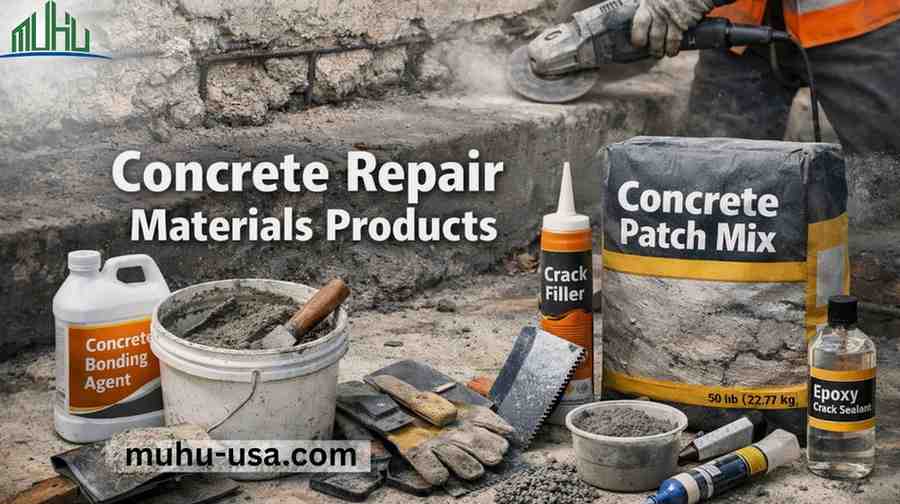
Walking into a hardware store can be overwhelming when you see dozens of concrete products. Let me break down the main types you’ll encounter:
These are your go-to products for filling cracks, holes, and damaged areas. They come in different formulas designed for specific jobs. Some dry quickly for fast repairs, while others are designed for deeper fills. The key is matching the product to your specific damage.
When your concrete surface looks terrible but the structure underneath is still solid, resurfacers are your best friend. These products create a fresh new layer over old, worn concrete. It’s like giving your concrete a facelift without the cost of complete replacement.
For serious structural repairs, epoxy products are the heavy-duty option. They create incredibly strong bonds and can handle significant stress. You’ll often see these used in commercial and industrial settings, but they’re great for residential projects too.
These specialized products are designed specifically for sealing cracks before they become bigger problems. They prevent water infiltration and stop cracks from spreading. Think of them as preventive medicine for your concrete.
Sometimes you need a little help getting new concrete to stick to old concrete. That’s where bonding agents come in. They create a strong connection between the two surfaces, ensuring your repair actually lasts.

Here’s where things get practical. Choosing the right product isn’t complicated if you ask yourself these questions:
How big is the damage? Small hairline cracks need different products than large holes or extensive surface damage. Be honest about the scope of your problem.
Where is the damaged concrete? Indoor repairs are different from outdoor ones. A basement floor has different requirements than a driveway that faces rain, snow, and sun.
What kind of traffic will it handle? Repairing a decorative patio is different from fixing a driveway or industrial floor. Higher traffic areas need tougher materials.
What’s your skill level? Some products are super easy for beginners, while others require more experience. Don’t pick a professional-grade product if this is your first repair project.
How fast do you need it done? Some repairs can be walked on in a few hours, others need days to cure properly. Consider your timeline.
Not all concrete repair products are created equal. Here’s what separates the good from the mediocre:
Strong adhesion is crucial. The repair material needs to bond tightly with the existing concrete. Otherwise, it’ll just pop out after a few weeks or months.
Durability matters because you don’t want to do the same repair twice. Quality materials withstand weather, traffic, and time.
Easy application makes your life easier. Look for products that mix smoothly, spread easily, and don’t require special equipment.
Weather resistance protects your investment. The material should handle rain, sun, heat, and cold without deteriorating.
Matching appearance might seem minor, but it’s frustrating when your repair sticks out like a sore thumb. Good products blend with existing concrete.
Having great materials is only half the battle. Here are some tips to ensure your repair actually works:
Clean thoroughly first. Remove all loose concrete, dirt, oil, and debris. Your repair material needs to bond with solid, clean concrete.
Follow the instructions. I know it’s tempting to skip the directions, but mixing ratios and application methods matter. Cutting corners leads to failed repairs.
Consider the weather. Don’t repair concrete when it’s about to rain or when temperatures are too hot or too cold. Most products have specific temperature ranges for application.
Prepare the surface properly. This might mean dampening the concrete, applying a bonding agent, or roughening the surface. Proper prep work makes all the difference.
Allow proper curing time. Patience is key. Give your repair the full recommended time to cure before putting it to use.

Investing in good concrete repair materials isn’t just about fixing what’s broken today. It’s about protecting your property for years to come.
You’ll save money because quality repairs last longer. Cheap fixes that fail in six months end up costing more when you factor in repeated repairs.
Your property value stays strong. Damaged concrete makes your home or business look neglected. Clean, well-maintained surfaces create a positive impression.
Safety improves when you eliminate trip hazards from uneven or crumbling concrete. This is especially important for businesses that could face liability issues.
Prevention becomes possible. Many repair materials also seal and protect concrete, preventing future damage before it starts.
Concrete repair doesn’t have to be intimidating. With the right materials and a little preparation, you can tackle most repairs yourself and save thousands of dollars in replacement costs.
The key is choosing products specifically designed for your type of damage and application. Don’t try to make a one-size-fits-all product work for everything. Match the material to the job, follow the instructions, and you’ll get professional-looking results.
Whether you’re fixing small cracks in your walkway or resurfacing an entire garage floor, quality concrete repair materials make all the difference. Your concrete will look better, last longer, and continue protecting your property for many years to come.

© 2025 Crivva - Hosted by Airy Hosting Managed Website Hosting.