


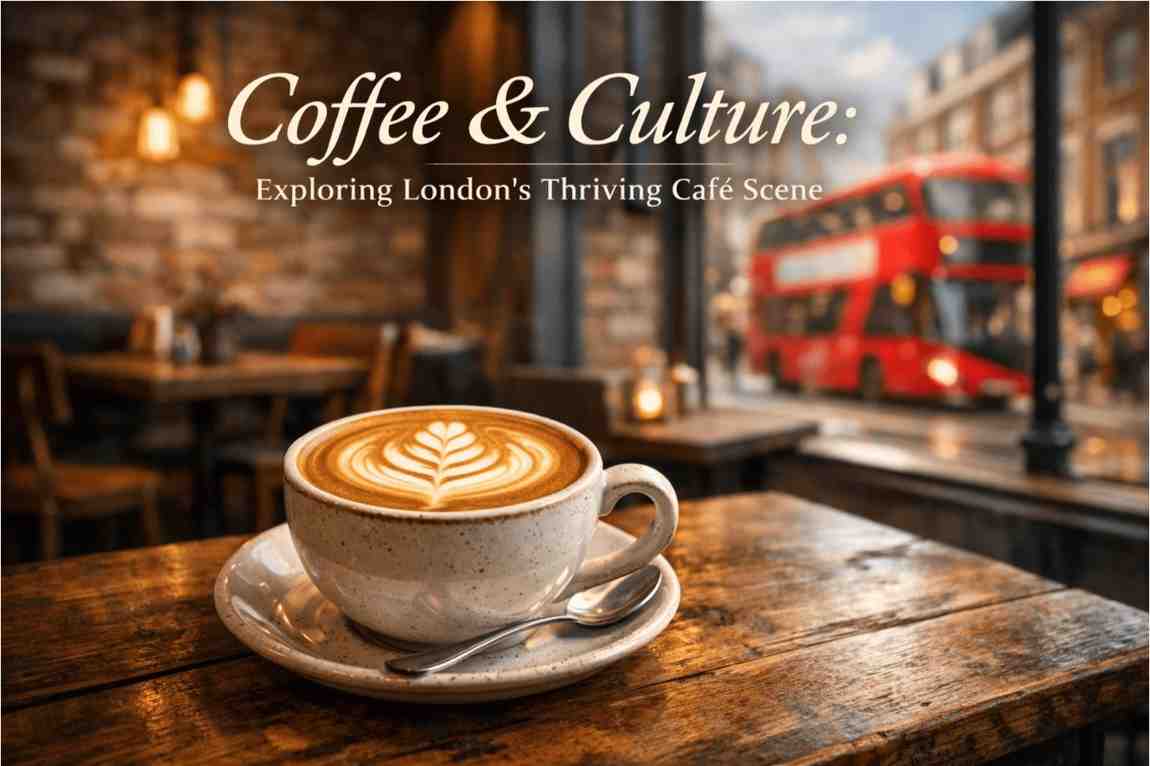
If you’re searching for London cafés, chances are you’re not just looking for a flat white. You’re looking for atmosphere. A place to sit without being rushed. Maybe somewhere that roasts its own beans, or somewhere that still serves coffee in chipped ceramic cups that feel older than the building.
London’s café scene isn’t a trend. It’s a layered ecosystem built over centuries — shaped by migration, design movements, independent roasters, and a city that never really sits still. I’ve worked with hospitality brands and urban retail projects for years, and London remains one of the most complex coffee markets anywhere. The density alone changes everything.
Let’s unpack what makes it tick.
London’s relationship with coffee goes back to the 17th century. The first coffee houses appeared around 1652, and by the early 1700s there were thousands scattered across the city. These weren’t cozy Instagram spots. They were business hubs — traders, writers, politicians, all packed into rooms thick with smoke and debate.
Lloyd’s of London famously started in a coffee house. That tells you something.
Fast forward a few centuries, and espresso culture arrives with waves of Italian immigration. Then comes the third-wave movement — lighter roasts, single-origin beans, manual brew methods. London didn’t just adopt it. It refined it.
Today, that evolution is reflected in modern cafés across the city — including places like Kula Café, where tradition meets contemporary coffee craft.
What’s interesting is how the old and new overlap. You can still find wood-paneled cafés near Covent Garden serving traditional blends, while a few streets away someone’s weighing 18 grams of Ethiopian heirloom beans to the decimal point.
Different worlds. Same city.
It’s not just about the coffee quality — although that’s high almost everywhere now. The defining factors are:
In cities like New York or Melbourne, cafés often follow a recognizable aesthetic wave. London doesn’t move that way. Each borough feels independent.
Walk through Shoreditch and you’ll see minimalist interiors, exposed brick, Nordic furniture. Head west toward Notting Hill and the spaces soften — pastels, sunlight, pastries that look almost too good to eat.
The real takeaway is this: London cafés reflect micro-communities, not just trends.
The third-wave coffee movement — focused on traceability, lighter roasting, and brewing precision — gained serious traction in London over the last 15 years. A few names consistently shaped that shift:
These companies didn’t just sell beans. They educated customers. Baristas started explaining origin notes, processing methods, farm relationships. Suddenly “coffee” wasn’t a generic product — it was agricultural craft.
That same shift in consumer awareness is visible beyond coffee. As explored in this piece on why all-day breakfast is more than just a trend, modern café culture is driven as much by psychology and experience as by the menu itself. People want transparency. They want story. They want intention behind what’s served.
What surprises many people is how competitive wholesale became. Independent cafés had to raise standards fast. Extraction ratios mattered. Water filtration systems mattered. Even the grinder calibration became a daily ritual.
I’ve seen cafés in East London recalibrate espresso shots four times before 9 a.m. That’s the level now.
Creative, experimental, fast-moving. You’ll find cafés doubling as art galleries or co-working spaces. Laptop culture is strong here, but turnover still matters — rent isn’t cheap.
High traffic. Tight spaces. Here cafés operate almost like pit stops. You get excellent espresso but you probably won’t camp out all afternoon. The energy is quick.
Near cultural institutions like Tate Modern, cafés here blend tourism with serious coffee drinkers. Views of the Thames don’t hurt either.
Quieter. Residential. Independent cafés lean toward community feel rather than trend chasing. You’ll see regulars — same seat every morning.
Each area shapes the coffee experience differently. That’s part of London’s charm, even if it makes market analysis more complicated.
Flat whites dominate. That’s no surprise. But something else is happening — filter coffee is making a steady comeback.
Manual brewing methods like V60 and AeroPress are no longer niche. Customers are asking for origin specifics, and baristas are expected to know them. If they don’t, it shows.
Plant-based milk is standard now, not optional. Oat milk, especially. Many cafés default to it unless you request dairy.
The prices varies depending on borough, but expect £3.20–£4.50 for a well-made flat white in central zones. Independent cafés justify that cost through bean sourcing, rent, and labour — and honestly, London overhead is brutal.
In dense cities, physical space defines success. London cafés often operate in narrow units, former retail shops, or converted Victorian buildings. Layout isn’t aesthetic fluff — it’s operational strategy.
I’ve consulted on hospitality spaces where seating capacity was reduced intentionally to improve flow and reduce noise. Less chairs, better experience. That seems counterintuitive but it works.
Materials also reflect branding. Polished concrete suggests modern minimalism. Reclaimed wood suggests sustainability. Some cafés lean into industrial steel and exposed wiring. Others want velvet and brass.
Customers don’t always notice consciously. But they feel it.
Remote work changed everything. After the pandemic, London cafés saw an influx of freelancers and hybrid workers.
The challenge? Balancing community atmosphere with revenue per seat.
Some cafés introduced laptop-free weekends. Others added subtle signage: “No laptops after 12.” It’s a tightrope. If you’re too strict, customers leave. Too relaxed, and tables become unofficial offices.
In my experience, cafés that create zoning — communal tables for work, small tables for quick drinks — handle it best. There isn’t a perfect solution, and many operators are still figuring it out.
Chains still dominate footfall in transport hubs. But independents dominate cultural influence.
Brands like Pret a Manger serve convenience. Predictability. Speed.
Independents serve identity.
What most people miss is that chains helped normalize high coffee prices. When £3 became standard, independent operators could focus on quality rather than convincing customers coffee should cost more than £1.
Competition isn’t always negative. Sometimes it pushes standards higher.
London consumers are increasingly conscious of sourcing transparency. Cafés highlight farm partnerships, fair trade certifications, and carbon-conscious roasting.
The Specialty Coffee Association sets widely recognized grading standards, and many London roasters align with those benchmarks.
But sustainability goes beyond beans. Cup recycling, compostable lids, energy-efficient espresso machines — all matter. Rent and energy costs in London are rising, so sustainability isn’t just ethics, it’s financial strategy.
And yes, some places talk about it more than they practice it. You can usually tell which is which.
Here’s where things get interesting.
Commercial rent in central London can be staggering. Labour costs are high. Utilities fluctuates wildly depending on building age and insulation. Coffee beans themselves aren’t the biggest expense — it’s everything around them.
A simple breakdown often looks like this:
Margins are thinner than customers assume. That’s why some cafés diversify — retail beans, brewing equipment, workshops, even subscription models.
The ones who survive long term treat coffee as both craft and business. Romanticism alone doesn’t pay London leases.
London cafés function as informal community centres. Meetings happen here. First dates. Freelance deals. Book clubs. Language exchanges.
Some cafés host poetry nights or live acoustic sessions. Others collaborate with local bakeries or artists. The café becomes platform.
I’ve noticed something else too — younger Londoners see cafés as social third spaces. Not home. Not office. Something in between. That’s powerful.
If you’re visiting and want to experience the café scene properly:
Don’t rush it.
The best cafés aren’t always the ones trending on social media. Sometimes it’s the quieter corner shop where the barista remembers your order by day two.
Specialty coffee isn’t slowing down, but it is maturing. Expect:
What’s worth paying attention to is how cafés adapt to rising rent and changing work patterns. Flexibility will matter more than aesthetic perfection.
London has always evolved. Coffee culture evolves with it.
And if you spend enough time exploring it, you’ll realize something — the real story isn’t about espresso machines or latte art. It’s about people. The city moves fast, but inside a good café, time stretches just a little.

© 2025 Crivva - Hosted by Airy Hosting Managed Website Hosting.