

Modern metro rail systems are transforming urban transportation across India and the world. As governments invest in expanding public transit networks, the demand for high-quality metro components continues to grow. Every metro project depends on reliable parts that can withstand heavy usage, comply with strict safety standards, and perform consistently throughout their service life.
Whether you are an OEM, EPC contractor, infrastructure developer, or procurement manager, selecting the right metro parts manufacturer plays a critical role in the success of your project. Beyond supplying components, a capable manufacturing partner contributes to quality assurance, timely delivery, engineering support, and long-term reliability.
This guide explains the key factors to consider when choosing a metro parts manufacturer for large infrastructure projects.
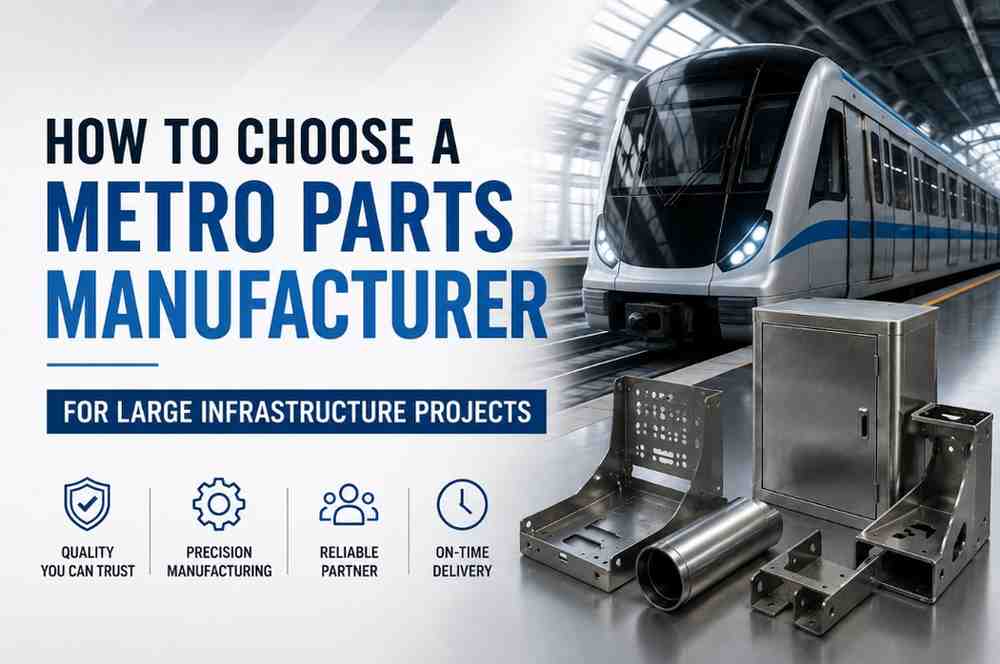
Metro rail systems consist of thousands of precision-engineered components that work together to ensure safe and efficient operations. A metro parts manufacturer produces a wide range of fabricated and engineered products used in coaches, stations, trackside infrastructure, and supporting systems.
Common products include:
Many manufacturers also provide engineering assistance, prototype development, and customized manufacturing to meet project-specific requirements.
Metro infrastructure projects involve substantial investments and strict project timelines. Delays or component failures can increase costs, affect passenger safety, and disrupt operations.
Working with an experienced metro components manufacturer offers several advantages:
Instead of focusing only on the purchase price, buyers should evaluate the manufacturer’s overall capability to deliver quality products throughout the project lifecycle.
Experience is often the first indicator of a manufacturer’s capability.
Companies with experience serving transportation, railways, metro systems, and industrial infrastructure generally have a better understanding of project requirements, quality expectations, and documentation standards.
When evaluating a manufacturer, consider:
Manufacturers with an established track record are usually better prepared to manage complex production requirements and changing project demands.
Modern metro projects require components manufactured with high precision and repeatability. The manufacturer’s production facility should be equipped with advanced machinery capable of delivering consistent quality.
Look for capabilities such as:
A manufacturer with multiple in-house capabilities can reduce dependency on external vendors, improve quality control, and shorten production lead times.
Metro infrastructure components operate in demanding environments where corrosion resistance, strength, and durability are essential.
A reliable manufacturer should have experience working with materials such as:
Among these, stainless steel components for metro applications are widely preferred because they offer excellent corrosion resistance, long service life, high strength, and low maintenance requirements.
Material selection directly impacts component performance, making technical expertise an important factor during supplier evaluation.
Quality assurance should never be compromised in metro infrastructure projects.
An experienced manufacturer follows documented quality management systems throughout production, from raw material inspection to final dispatch.
Look for certifications and quality practices such as:
Consistent quality systems help ensure that every component meets customer specifications and industry standards.
Many infrastructure projects require custom-designed components rather than standard products.
Manufacturers with in-house engineering teams can assist during the product development stage by offering:
Early engineering collaboration often improves manufacturability, reduces production costs, and minimizes project risks.
Large metro infrastructure projects require consistent production over extended periods.
Before selecting a supplier, evaluate whether the manufacturer has sufficient production capacity to meet your delivery schedule.
Important considerations include:
Manufacturers with modern facilities and efficient production planning are better positioned to support high-volume infrastructure projects without compromising quality.
Quality inspection should be integrated into every stage of manufacturing rather than limited to the final product.
An effective quality control system may include:
Robust inspection procedures help reduce defects and improve consistency across production batches.
Timely delivery is essential for infrastructure projects with fixed construction schedules.
A dependable metro parts manufacturer should have a stable supply chain supported by reliable raw material sourcing, inventory management, and logistics planning.
Evaluate factors such as:
Reliable supply chain management helps minimize project delays and ensures uninterrupted production.
Before finalizing your supplier, ask questions that provide insight into their technical capabilities and operational reliability.
Some useful questions include:
These discussions help determine whether the manufacturer is the right fit for your project requirements.
Selecting a manufacturing partner based only on price can create long-term challenges.
Some common mistakes include:
A comprehensive evaluation reduces procurement risks and helps establish long-term partnerships.
Today, metro components manufacturers in India are increasingly serving both domestic and international infrastructure projects.
Several factors contribute to this growth:
Many metro equipment manufacturers in India now offer complete manufacturing solutions, from design assistance to fabrication, assembly, finishing, and quality inspection.
This makes India an attractive sourcing destination for transportation and infrastructure companies worldwide.
As metro systems continue to expand, manufacturers are adopting advanced technologies to improve productivity and quality.
Some important trends include:
These innovations help manufacturers deliver higher precision, shorter lead times, and greater production efficiency while supporting the evolving needs of urban transportation.
Choosing the right metro parts manufacturer is about much more than comparing prices. It requires careful evaluation of manufacturing capabilities, engineering expertise, quality systems, production capacity, and supply chain reliability.
A dependable manufacturing partner contributes to every stage of a metro infrastructure project by delivering precision-engineered components that meet demanding performance and safety requirements. Whether your project requires stainless steel components for metro applications, custom fabricated assemblies, or complete mobility solutions for metro, selecting an experienced manufacturer can improve project execution and reduce long-term operational costs.
As metro rail infrastructure continues to expand across India and globally, working with an established manufacturing partner ensures your project benefits from consistent quality, technical expertise, and reliable delivery—building a strong foundation for successful urban transportation systems.

© 2025 Crivva - Hosted by Airy Hosting Managed Website Hosting.