

Call centers handle a large number of customer calls every day. Customers contact businesses for support service requests and product information. When calls are not managed properly it creates long wait times and confusion. Agents may spend time transferring calls instead of solving customer problems. This affects both service quality and team efficiency.
An IVR system helps organize incoming calls through automated voice response technology. When a customer calls the system provides voice options and guides the caller to the correct department. This reduces the need for manual call handling and improves the overall flow of communication. Many businesses now depend on IVR system solutions to manage call traffic and maintain smooth customer interaction.
One of the main reasons IVR system technology is important in modern call centers is its ability to manage call routing. Without a structured system incoming calls may reach the wrong department which leads to delays and repeated transfers. This creates frustration for customers and increases workload for support agents.
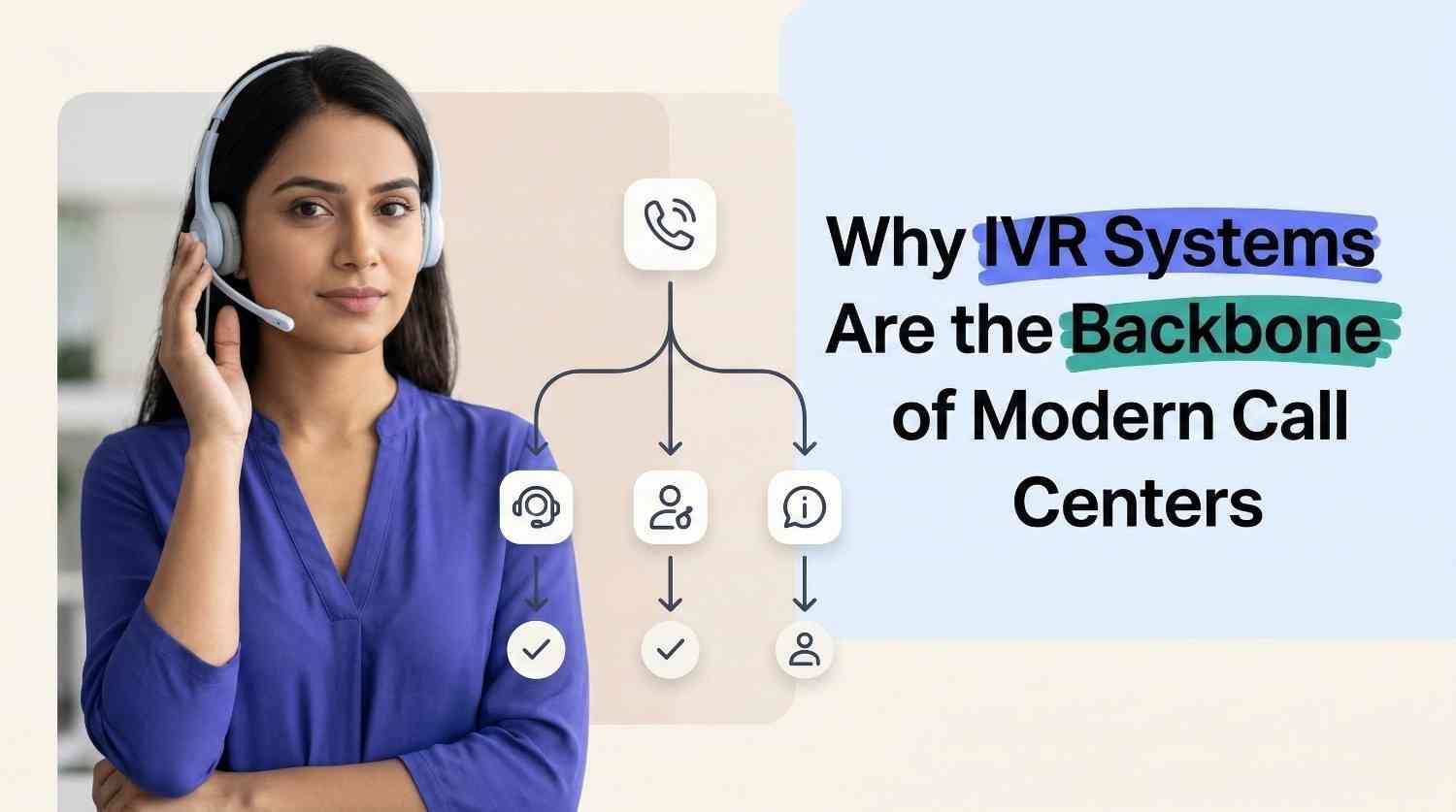
An IVR system solves this problem by guiding callers through a menu of options. Customers select the service they need and the system routes the call to the correct department. This process works automatically which saves time and reduces confusion.
The IVR system can also work with call routing software and contact center solutions to improve accuracy. Calls are directed based on customer input which ensures that agents receive calls related to their role. This organized approach helps call centers handle large volumes of calls more efficiently.
Support agents often spend a large part of their time answering basic questions or transferring calls between departments. These tasks reduce the time available for solving real customer issues. As call volume increases the workload becomes difficult to manage.
An IVR system reduces this pressure by handling the first stage of customer interaction. The system answers incoming calls, provides menu options and shares basic information through recorded messages. Customers can receive answers to common questions without speaking to an agent.
This allows support teams to focus on more complex customer problems. Agents receive calls that require real assistance instead of routine inquiries. The IVR system also helps reduce call queue length which improves overall service efficiency.
Because of this automation, call centers can handle more calls without increasing team size.
Customer satisfaction depends on how quickly businesses respond to inquiries. Long waiting times and repeated call transfers often lead to poor customer experience. An IVR system helps improve response time by guiding customers immediately after they place a call.
As soon as the call connects the IVR system interacts with the caller and provides clear instructions. Customers do not need to wait for an agent to answer before selecting the required service. This reduces waiting time and helps customers reach the right department faster.
The IVR system also supports features like call queue management and automated responses. These features ensure that calls are handled in an organized way even during peak hours.
When customers receive quick and clear assistance they feel more satisfied with the service. This improves customer trust and strengthens business relationships.
Modern call centers use multiple tools to manage communication such as CRM systems call monitoring software and auto dialer solutions. An IVR system can integrate with these tools to create a connected communication environment.
When integrated with CRM platforms the IVR system can access customer data and provide personalized service. For example the system may identify a returning customer and route the call based on previous interactions. This helps agents provide faster and more relevant support.
The IVR system can also work with call monitoring software to track call performance. Managers can review call data and understand how the system handles incoming traffic. This helps improve call center operations over time.
Because the IVR system connects with other communication tools businesses can manage customer interactions more effectively.
As businesses grow the number of customer calls increases. Traditional call handling methods may not be able to support this growth without adding more staff. Hiring and training new agents requires time and resources.
An IVR system provides scalability by allowing call centers to handle more calls without increasing workforce size. The system can manage multiple calls at the same time and guide each caller through the appropriate process.
Businesses can also update IVR system settings based on changing requirements. New menu options can be added and call routing rules can be adjusted easily. This flexibility helps companies adapt to growing customer demands.
Because the IVR system can scale with business growth it becomes a long term solution for managing communication.
Understanding call center performance is important for improving service quality. Businesses need to track call volume response time and customer interaction patterns. Without proper data it becomes difficult to identify problems and improve operations.
An IVR system provides valuable insights into call activity. The system records data about how calls are handled including menu selection, call duration and call flow. Managers can review this information to understand customer behavior and service efficiency.
This data helps businesses identify areas where improvements are needed. For example managers may find that certain menu options are used more often or that some departments receive higher call volume. With this knowledge companies can adjust their call handling strategies.
Better data visibility allows call centers to improve both performance and customer experience.
Call centers must handle large volumes of customer communication while maintaining service quality. Without a structured system call management becomes difficult and customer experience may suffer.
An IVR system provides a reliable solution for managing incoming calls through automated voice response and smart call routing. It reduces agent workload, improves response time and helps businesses handle calls more efficiently.
By integrating with other communication tools and providing useful data insights the IVR system becomes a key part of modern call center operations. For businesses that want to maintain organized and efficient communication the IVR system remains an essential component.

© 2025 Crivva - Hosted by Airy Hosting Managed Website Hosting.