

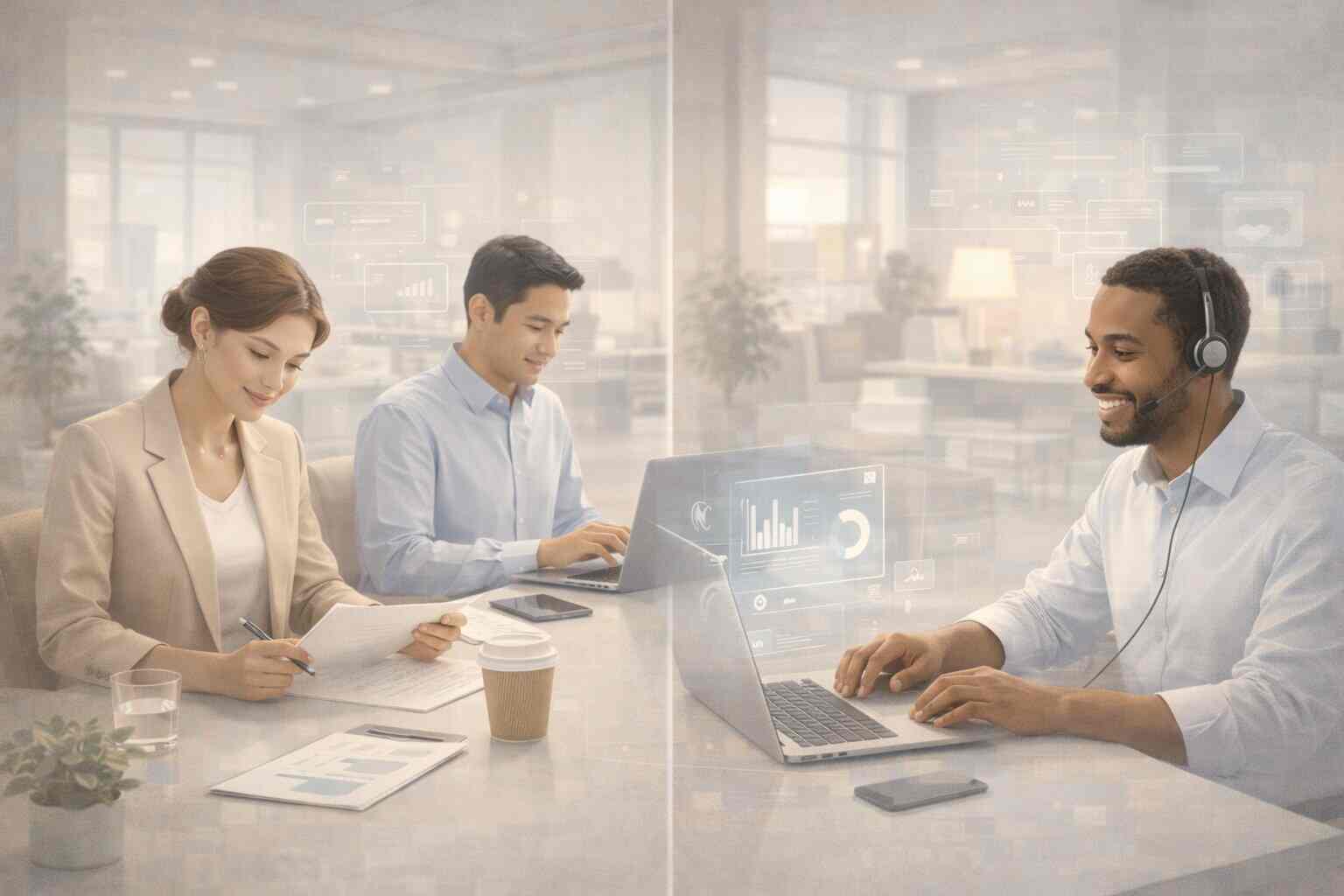
Modern organizations are surrounded by tools, dashboards, apps, platforms, and notifications, yet the most effective workplace technology often goes unnoticed. It doesn’t announce itself. It doesn’t demand training manuals or constant reminders. It simply works, quietly supporting people as they do their jobs.
Organizations still believe that they have achieved digital transformation when their systems display complicated functionality because they fail to execute basic tasks. The system requires multiple interface components, which need handling through various data points. The most effective workplace technology becomes invisible to employees because it operates without drawing their attention. The technology functions as an invisible force that eliminates obstacles instead of creating barriers to progress.
The development of systems that operate without visible human presence has become the new standard that organizations now use to assess their technology needs while evaluating existing assets. The new assessment methods provide companies with a strategic edge over their competitors.
The situation contains an ironic twist because:
Effective workplace technology creates a seamless experience for users that they will not detect. Users will find the system impossible to detect when its design elements function in an ineffective manner.
Employees don’t want to “use software.” They need software that enables them to finish tasks while working together with others to find answers and reach decisions without experiencing delays from unfamiliar or burdensome tools.
Invisible workplace technology achieves this by:
When technology mirrors how people already work, adoption becomes effortless.
For years, enterprise software competed on feature volume. The software system became more powerful according to users because it included additional buttons, settings, and modules.
The actual office environment experiences difficulties because of feature overload.
Workplace technology functions best when it provides essential tools instead of delivering excessive options. It focuses on the few actions that matter most and removes everything else from view.
Work activities do not follow a straight path because people need to change their work environment and cooperate with different teams while their work duties change throughout the day. The best workplace technology respects this reality.
The system provides users with a natural way to work by eliminating strict operational procedures. The system achieves this goal by:
The systems that support flow create uninterrupted work time, which enables employees to operate with greater efficiency.
Employees develop trust toward systems that demonstrate dependable performance with predictable results and steady operation. The combination of bright user interfaces together with nonstop notification systems creates a state of anxiety for users instead of fostering their active participation.
Invisible workplace technology builds trust through three specific methods, which include:
The system achieves its maximum value when employees reach a complete mental state of operational detachment from it.
Human-centered design serves as the essential method that enables employees to use workplace technology without noticing its presence. The approach begins by studying actual users who exist in the world rather than creating idealized user personas.
Design teams achieve success through their work, which focuses on three main activities:
The objective creates a need to vanish from users’ standard activities instead of trying to create an impact.
The architectural requirements for achieving invisibility need powerful structural elements. The invisible technological solutions used in workplaces function only when their underlying systems maintain proper integration and scalability, and they undergo strategic design development.
The platform development process demonstrates how HR Software Development partners utilize their expertise to create complex systems that operate efficiently while providing users with straightforward interfaces. The user sees simplicity. The system handles the rest.
The user sees simplicity. The system handles the rest.
You can spot invisible workplace technology when:
These outcomes don’t come from louder tools; they come from smarter ones.
The adoption process improves when users keep their software tools inactive. The adoption process begins when users find their tools to be beneficial.
The invisible workplace technology helps organizations to achieve better adoption rates through these benefits:
Users will come back to technology that shows them respect.
Organizations that invest in barely noticeable workplace technology see long-term benefits that compound over time:
These advantages don’t show up as flashy metrics, but they quietly shape performance, culture, and resilience.
Instead of asking, “What can this system do?” forward-thinking leaders ask:
When the answer is yes, the technology is doing its job.
The assessment of technological development in workplaces requires evaluation of system performance, which should be evaluated through its capacity to assist users in their tasks. The most effective tools don’t demand attention or constant explanation; they respect human focus, adapt to real work patterns, and remove friction without ceremony.
When employees use technology that operates in the background, they regain their cognitive resources, which enable them to work together while developing new ideas. Work processes become more efficient, organizations make quicker decisions, and people build confidence in their systems, which develops naturally. The design needs to be productive because it requires proper planning and established design elements, which need thorough knowledge of the actual workflow to achieve optimal results.
The organizations that choose to implement technology that operates without user awareness will achieve higher system usage and operational efficiency. The organizations will create peaceful workplaces that help employees develop strength while their technology operates in the background to protect their focus.
1. Why is invisible workplace technology more effective?
The system operates through its natural design, which reduces mental stress while eliminating workplace obstacles that would disturb staff members.
2. Do fewer features mean weaker software?
The software system maintains its essential functions because developers have chosen to present only vital information to users.
3. How does invisible technology improve adoption?
Employees adopt tools more easily when they feel intuitive and helpful rather than forced or complicated.
4. Is invisible technology harder to build?
The process demands advanced system design and complete knowledge of actual user patterns, which form its foundation.

© 2025 Crivva - Hosted by Airy Hosting Managed Website Hosting.