


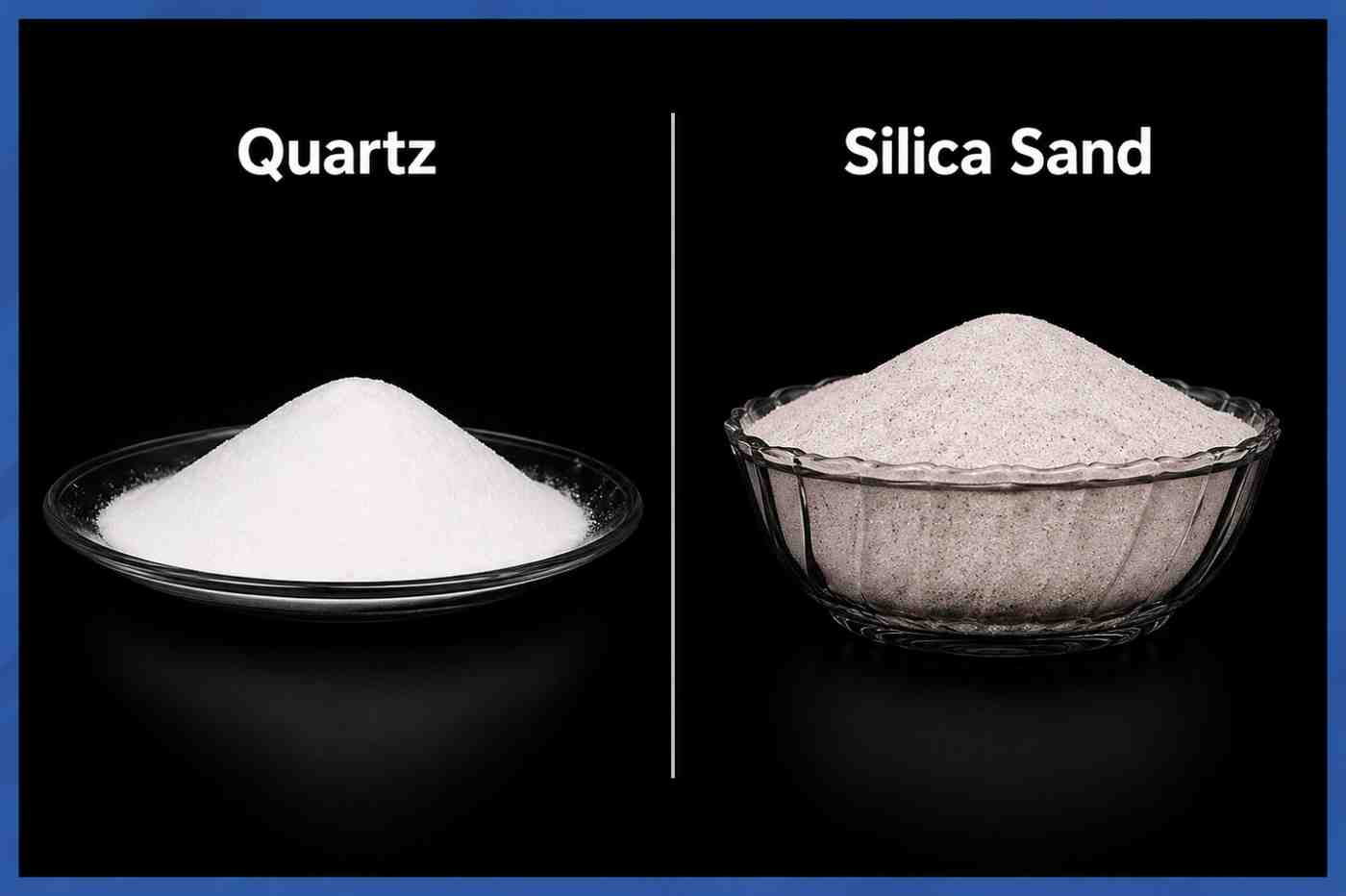
Every major industry runs on raw materials that most people never think about. Glass, ceramics, paints, construction, electronics, and water treatment all depend on minerals that are mined, processed, and supplied in enormous quantities every year. India sits at the center of this global supply chain – and its position is not accidental.
The country holds some of the world’s largest and highest-quality deposits of industrial minerals. Decades of mining expertise, a skilled processing workforce, and improving logistics infrastructure have turned India into a sourcing destination that global buyers return to consistently. Understanding why requires looking at what India actually offers – and why that offering is difficult to replicate anywhere else.
India’s mineral wealth is distributed across a remarkably diverse set of geological formations. Rajasthan, Gujarat, Andhra Pradesh, and Tamil Nadu each host significant mineral deposits with characteristics that suit different industrial applications. This geographic spread means that supply disruptions in one region rarely affect the overall availability of key minerals.
The quality profile of Indian deposits is highly competitive on a global scale. High silica content in quartz deposits, consistent grain size distribution in silica sand, and low contamination levels in processed minerals all reflect the underlying geology combined with decades of processing refinement. These are not incidental advantages – they are structural features built into the supply from the ground up.
India’s mineral processing industry has matured considerably over the past two decades. What was once a relatively informal sector has developed into an organized industry with consistent quality standards and export documentation capability. Today it has the operational strength to meet specifications that even the most demanding international buyers require.
India’s infrastructure expansion has created domestic demand for industrial minerals at a scale that would have seemed unlikely fifteen years ago. Highway construction, urban housing projects, airport expansions, and industrial corridor development all consume silica-based minerals in very large quantities. This domestic demand has pushed the entire processing industry to scale up faster than at any previous point in its history.
The scale-up has improved supply capabilities for export markets at the same time. Processing facilities that invested in capacity and quality control to serve large domestic infrastructure contracts simultaneously became better positioned to supply consistent, specification-compliant material to international buyers. Scale drives quality improvement in mineral processing just as it does in any other manufacturing sector.
Construction-grade demand has also created a more competitive logistics environment across India. More regular shipments, better port handling infrastructure, and improved inland transportation networks have all developed directly in response to domestic demand growth. These improvements benefit export supply chains just as much as they benefit domestic buyers.
Quartz and silica sand are not commodity minerals in the sense that they are interchangeable with alternatives. Their physical and chemical properties make them specifically suited to applications where substitution simply isn’t practical. The industries that depend on these minerals have no real alternative – they need the real thing, consistently supplied, at the right specification.
High-purity quartz is essential in semiconductor manufacturing, optical glass production, and specialty ceramics where silicon dioxide content and purity specifications are non-negotiable. The electronics industry’s demand for quartz with consistently low trace element content has created a quality tier that only a limited number of global sources can reliably supply. Indian deposits meeting these specifications have attracted buyers from East Asian electronics manufacturing clusters who value supply chain diversification above almost everything else.
Silica sand for glass manufacturing, foundry applications, and water filtration requires different specifications – particle size distribution, grain shape, and mineral composition. But the underlying demand driver remains exactly the same across all these applications. They need material that performs consistently across production batches, and consistent performance requires consistent raw material supply from a supplier who truly understands the end use.
The shift in buyer expectations over the past decade has been significant and fast-moving. International buyers who once accepted relatively variable material specifications now arrive with detailed technical requirements and expect suppliers to demonstrate compliance through systematic testing and documented evidence. Indian suppliers have adapted to this expectation far more effectively than the industry’s reputation in some markets currently suggests.
A quartz manufacturer in india serving export markets today operates very differently from how the sector worked twenty years ago. Investment in processing equipment, laboratory testing capability, and quality management systems has become standard among suppliers competing seriously for international business. Buyers who dismiss Indian suppliers based on outdated perceptions are frequently surprised when they conduct a proper, structured supplier assessment.
Certification to international quality standards, batch-specific test certificates, and consistent delivery performance have all improved as the competitive environment among Indian mineral suppliers has intensified. Buyers benefit from this competition directly – they get better service, better documentation, and more consistent quality than the market offered even five years ago. That is a genuine shift, and it is worth acknowledging clearly.
Silica sand’s range of industrial applications is wider than most buyers who don’t work directly with it appreciate. Glass manufacturing is the largest single application by volume, but foundry casting, hydraulic fracturing, recreational surfaces, water filtration, and building products all consume silica sand in significant quantities. Each of these sectors has its own specification requirements that demand real processing sophistication from the supplier.
Glass-grade silica requires high SiO2 content and low iron levels that directly affect glass color and optical clarity. Foundry-grade material needs specific grain size distributions and shape characteristics that influence casting quality at every stage of production. Water filtration grade is evaluated on particle size uniformity and chemical purity that directly affects treatment performance in the field.
Finding a reliable silica sand suppliers in india for a specific application requires more than simply identifying a source with the right geology. It requires a processor with the screening, washing, and quality control capability to consistently produce material meeting the specification for the exact intended end use. The difference between adequate and excellent in this area shows up in production performance – not in the initial material price quoted at inquiry stage.
Sourcing industrial minerals from India involves logistics considerations that must be understood before the supply economics can be properly evaluated. Port access, vessel frequency, and customs documentation all affect the true landed cost and supply reliability in ways that the ex-works mineral price alone does not capture. Buyers who evaluate only the raw material price consistently underestimate what Indian supply actually costs and what it actually delivers.
India’s major mineral export ports – Kandla, Mundra, Vizag, and Chennai – have all invested significantly in bulk handling infrastructure over the past decade. Vessel frequency on routes to Middle Eastern, Southeast Asian, and European destinations has improved steadily as Indian mineral export volumes have grown year on year. These improvements have reduced the premium that buyers once accepted for sourcing from geographically closer but less competitive mineral sources.
For buyers evaluating Indian mineral supply for the first time, the most reliable approach is to request samples and have them independently tested against your application specification. Evaluating at least two or three potential suppliers before committing to a supply relationship is strongly advisable given the quality range across the sector. The sourcing decision genuinely matters – and for materials going into demanding industrial applications, that upfront evaluation effort always pays for itself.
Global supply chain disruptions over the past several years have prompted industrial buyers in every sector to reassess their sourcing concentration seriously. Mineral supply is no exception to this trend – buyers who previously sourced entirely from a single country or region have been actively qualifying alternative sources at a pace that is unprecedented in the sector’s recent history. India has been a consistent primary beneficiary of this global reassessment.
The combination of geological quality, processing capability, competitive pricing, and improving logistics infrastructure makes India a compelling diversification option for mineral buyers sourcing from other regions. The qualification process takes time – sample evaluation, supplier audits, initial trial orders – but buyers who complete it generally find that Indian supply meets their requirements more consistently than they expected going in. That track record, building steadily across the global buyer base, is what sustains India’s position as a go-to source for industrial minerals.
The facilities and suppliers investing in quality systems, testing infrastructure, and export capability right now are the ones that will capture the largest share of this growing international demand. The buyers who engage with them early gain supply chain advantages that are difficult for later entrants to replicate. The window for building these relationships on favorable terms is open – but it won’t stay open indefinitely.

© 2025 Crivva - Hosted by Airy Hosting Managed Website Hosting.