


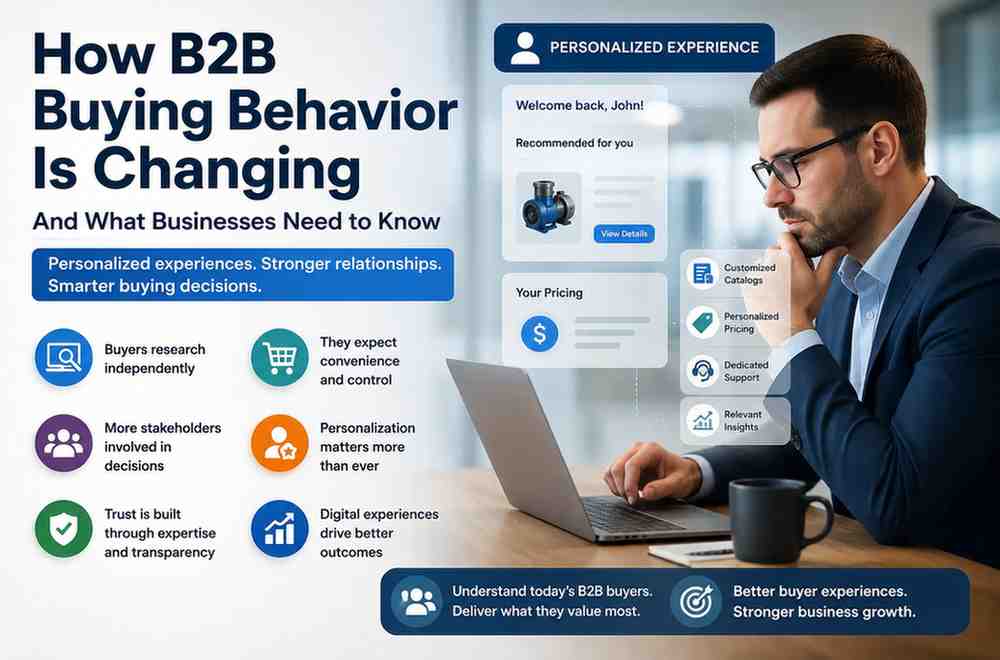
The way businesses buy products and services has changed dramatically over the past few years. Traditional B2B purchasing was often built around long sales cycles, face-to-face meetings, and relationships developed over time. While trust and relationships still matter, today’s buyers expect something more: convenience, transparency, and control over their purchasing journey.
The businesses that recognize these changes early are often the ones that build stronger relationships, shorten sales cycles, and create better customer experiences. Before speaking with a sales representative, they have often researched solutions, compared vendors, read reviews, and narrowed down their options. For businesses, understanding these changing expectations is no longer optional; it’s essential for staying competitive.
One of the biggest shifts in B2B buying behavior is the desire for self-directed research. Decision-makers no longer rely solely on sales teams for information. Instead, they seek answers online through articles, product comparisons, case studies, and educational resources.
Think about how procurement managers, department heads, or business owners make decisions today. They want access to detailed product information, transparent pricing where possible, and clear explanations of how a solution addresses their challenges.
Businesses that invest in informative content and provide buyers with the resources they need often become trusted sources of information long before a purchase decision is made.
Unlike B2C purchases, B2B buying decisions often involve multiple stakeholders. A single purchase may require input from finance teams, operations managers, procurement departments, and executive leadership.
This means businesses must address different priorities throughout the digital B2B purchasing journey. While one stakeholder may focus on cost savings, another may prioritize efficiency, scalability, or ease of implementation.
Understanding these diverse perspectives allows organizations to create experiences that support the entire B2B decision-making process, not just the final transaction.
Modern buyers expect the same level of convenience they experience in their personal lives. Whether ordering office supplies or evaluating enterprise software, they want streamlined interactions that save time.
This includes:
Businesses that simplify the B2B procurement process often improve customer satisfaction and strengthen long-term relationships.
After all, buyers are not just comparing products anymore; they are comparing experiences.
The rise of digital technology has transformed how organizations interact with suppliers. Buyers increasingly expect self-service options that allow them to browse catalogs, place orders, track purchases, and access support when needed.
As these expectations continue to evolve, many business leaders find themselves asking what is b2b eCommerce and whether digital commerce solutions can help deliver the speed, convenience, and flexibility today’s buyers expect.
These changing expectations are influencing purchasing decisions across industries, from manufacturing and wholesale to professional services. Businesses that recognize this shift early are often better positioned to deliver the experiences buyers now expect.
According to McKinsey’s 2024 B2B Pulse Survey, modern B2B buyers increasingly value the flexibility of digital channels while still expecting access to expert support when needed.
Digital channels do not replace human relationships. Instead, they enhance them by reducing friction and giving buyers greater control throughout the purchasing process.
Not all B2B customers have the same needs. Businesses operate in different industries, face unique challenges, and follow distinct procurement procedures.
Modern buyers appreciate experiences tailored to their requirements. This could include:
By understanding B2B buyer preferences, organizations can deliver experiences that feel more relevant and valuable.
Personalization is no longer viewed as an added benefit. Increasingly, it has become an expectation.
Trust continues to play a major role in B2B purchasing decisions. However, the way trust is established has evolved.
Today’s buyers look for evidence of expertise before engaging with vendors. They evaluate case studies, read testimonials, explore thought leadership content, and assess whether a company truly understands their industry.
Businesses can strengthen credibility by:
Organizations that prioritize authenticity often build stronger relationships with their customers over time.
Understanding change is only the first step. Businesses must also respond strategically to evolving customer expectations.
Here are several ways organizations can adapt:
Buyers actively seek information throughout the purchasing journey. Helpful resources such as guides, FAQs, webinars, and case studies can support informed decision-making.
Creating valuable content is only one part of the equation. Publishing helpful content is only part of the process. Businesses also need effective b2b ecommerce marketing strategies to ensure the right audience discovers, engages with, and acts on that information throughout the buying journey.
Reducing complexity within the buying process improves satisfaction. Clear navigation, straightforward communication, and accessible support can make a significant difference.
Many buyers prefer completing routine tasks independently. Features such as customer portals, online ordering systems, and order tracking tools enhance convenience for modern procurement teams.
Understanding purchasing patterns and customer feedback can help businesses deliver more personalized experiences while continuously improving their offerings.
Successful organizations recognize that digital tools and human interactions should complement each other. Buyers often move between online research and direct conversations before making decisions.
B2B buying behavior continues to evolve as technology reshapes expectations and purchasing habits. Buyers want more than products and services—they want experiences that are informative, efficient, and tailored to their needs.
Businesses that take the time to understand modern buyer expectations are better positioned to build trust, strengthen customer relationships, and remain competitive in a rapidly changing marketplace.
The future of B2B commerce belongs to organizations that place customers at the center of every interaction. Those willing to adapt today will be better prepared for the opportunities of tomorrow.
Several factors shape B2B purchasing decisions, including budget considerations, organizational goals, stakeholder input, supplier reputation, product quality, and overall customer experience.
Digital channels provide greater convenience, faster access to information, self-service capabilities, and the flexibility buyers need to evaluate solutions on their own terms.
Organizations can improve customer experiences by simplifying purchasing processes, offering relevant content, personalizing interactions, and providing responsive support throughout the buyer journey.
Absolutely. While digital experiences have become increasingly important, trust and relationships remain essential. The difference is that buyers now expect those relationships to be supported by efficient and user-friendly experiences.

© 2025 Crivva - Hosted by Airy Hosting Managed Website Hosting.