


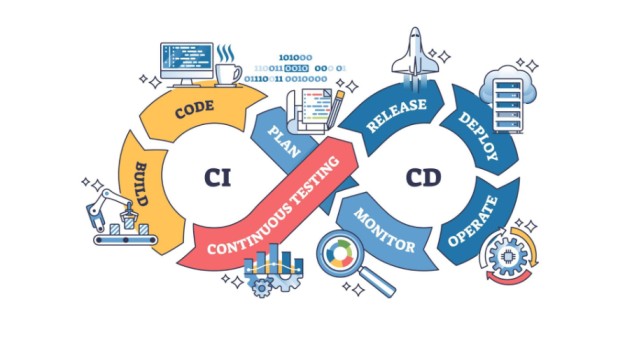
The software development lifecycle today is changing due to the influence of Quality Assurance Automation (QA Automation). Automated tools and frameworks used to test applications prior to release provide reliable functionality, quality and performance across various platforms and environments. In fast-paced Agile and DevOps environments, QA Automation is a necessity, not just an option.
QA Automation is a method that uses specialized software tools to execute test cases automatically, compare the actual results to the expected results and create an easily readable and detailed test report.
Unlike manual testing where testers go through the entire test case each time, QA Automation enables repeatable and standardized testing that can be easily scaled and executed for Continuous Integration/Continuous Deployment (CI/CD) pipelines and for continuously delivering releases.
QA Automation provides many advantages to organizations by eliminating testing challenges while improving speed, quality and efficiency. Here are just a few of the many benefits of QA Automation:
Running an automated test is dramatically faster than running the same test manually. Tasks that take hours to days manually can be performed in a matter of minutes with automated testing. This allows for increased frequency of testing and faster time to market with new releases.
While the initial investment in setting up automated tests can be substantial, they are reusable and as such, will reduce overall costs per release, as you will be able to run the same test multiple times. Over time, this will result in significant reduction of testing costs associated with each release.
With the use of automation, repetitive tasks can now be completed without making mistakes caused by humans. Once an automated test is properly set up and configured, the outcomes from running these tests are consistent and can be relied on.
More Test Coverage
By utilizing automation, thousands of test cases can be executed during one execution cycle, resulting in more comprehensive coverage of the software being tested.
Continual Testing in an Agile & DevOps Environment
Quality Assurance (QA) testing does not disrupt or interfere with the Agile or DevOps workflows because it is integrated into their processes and enables testers to obtain feedback on the progress of their testing in real time while also supporting continual testing.
Desktop applications used to automate the creation, management, and execution of automated tests. Examples: Selenium, Appium, JUnit, Keploy .
The instructions used by the tester to execute the test case. They are written in a programming language such as Java, Python, and JavaScript, and provide a way to define what needs to be done to ensure the application works appropriately.
The data used to perform your automated testing (e.g., input, expected output, and environmental conditions). Proper management of test data will guarantee that you have reliable and repeatable tests.
The setup (software, hardware, network configurations) of the test environment must replicate the characteristics of the production environment in order for tests to be executed successfully.
Test isolated parts of an app to see if they perform properly.
See if multiple parts of an app communicate with one another as expected.
Verify the app is performing according to expectations based on business and user requirements.
Run existing test cases to confirm they still pass after changes that may break existing features.
Test speed, scalability, and stability through simulations of realistic user patterns.
Do It Step-By-Step – Focus on high-ROI cases before performing large scale automation.
Use Appropriate Tools – Pick tools that match both your environment and your project.
Keep Test Scripts Current – Tweak scripts to minimize false positives on tests.
Connect to CI/CD Processes – Start running automated tests as code is changed.
Measure & Refine – Reduce redundant testing and speed up run times.
Selenium – Open-source tool for web application testing across browsers.
Keploy – AI-based tool that generates unit tests automatically, reducing manual labor.
Appium – Automated mobile app testing for Android and iOS devices.
Jenkins – Continuous integration and continuous delivery automation server allowing you to add testing into your deployment pipeline.
Initial High Investment – Tooling, infrastructure & setup usually require an initial investment.
The need for skilled automation engineers to develop complex scripts for advanced applications is an ongoing challenge in today’s marketplace because of the mounting maintenance overhead associated with test script evolution in accordance with application evolution.
The future of QA Automation is heavily influenced by artificial intelligence and machine learning. Intelligent tools like Keploy are reducing the effort required to create and maintain test scripts manually. The increased use of DevOps and continuous integration/continuous delivery will continue to enhance the importance of QA automation and increase the frequency of releases at greater levels of assurance.
In conclusion, QA automation is a critical component in the software development life cycle. It promotes faster release cycles, higher quality software, and improved teamwork and collaboration among all of the development team members. Organizations that leverage the right technologies, employ sound quality assurance practices, and integrate continuous testing methodologies can remain competitive and deliver high-quality software at a global level.
QA Automation is a process that uses software tools to automatically execute test cases and identify defects in order to verify software quality efficiently.
QA automation utilizes automated tests that run consistently and automatically in comparison to strictly human-executed tests that are used for exploratory testing purposes.
Some of the most commonly used QA automation tools include Selenium, Keploy, Appium, TestComplete, and Jenkins.
QA automation should ideally be implemented at the earliest stages of software development utilizing the shift-left testing approach to ensure defects are caught as early in the software development process as possible.

© 2025 Crivva - Hosted by Airy Hosting Managed Website Hosting.