

You just closed a deal, your manager high-fives you, and then someone mentions you’ll be getting a “spiff” on top of your regular commission. You nod like you know what that means and then quietly Google it on the way home. If that’s you, you’re not alone. The word gets thrown around sales floors constantly, but almost nobody stops to actually explain it.
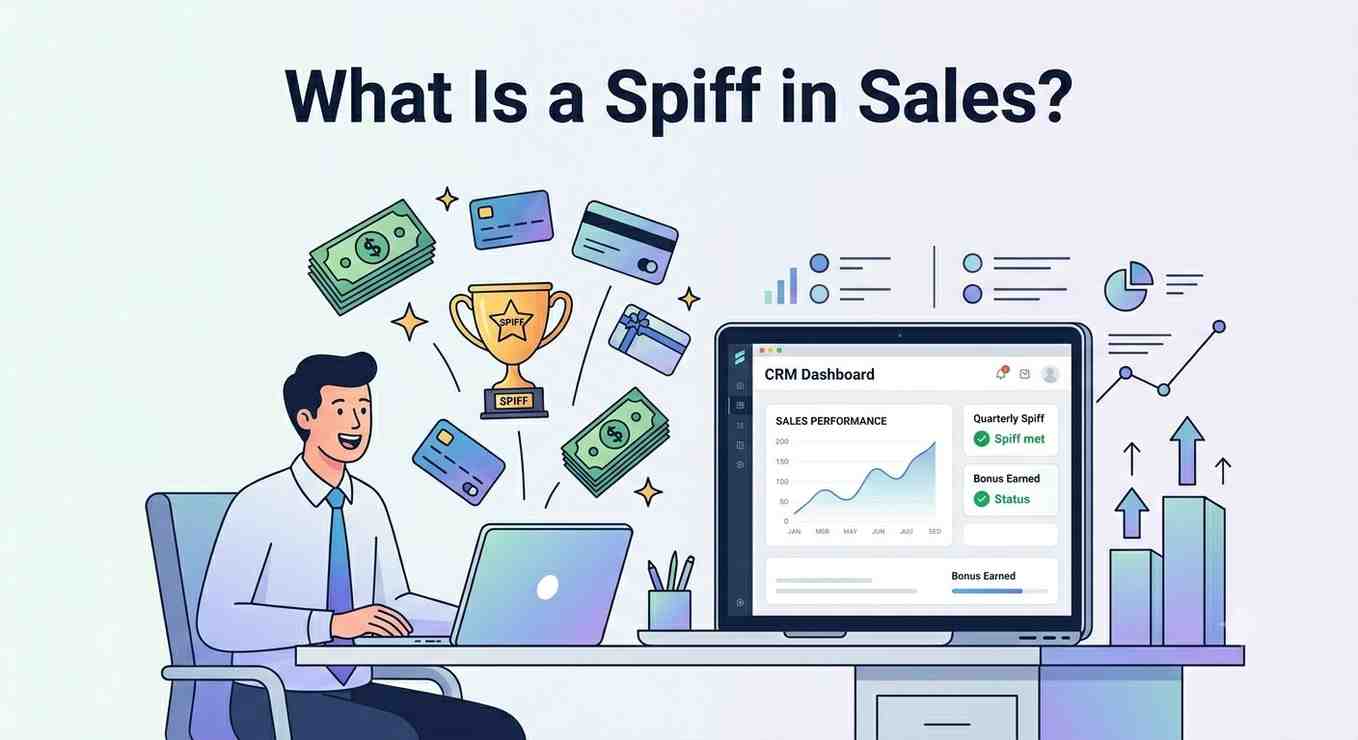
A spiff, sometimes spelled SPIF and occasionally said to stand for Sales Performance Incentive Fund, is a short-term bonus paid directly to a salesperson for selling a specific product or hitting a specific target, usually on top of whatever commission structure they’re already working within.
Think of it less like your base salary and more like a spontaneous reward. Your company wants to move a particular product quickly, clear out old inventory, or push a new service offering, so it attaches a cash bonus to the product or service. Sell that item, get the extra money. Simple as that.
Spiffs can look different depending on the industry and company:
The common thread is this: spiffs are targeted, time-bound, and designed to shift sales behavior quickly.
This is where it gets a little murky. The word “spiff” has been kicking around in sales culture since at least the mid-1800s, when it appeared in British slang to mean something sharp or well-dressed. Over time, it migrated into retail and sales contexts, eventually settling into the meaning we use today.
The acronym/backronym “Sales Performance Incentive Fund” came later and is more of a tidy explanation applied after the fact than a true origin story. Either way, the term stuck, and if you work in sales long enough, you’ll hear it constantly.
Here’s a real-world scenario. Say you work at a technology retailer, and the company has excess stock of a particular laptop model that it needs to clear before a new release. Your manager announces that for the next two weeks, every salesperson who sells that laptop gets an extra $30 per unit, paid out at the end of the month.
That’s a spiff. It’s not part of your normal commission. It doesn’t change your quota. It’s just an added incentive layered on top of your existing structure to nudge your attention toward that specific product.
Some companies run spiffs constantly. Others use them sparingly for high-pressure moments, end-of-quarter pushes, product launches, and slow periods that need a jolt. The frequency and structure depend entirely on the company’s strategy and budget.
This is a question a lot of salespeople never think to ask, and it actually matters.
In some cases, the company itself funds the spiff directly. In others, particularly in retail and channel sales, it’s the manufacturer or vendor who pays the spiff, not the retailer employing you. This is especially common when a brand wants to incentivize store employees to recommend its product over a competitor’s.
That vendor-funded model is worth knowing about for one reason: it can create a quiet conflict of interest. If a salesperson earns an extra $40 for recommending Brand A over Brand B and the customer doesn’t know that, the recommendation suddenly has a financial motive. Most sales professionals handle this with integrity, but it’s a dynamic worth being aware of, whether you’re on the selling or buying side.
People mix these up all the time, so it’s worth drawing clear lines.
Understanding this distinction matters when you’re evaluating a job offer or making sense of your own paycheck. A role that sounds lucrative because of “spiff opportunities” is different from one with a strong base commission structure.
From a company’s perspective, spiffs are one of the most efficient tools in the sales incentive toolkit. They require no restructuring of compensation plans, no lengthy approval processes, and can be turned on and off quickly based on business needs.
And they work because they tap into something real about human motivation: people respond to immediate, tangible rewards attached to specific actions. It’s the same psychology behind loyalty incentive programs that reward customers for specific buying behaviors: tie a clear reward to a clear action, and behavior shifts.
For salespeople, a well-run spiff can make an otherwise slow week feel genuinely exciting. There’s a reason experienced reps pay close attention when spiff announcements hit the floor.
Spiffs aren’t without their problems. A few honest ones worth knowing:
None of this makes spiffs bad. It just means they work best when they’re used strategically and transparently, not as a substitute for a healthy compensation plan.
Yes, but keep them in perspective. A company that uses spiffs thoughtfully as a short-term motivator is doing something smart. A company that leans on spiffs to paper over a weak base commission structure is a different story.
When evaluating a role, ask how frequently spiffs are run, what products or behaviors they typically target, and how payouts are structured. That tells you a lot about how the company thinks about its salespeople, whether they see them as partners in growth or just levers to pull when things need to move fast.
A spiff in sales is a short-term, targeted incentive designed to move specific products or behaviors quickly, separate from your regular commission, and usually tied to an immediate company need. They’re a normal and often welcome part of sales life, as long as you understand what they are, who funds them, and why they exist. Know the difference between a spiff, a commission, and a bonus. Use spiffs as the motivational fuel they’re designed to be, not as the foundation of your income expectations. And if your manager mentions one on the way into a team meeting, now you’ll know exactly what’s coming.
Spiff is often said to stand for Sales Performance Incentive Fund, though the term predates the acronym and likely originated from older British slang. The acronym is widely used today as a convenient explanation for the word.
No. Commission is a standard part of your compensation tied to overall sales activity. A spiff is a separate, short-term bonus for selling a specific product or hitting a specific target. It’s added on top of your existing structure, not part of it.
It depends. Some spiffs are funded by the employing company, while others, particularly in retail and channel sales, are paid directly by a manufacturer or vendor who wants their product prioritized on the floor.
Yes. In most jurisdictions, spiff payments are considered taxable income, just like regular wages or commission. Whether paid in cash, gift cards, or merchandise, such payments are treated by the IRS and most tax authorities as compensation.
They can. When a salesperson earns extra for recommending a specific product, there’s an inherent incentive to favor that product regardless of whether it’s the best fit for the customer. Ethical salespeople navigate this with transparency, but it’s a real dynamic worth understanding on both sides of the transaction.

© 2025 Crivva - Hosted by Airy Hosting Managed Website Hosting.