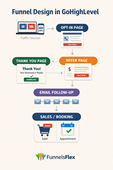
Digital funnels are often described as technical systems built with software, automation, and data. While tools can help, they are not what makes a funnel effective. What truly matters is how clearly a funnel guides a real person from one step to the next.
In simple terms, a digital funnel is just a structured path. Someone arrives with a question, curiosity, or need, and the funnel helps them move forward without confusion. When that path feels natural, people continue. When it feels complicated, they leave.
Most users do not spend much time trying to understand a page. They scan quickly and decide whether to stay or go. This is why simple funnels often perform better than complex ones.
A simple funnel focuses on one idea at a time. It avoids overwhelming visitors with too many choices or long explanations. Instead of forcing decisions, it gently guides attention toward a clear next step.
Simplicity also builds trust. When a message is easy to understand, users feel more comfortable engaging with it. Confusing layouts and excessive information often create doubt, even if the intention is good.
It’s easy to think about funnels in terms of pages, steps, and actions. But behind every click is a real person with limited time and attention. Good funnels are designed around how people naturally behave online.
People skim content. They look for clarity and reassurance. They want to know what is expected of them without feeling pressured. Funnels that respect these behaviors feel more human and less transactional.
When a funnel design with empathy, it feels like a conversation rather than a process. This makes users more willing to continue, even if they don’t take action immediately.
One common mistake is trying to do too much in one place. Pages filled with multiple offers, long forms, and competing messages often confuse visitors instead of helping them.
Another issue is inconsistency. When the tone or design changes suddenly between steps, users may feel uncertain about where they are or what comes next.
Many funnels also fail because they focus too much on outcomes and not enough on experience. A funnel that feels rushed or aggressive may achieve short-term results, but it rarely builds long-term trust.
Clear structure helps users feel oriented. Each step in a funnel should have a purpose and connect logically to the next one. When the flow makes sense, users don’t need to think—they simply follow.
Short sections, clear headings, and simple language make content easier to consume. This doesn’t mean removing depth; it means presenting information in a way that feels approachable.
Funnels that are easy to understand are also easier to improve. When something isn’t working, it’s easier to identify the issue and adjust without rebuilding everything.
The most effective funnels don’t feel like systems at all. They feel like smooth experiences that respect the user’s pace. Instead of pushing people forward, they support decision-making.
When funnels are treated as experiences, design choices become more thoughtful. Every element is added with intention, and unnecessary friction is removed.
This approach creates better long-term results. Users are more likely to remember and trust experiences that feel simple, honest, and easy to navigate.
Digital funnels don’t need to be complex to be effective. In many cases, simplicity is their greatest strength. Clear messaging, thoughtful structure, and respect for real user behavior go a long way.
Good funnels guide people rather than pressure them. They focus on clarity instead of control. When a funnel makes sense to the user, it works naturally—without force, hype, or confusion.
Digital funnels don’t need to be complex to be effective. In many cases, simplicity is their greatest strength. Clear messaging, thoughtful structure, and respect for real user behavior go a long way.
Good funnels guide people rather than pressure them. They focus on clarity instead of control. When a funnel makes sense to the user, it works naturally—without force, hype, or confusion.
Digital funnels don’t need to be complex to be effective. In many cases, simplicity is their greatest strength. Clear messaging, thoughtful structure, and respect for real user behavior go a long way.
Good funnels guide people rather than pressure them. They focus on clarity instead of control. When a funnel makes sense to the user, it works naturally—without force, hype, or confusion.
Good funnels guide people rather than pressure them. They focus on clarity instead of control. When a funnel makes sense to the user, it works naturally—without force, hype, or confusion.
Good funnels guide people rather than pressure them. They focus on clarity instead of control. When a funnel makes sense to the user, it works naturally—without force, hype, or confusion.
Good funnels guide people rather than pressure them. They focus on clarity instead of control. When a funnel makes sense to the user, it works naturally—without force, hype, or confusion.
Good funnels guide people rather than pressure them. They focus on clarity instead of control. When a funnel makes sense to the user, it works naturally—without force, hype, or confusion.
Good funnels guide people rather than pressure them. They focus on clarity instead of control. When a funnel makes sense to the user, it works naturally—without force, hype, or confusion.
Good funnels guide people rather than pressure them. They focus on clarity instead of control. When a funnel makes sense to the user, it works naturally—without force, hype, or confusion.
Good funnels guide people rather than pressure them. They focus on clarity instead of control. When a funnel makes sense to the user, it works naturally—without force, hype, or confusion.
Good funnels guide people rather than pressure them. They focus on clarity instead of control. When a funnel makes sense to the user, it works naturally—without force, hype, or confusion.
Good funnels guide people rather than pressure them. They focus on clarity instead of control. When a funnel makes sense to the user, it works naturally—without force, hype, or confusion.

© 2025 Crivva - Hosted by Airy Hosting Managed Website Hosting.