


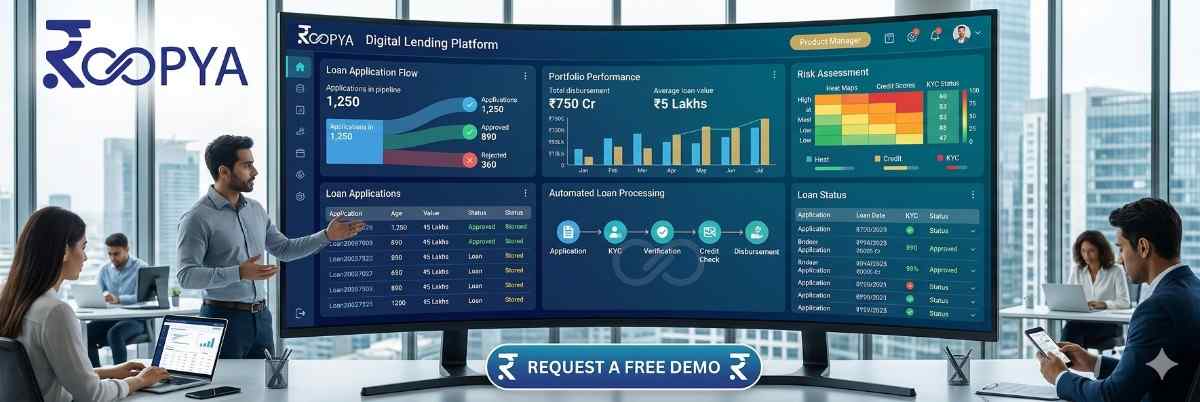
The digital lending industry is undergoing a massive transformation. Traditional lending processes that relied on manual paperwork, branch visits, physical verification, and lengthy approval cycles are rapidly being replaced by intelligent digital lending software platforms.
Today’s borrowers expect instant approvals, paperless onboarding, mobile-first experiences, and faster disbursements. To meet these expectations, banks, NBFCs, fintech companies, microfinance institutions, and digital lenders are investing heavily in digital lending software.
Modern lending platforms are no longer limited to loan application processing. They now include AI-powered underwriting, automated KYC verification, business rule engines, fraud detection, credit scoring, workflow automation, analytics, and customer engagement tools.
Platforms such as Roopya provide an integrated lending infrastructure that helps lenders automate customer onboarding, underwriting, bureau checks, disbursement workflows, risk assessment, compliance management, and portfolio monitoring.
This guide explains the most important digital lending software features that lenders should look for when selecting a lending platform.
Digital lending software is a technology platform that automates the entire lending lifecycle, from customer acquisition to loan servicing.
The software enables lenders to:
The objective is to reduce turnaround time, improve operational efficiency, lower risk, and enhance customer experience.
The lending ecosystem is becoming increasingly competitive.
Modern lenders face several challenges:
Digital lending platforms solve these challenges through automation, AI, and intelligent workflows.
Benefits include:
Customer onboarding is the first interaction between the borrower and lender.
A good lending platform should provide:
Benefits:
Modern platforms allow borrowers to complete applications from any device without visiting a branch.
Know Your Customer (KYC) compliance is mandatory for financial institutions.
Digital lending software should support:
Benefits:
Managing thousands of applications manually can create bottlenecks.
A digital lending platform should include:
Benefits:
Traditional credit evaluation relies heavily on bureau scores.
Modern lending software uses AI to evaluate:
Benefits:
AI-driven credit scoring has become a major differentiator for lenders seeking growth while controlling risk.
Manual underwriting slows loan approvals.
An automated underwriting engine evaluates applications using predefined lending rules.
Key capabilities:
Benefits:
A Business Rule Engine allows lenders to automate decision-making.
Examples include:
Benefits:
Many modern platforms provide no-code BRE configurations that enable lenders to modify rules without development teams.
A strong lending platform should connect with major credit bureaus.
Examples:
Benefits:
Industry experts increasingly consider multi-bureau integration a critical lending requirement.
Optical Character Recognition (OCR) eliminates manual data entry.
Documents processed include:
Benefits:
Digital lending fraud continues to increase across the industry.
A robust platform should include:
Benefits:
Workflow automation enables lenders to streamline operations.
Processes automated include:
Benefits:
The Loan Origination System serves as the backbone of digital lending.
A comprehensive LOS should include:
Benefits:
Roopya’s LOS platform enables lenders to automate the complete loan origination journey from onboarding to disbursement.
Modern lenders rely on multiple third-party services.
Required integrations include:
Benefits:
Account Aggregators are becoming increasingly important in India.
Benefits include:
Industry experts consider AA integration a significant advantage for modern lenders.
Borrowers expect instant results.
Real-time decision engines provide:
Benefits:
After approval, lenders need efficient disbursement processes.
Features include:
Benefits:
Digital lending platforms should automatically generate:
Benefits:
Electronic signatures simplify loan execution.
Benefits include:
Loan management begins after disbursement.
Key LMS features:
Benefits:
Collections significantly impact profitability.
Features should include:
Benefits:
Analytics transforms lending operations.
Metrics include:
Benefits:
Modern lending platforms increasingly offer predictive analytics and portfolio intelligence.
Security is essential for lenders.
Features include:
Benefits:
Lenders often offer multiple loan products.
Examples:
Benefits:
Mobile-first lending is now the industry standard.
Capabilities:
Benefits:
Cloud technology enables:
Benefits:
Cloud-native lending platforms are increasingly preferred by NBFCs and fintech lenders.
Compliance is critical in financial services.
Features include:
Benefits:
When evaluating a platform, consider:
Can it support future growth?
Can workflows be modified easily?
Does it connect with your ecosystem?
How much manual work is eliminated?
Does it meet industry standards?
Does it support regulatory requirements?
Does it provide actionable insights?
Industry practitioners often emphasize configurability, integration capabilities, and implementation flexibility over simple feature lists.
Roopya offers:
The platform helps lenders automate the complete lending lifecycle while improving speed, compliance, and borrower experience.
Digital lending software has become the foundation of modern lending operations. Whether you are a bank, NBFC, MFI, cooperative society, or fintech startup, selecting a platform with the right features can dramatically improve efficiency, reduce risk, and accelerate growth.
The most important features include:
Organizations that invest in advanced digital lending software today will be better positioned to scale, improve customer experience, and remain competitive in the rapidly evolving lending market.
Digital lending software is a platform that automates loan application processing, underwriting, approval, disbursement, and loan servicing.
Key features include digital onboarding, KYC verification, AI underwriting, workflow automation, credit bureau integration, analytics, and loan management.
AI helps lenders improve credit assessment, detect fraud, automate underwriting, and reduce default risk.
A Loan Origination System manages the complete loan lifecycle from application submission to loan disbursement.
Automation eliminates manual tasks, reduces errors, improves productivity, and lowers operational expenses.
Yes. Modern digital lending platforms are specifically designed for NBFCs, banks, MFIs, and fintech lenders.
Credit bureaus, KYC providers, payment gateways, Account Aggregators, CRM systems, and banking APIs.
It provides instant applications, paperless onboarding, faster approvals, and real-time status updates.

© 2025 Crivva - Hosted by Airy Hosting Managed Website Hosting.