


Managing a Self-Managed Super Fund (SMSF) offers Australians greater control over their retirement savings, investment choices, and long-term financial planning. However, with that control comes responsibility. Trustees are expected to understand and follow a wide range of rules set by the Australian Taxation Office (ATO).
Many SMSF trustees start with the best intentions but unintentionally make mistakes that can lead to penalties, compliance breaches, audits, or even the loss of tax concessions. As regulations continue to evolve, staying informed is more important than ever.
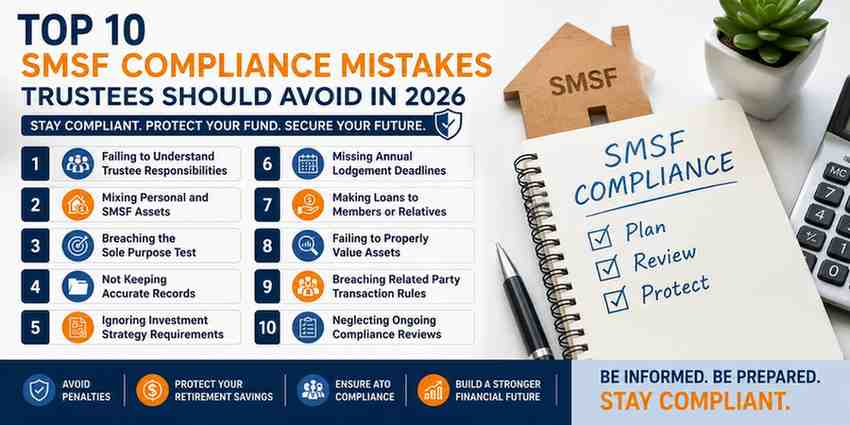
Seeking professional SMSF Compliance Advice can help trustees navigate complex requirements and avoid costly errors. To help keep your fund on track, here are ten common SMSF compliance mistakes trustees should avoid in 2026.
Managing a Self-Managed Super Fund gives trustees greater control over their retirement savings, but it also comes with ongoing responsibilities. With changing regulations, increased ATO scrutiny, and stricter reporting requirements, even experienced trustees can make mistakes that lead to compliance breaches.
In many cases, these issues are not caused by intentional wrongdoing. They often result from outdated information, poor record keeping, missed deadlines, or a lack of understanding of the rules. As SMSFs continue to grow in popularity, trustees need to stay proactive and regularly review their obligations.
Here are ten common SMSF compliance mistakes trustees should avoid in 2026 to help protect their fund and maintain compliance with ATO requirements.
One of the most common issues occurs when trustees establish an SMSF without fully understanding their obligations.
Being a trustee is not a passive role. Every trustee is legally responsible for ensuring the fund complies with superannuation laws and regulations. This includes managing investments appropriately, maintaining records, lodging returns on time, and acting in the best interests of members.
Many compliance problems begin simply because trustees underestimate the responsibilities involved.
An SMSF must always remain separate from personal finances.
Unfortunately, some trustees accidentally use fund money for personal expenses or hold assets in a way that does not clearly distinguish ownership between the fund and individual members.
The ATO takes this issue seriously because it undermines the integrity of the fund structure.
Examples include:
Maintaining a clear separation between personal and fund assets is essential for compliance.
Every SMSF must satisfy what is known as the Sole Purpose Test.
This means the fund must exist solely to provide retirement benefits to members or their beneficiaries. Problems arise when trustees use fund assets for personal enjoyment or immediate benefit.
Common examples include:
Even if the breach seems minor, it can create significant compliance concerns.
Good record-keeping remains one of the foundations of SMSF compliance.
Trustees are required to maintain records relating to:
Missing or incomplete records can create difficulties during audits and increase the likelihood of compliance issues. The ATO expects SMSFs to maintain accurate documentation throughout the life of the fund.
Every SMSF must have a documented investment strategy.
However, many trustees create an investment strategy once and never review it again.
An effective strategy should consider:
As circumstances change, the investment strategy should also be reviewed and updated. Working with experienced self managed super fund accountants can help trustees ensure their investment approach remains aligned with regulatory requirements.
Late lodgement remains one of the most common compliance problems facing SMSFs.
Each year trustees must ensure that:
Failure to meet deadlines may result in penalties, increased scrutiny, and restrictions on the fund’s compliance status.
Many trustees underestimate how long the annual reporting process can take, especially when records are incomplete.
Creating a compliance calendar can help avoid last-minute stress and missed deadlines.
SMSF assets cannot be used to provide financial assistance to members or their relatives.
Despite this, some trustees unknowingly breach the rules by:
These arrangements are generally prohibited and can trigger serious compliance consequences.
Trustees should carefully review any proposed transaction involving related parties before proceeding.
Accurate asset valuation has become an increasing focus for regulators.
Trustees are responsible for ensuring fund assets are reported at market value when required.
This applies to:
Incorrect valuations can affect member balances, pension calculations, and reporting obligations.
Obtaining independent evidence where appropriate can help support valuation decisions.
Many trustees seek specialist smsf compliance advice perth professionals when dealing with complex asset valuations.
Related party transactions are permitted in limited circumstances, but strict rules apply.
Trustees sometimes assume they can buy, sell, or lease assets to family members without restrictions.
In reality, the regulations surrounding related-party dealings are highly specific.
Common compliance issues include:
Trustees should always ensure transactions are conducted at arm’s length and comply with superannuation legislation.
Some trustees mistakenly believe compliance is only something they need to think about at tax time.
In practice, compliance should be an ongoing process throughout the year.
Regulations change, investment portfolios evolve, and member circumstances shift over time.
Regular reviews can help identify potential issues before they become major problems.
Trustees who proactively monitor their fund are generally better positioned to avoid costly breaches and maintain long-term compliance.
Many firms offering smsf services perth recommend conducting periodic compliance reviews to ensure the fund continues operating within regulatory requirements.
The ATO continues to strengthen its focus on SMSF compliance through increased data matching, enhanced reporting capabilities, and targeted compliance programs.
Technology now allows regulators to identify inconsistencies and potential breaches more quickly than ever before.
As a result, trustees can no longer assume that minor errors will go unnoticed.
Staying compliant protects:
More importantly, compliance helps ensure the SMSF continues serving its primary purpose—providing retirement benefits to members.
While the rules may seem complex, there are several practical steps trustees can take to reduce risk:
Running an SMSF can be highly rewarding, but it also requires ongoing attention to compliance obligations. Many breaches occur not because trustees intentionally break the rules, but because they misunderstand requirements or overlook important details.
By understanding the most common compliance mistakes and taking proactive steps to avoid them, trustees can better protect their retirement savings and maintain the long-term success of their fund.
As compliance expectations continue to increase in 2026, staying informed, maintaining accurate records, and seeking professional support when needed will remain essential components of successful SMSF management.

© 2025 Crivva - Hosted by Airy Hosting Managed Website Hosting.