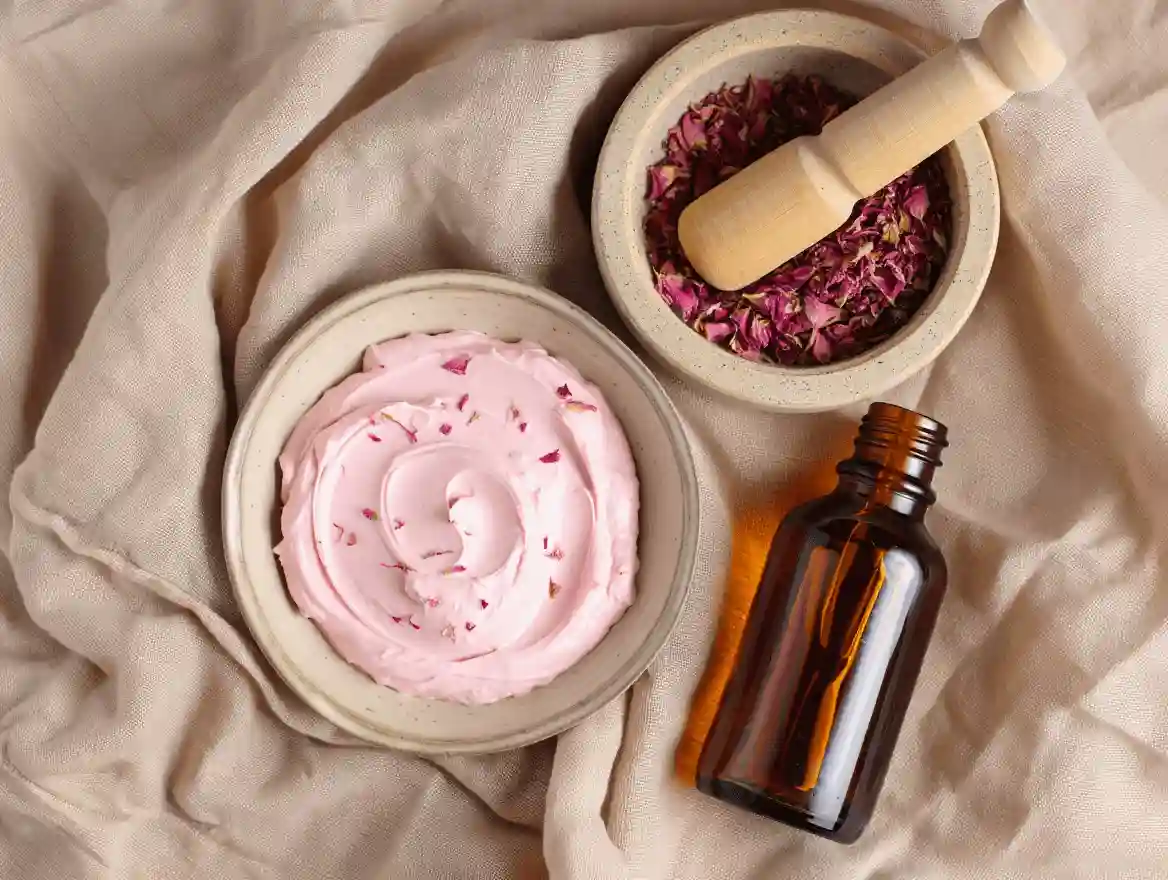
Ru Xia was not a minimalist by nature.
Her bathroom shelf told the whole story. Seventeen products arranged in the precise order she applied them — double cleanse, essence, ampoule, serum, emulsion, cream, eye cream, SPF. She had built this routine over six years with the kind of dedicated research she normally reserved for her work as a pharmaceutical analyst in Chengdu. She understood ingredients. She read studies. She knew the difference between a genuine collagen-stimulating botanical and a marketing claim dressed in scientific language.
So when her skin started reacting — redness across the cheeks, tightness after cleansing, a sensitivity that had not been there two years ago — she did not panic. She did what she always did. She went back to the data.
What the data told her surprised her.
The average Chinese woman with a multi-step routine is exposing her skin to over 150 distinct chemical compounds every single morning. Some work synergistically. Many do not. A growing body of dermatological research points to skin barrier dysfunction — not dry weather, not pollution, not genetics — as the leading cause of the sensitivity epidemic sweeping China’s urban female population. And the primary driver of barrier dysfunction, according to the same research, is overcleansing and over-exfoliation with synthetic compounds.
She looked at her seventeen products. Then she looked at the ingredient lists. Then she sat down.
The cleanser she had used loyally for four years contained three types of surfactant, a synthetic fragrance compound, and a preservative system that she recognized, from her pharmaceutical background, as a known sensitizer in concentrations above 0.5%. She checked the concentration. It was not disclosed. It never was.
Her toner — the one she had been using as a natural skin brightening treatment — contained alcohol as its second ingredient, which meant it was present in higher concentration than almost everything else in the formula. Alcohol tones the skin by stripping it. Stripping feels like tightening. Tightening feels like results. It is not results. It is damage presenting as sensation.
She had been stripping her barrier for six years and calling it skincare.
The solution was not a new product. It was fewer products. Better sourced. More honest in their composition.
She began with a single change. She replaced her toner with genuine rose water — not the fragrance-infused water sold in gradient-colored bottles on Tmall, but actual distilled rose water made from dried petals, with nothing added. No alcohol. No synthetic fragrance. No preservative cocktail. Just the water-soluble compounds of the rose: natural tannins for gentle pore-tightening, polyphenols for antioxidant skin protection, flavonoids for anti-inflammatory action on sensitized skin.
Within three weeks the redness had reduced noticeably. Within six, her skin felt — for the first time in years — like her own again.
The second change came from an unexpected direction.
A colleague in her department — a biochemist in her late fifties with the kind of calm, even complexion that Ru Xia had always attributed to good genetics — mentioned over lunch that she had been drinking rose petal tea every morning for twenty years. Not for beauty specifically. For digestion. For what she called hormonal balance for women — the stabilizing effect that Traditional Chinese Medicine had long attributed to méiguī on the liver and the body’s qi circulation.
Ru Xia had written a research note on botanical polyphenols and systemic inflammation the previous year. She knew the mechanism. Rose petals consumed as tea release compounds into the bloodstream that reduce the inflammatory markers associated with skin redness, uneven tone, and the accelerated aging driven by chronic low-grade inflammation — the silent condition affecting the majority of women in high-stress urban environments.
She ordered a bag of dry red rose petals — specifically the deep crimson variety from Pakistan, because she had read enough about what differentiates genuinely functional rose petals from decorative ones to know that color and fragrance intensity are not aesthetic qualities. They are indicators of polyphenol concentration and essential oil preservation. Pale, odorless petals are spent material. Deep crimson petals with a fragrance that fills the room when you open the bag are biochemically active.
She brewed a cup every morning. It tasted like drinking a garden in the best possible way.
Six months after her experiment began, Ru Xia’s shelf held seven products. Down from seventeen. Her skin was the best it had been since her late twenties — not because she had found a more sophisticated formula, but because she had stopped attacking her barrier and started supporting it.
Her morning routine: rose water as toner, a light moisturizer, SPF. Her evening routine: a gentle rose soap cleanse — no surfactant system, no synthetic fragrance, no second cleanse needed — followed by rose water and a simple barrier cream. Once a week, a rose powder mask mixed with yogurt for natural skin brightening and gentle exfoliation without the chemical peel aggression that had contributed to her sensitivity in the first place.
On her desk at work: a rose water face mist for the afternoon reset. The one that her colleague had recommended. The one that smelled exactly like the real thing, because it was.
Ru Xia eventually wrote an internal wellness note for her department — not about pharmaceuticals, but about the case for clean botanical skincare in an era of ingredient overload. She included citations. She included the dermatological literature on barrier dysfunction. She included her own reading on what rose petals do when consumed and applied consistently over time.
The note was forwarded around the company. Then outside it. Her inbox filled with questions from women who recognized the pattern she described — sensitive, reactive, over-treated skin that had been chasing solutions through the same industry that created the problem.
Her answer was always the same. Simplify. Source honestly. Start with the rose.
The full range of rose products — from dried petals and rose water to rose powder, rose soap, and face mist — sourced from Pakistani roses by Harmain Global, are available for individual buyers, wellness brands, and cosmetic formulators looking to build on an ingredient that the data, the tradition, and the results all point toward.
Not as a trend. As a foundation.
Contact Harmain Global at [email protected] — harmainglobal.com

© 2025 Crivva - Hosted by Airy Hosting Managed Website Hosting.