Modern HR teams operate beyond traditional personnel management because they oversee all aspects of their organization, which includes system operations, data management, legal requirements, and employee interaction throughout the organization. The design of the HR operations system becomes invisible to users who find it easy to use because an effective system design works quietly throughout their organization.
Frictionless HR requires intentional system design, together with efficient integration work and a technology system that enables organizational growth instead of creating obstacles. All systems that provide smooth employee onboarding processes together with precise payroll calculations and instant access to workforce data operate through systems that minimize operational difficulties.
The article examines architectural design principles together with system component structures, which create completely frictionless HR operations because establishing this foundation has become an essential requirement for modern business organizations.
Friction in HR isn’t always loud. Sometimes it shows up as small delays, duplicate data entry, manual reconciliations, or unclear reporting. Over time, these inefficiencies compound and quietly drain productivity.
Frictionless HR operations are defined by:
Achieving this requires moving beyond isolated HR tools toward a connected, architecture-first approach.
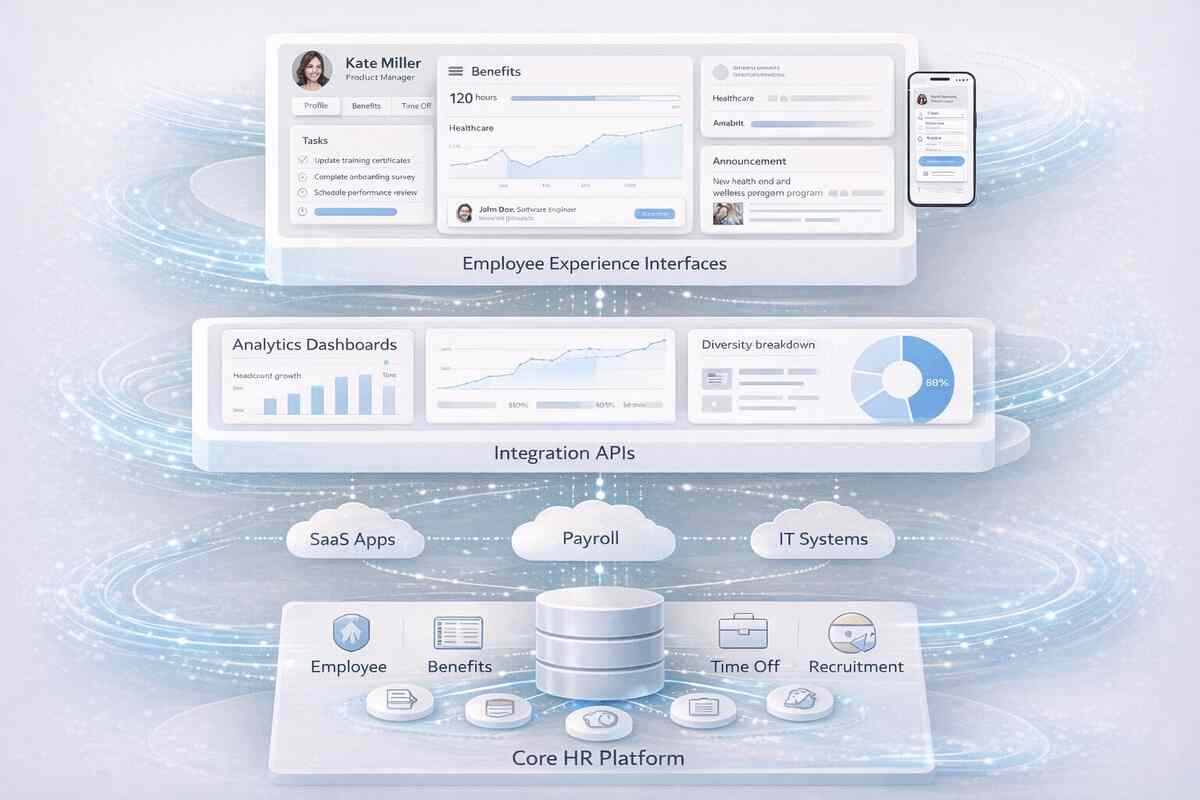
At a high level, frictionless HR operations rely on multiple architectural layers working together in harmony. Each layer has a specific role, but the real value comes from how well they interact.
The HR system architecture depends on this element as its fundamental building block. This system maintains official staff records, which include
The system requires complete accuracy and uniformity between its components. The system of record loses its effectiveness when it becomes divided into separate parts or when its information becomes outdated. An effective HR system requires this component to function as its sole reliable data source, which must be protected through rigorous data management practices.
This is the point where organizations either achieve total harmony between their systems or create more friction between their existing systems.
HR operations do not function as separate entities because they require HR data access from payroll systems, finance systems, learning platforms, identity management systems, and analytics systems.
The absence of an effective integration system forces teams to depend on manual exports, fragile scripts, and time-consuming batch procedures.
The system gains the following benefits through its strong integration layer, which enables:
Standardized APIs and middleware serve as the primary method that organizations use to simplify this system component when they implement enterprise HR systems. The Workday API Integration provides an implementation through which HR systems can maintain dependable communication with payroll systems, benefits systems, and analytics platforms while safeguarding their main business functions.
Human resources face their most severe problems because they need to approve requests through manual methods and handle processes that rely on email communication. The current architectural system integrates automatic operation through its workflow development process.
Common automated HR workflows include:
The design of workflows as configurable services enables organizations to achieve operational flexibility while maintaining their ability to control workflows. The system provides automatic process advancement while granting authorized personnel the ability to monitor essential areas of operation.
Frictionless HR achieves its goals through two separate aspects, which include backend efficiency and user experience testing of system performance.
This layer includes:
A well-designed experience layer sits on top of complex systems and hides that complexity from users. Employees should receive their required materials at the exact time they need them without needing to know about the multiple systems that handle their requests.
Data without insight still creates friction.
Modern HR architectures embed analytics directly into operational systems, enabling:
Instead of static reports, frictionless HR environments provide contextual, real-time intelligence. Leaders can make informed decisions without waiting days for manual reports or cross-system reconciliation.
Frictionless HR operations require organizations to follow essential principles that guide their operational processes.
The integrated systems that work together in a system face problems because of their strong connection. Organizations can use decoupled architectures to replace or upgrade their payroll systems and learning platforms without impacting their complete operational framework.
HR operations become more complicated when organizations expand their workforce to different locations and face new legal requirements. Organizations that design their systems only to meet present demands will discover their systems will fail when their business expands. The design of scalable HR systems includes future growth and operational changes as essential design elements.
Enterprise HR data ranks among the most critical and sensitive information. An effective system implements role-based access control with audit systems and compliance mechanisms that operate efficiently through authorized processes.
The most successful HR teams automate repetitive tasks so humans can focus on strategic and human-centric work. The system should establish automation as the primary operational method while treating automation as an essential design component.
The organization experiences multiple advantages when HR architecture receives proper design.
Most importantly, HR shifts from being reactive to proactive, enabled by systems that support decision-making instead of slowing it down.
As AI, automation, and predictive analytics become standard, HR architectures will continue to evolve. The organizations that succeed won’t necessarily adopt the most tools, but the ones that design the cleanest, most adaptable foundations.
Frictionless HR operations are not about removing people from the process. They’re about removing obstacles so people, systems, and decisions can move forward together with confidence.
Frictionless HR operations don’t come from adding more tools or chasing trends. The organization achieves its goals through architectural design, which establishes systems for clear communication and efficient system growth. HR teams achieve more productivity when systems operate without problems because they need to spend less time repairing problems that they encounter between systems.
Organizations that operate with distributed workforces and utilize data systems need advanced HR architectural systems to gain their competitive edge over rivals. The correct foundation enables process development, which produces insights at a faster rate while maintaining consistent employee experiences during times of increasing organizational complexity. The essential element for HR systems to function properly lies within their architectural foundation, which operates in silent mode throughout their operational period.

© 2025 Crivva - Hosted by Airy Hosting Managed Website Hosting.