


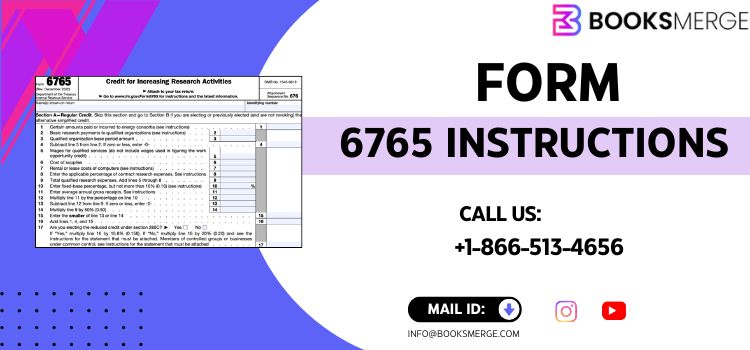
Form 6765 Instructions explain how to calculate and claim the federal R&D tax credit, identify qualified research expenses, and elect the payroll tax offset when eligible.
Form 6765 Instructions guide taxpayers through claiming the Credit for Increasing Research Activities, commonly called the R&D tax credit. The instructions explain who qualifies, how to compute credit amounts, and how to make elections that affect tax and payroll filing. For the official instructions and the form itself, see the IRS resources.
Form 6765 Instructions are the official guidelines issued by the IRS to help businesses properly complete Form 6765 Instructions, also known as the Credit for Increasing Research Activities form. This form allows businesses to claim the federal Research & Development (R&D) tax credit, which rewards companies investing in innovation, product development, and technological improvement. The instructions serve as a roadmap, outlining who qualifies, how to calculate the credit, what expenses can be included, and how to make important elections like the payroll tax offset.
The R&D credit can reduce federal tax bills or, for qualifying small businesses, offset payroll taxes. That makes the credit especially useful for startups and firms investing in product development or process improvements. Accurate use of the Instructions for Form 6765 helps protect claims from audit scrutiny and ensures the right elections are made.
The IRS updated the Instructions for Form 6765 in January 2025 and added a new Section G that collects business component information. For tax years beginning before 2025, Section G may be optional; for tax years beginning after 2024, it becomes more broadly required, subject to transition guidance and clarifications the IRS has issued. Check the latest IRS clarification notices for precise applicability.
Stick to the IRS sequence to avoid rework. The following roadmap reflects the official Instructions Form 6765 and practical filing steps.
Identify business components and projects
Group related research activities into business components so costs map cleanly to the form. Section G collects component-level data when required.
Choose a credit computation method
The instructions present the Regular Credit method and the Alternative Simplified Credit (ASC). Run both calculations to see which yields the best outcome.
Calculate Qualified Research Expenses (QREs)
QREs include wages for qualified activities, supplies used in experimentation, and certain contract research amounts. Keep contemporaneous records tying wages and hours to projects.
Decide elections
The Instructions for Form 6765 show how to elect the reduced credit under section 280C or the payroll tax offset for qualified small businesses. Elections affect reporting and may require Form 8974.
Complete and attach the form
Finish Form 6765, attach it to the federal return, and retain supporting documentation in case of an IRS inquiry.
Quick Note: An IRS form list is a comprehensive reference of all federal tax forms used to report income, claim credits, and ensure compliance with U.S. tax regulations.
Contract research payments can qualify, but rules differ from wages. Payments to outside contractors often appear on Form 1099 series returns. Instructions specify how contract research amounts factor into QREs and what documentation to keep. Reconcile Form 1099s and vendor invoices with the research projects they support to make claims defensible.
Eligible startups and small businesses can elect to apply part of the R&D credit against the employer share of Social Security tax. That payroll credit amount is tracked using Form 8974 and then claimed on employment tax returns such as Form 941. This option helps loss-making innovators convert research activity into immediate tax relief.
Good records make tax credits easier and safer. Follow these practical tips aligned with the Instructions Form 6765:
Write short project narratives that describe the technical uncertainty and experimental approach.
Keep time logs linking employee hours to specific projects and business components.
Preserve contracts and invoices for contract research and reconcile them with Form 1099s.
Record supply purchases with receipts and explanations about experimental use.
Note election choices and document board or owner approvals when applicable.
BooksMerge can convert messy records into audit-ready files and bookkeeping reports aligned with Form 6765 Instructions. Call +1-866-513-4656 for hands-on help.
Claiming routine or cosmetic work that does not meet the four-part test for qualified research. Always map activities to the IRS criteria.
Weak payroll substantiation. Without timekeeping tied to projects, wage-based QREs become vulnerable.
Ignoring Section G. As reporting requirements change, early preparation prevents last-minute scrambling.
Misclassifying contractors. Treat payments correctly for 1099 reporting and QRE qualification.
Form 6765 Instructions provide a structured and reliable framework for businesses to claim the federal R&D tax credit. These instructions break down the process step by step, ensuring that eligible companies can calculate their credit accurately, report qualified research expenses (QREs), and make important elections such as the payroll tax offset for startups and small businesses.
In addition to the IRS instructions, consulting practitioner notes and professional guidance adds another layer of confidence. Accounting experts and tax advisors often provide practical tips for mapping expenses to business components, documenting time tracking, and navigating payroll tax elections using Form 8974. Partnering with experienced professionals, like BooksMerge, can transform complex R&D recordkeeping into audit-ready reports and filing-ready documentation, giving business owners peace of mind while optimizing tax benefits. Call +1-866-513-4656 for personalized assistance.
Q: What is the first step when using the Instructions for Form 6765?
A: Start by identifying business components and documenting projects so costs map directly to the lines on Form 6765.
Q: Can contract work reported on Form 1099 count as QREs?
A: Yes, certain contract research payments qualify, but documentation and contract terms determine eligibility. Reconcile 1099s and invoices carefully.
Q: Who can use the payroll tax election?
A: Qualified small businesses with limited income tax liability may elect to apply part of the R&D credit against employer Social Security tax using Form 8974.
Q: Is Section G required for tax year 2025?
A: The IRS introduced Section G and provided transition guidance; check the January 2025 Instructions and IRS clarifications for exact applicability to your tax year.

© 2025 Crivva - Hosted by Airy Hosting Managed Website Hosting.