

For most Pakistani households and business owners, the decision to go solar doesn’t start with an interest in renewable energy — it starts with an electricity bill that feels impossible to justify. As tariffs continue climbing and outages remain unpredictable, more people are looking seriously at solar system installation as a way to take control of their energy costs rather than absorb another price hike. This article walks through the full journey — from understanding why solar makes sense in Pakistan’s current market, to what actually happens during installation, to how to choose a provider you can trust for the next two decades.
Pakistan’s power sector has struggled for years with a heavy reliance on imported fuel, aging transmission infrastructure, and rising circular debt — all of which eventually show up as higher tariffs for consumers. Unlike fuel-based generation, solar energy is largely insulated from these pressures once installed, since the primary input is sunlight rather than an imported commodity. Combined with Pakistan’s strong solar irradiance across most provinces, this has made solar one of the few energy investments where the payback period keeps shortening as grid electricity prices rise. For many households, a properly sized system pays for itself within three to six years, with two decades of low-cost power afterward.
Not every solar setup is the same, and understanding the categories helps you have a more informed conversation with any provider:
Your choice should be guided by how often your area experiences load-shedding, your daytime versus nighttime energy usage, and your budget — not simply by what a salesperson recommends first.
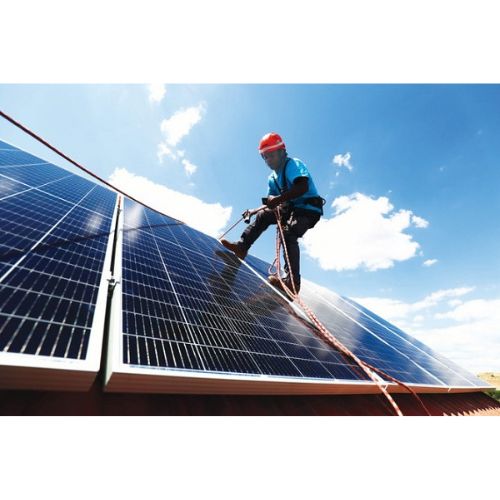
A well-run solar installation company follows a structured process rather than a rushed, one-visit setup. Here’s what that typically looks like:
Residential projects are usually completed within a week once the design is approved, while commercial and industrial installations may take several weeks depending on system size and grid approval timelines.
Solar performance and installation requirements vary somewhat depending on your region. Coastal cities like Karachi deal with higher humidity and dust accumulation, which affects panel efficiency and cleaning frequency. Punjab’s cities experience more seasonal temperature swings, which can influence inverter placement and ventilation needs. Northern areas, while sunny, may require additional attention to structural mounting due to wind loads. A provider with genuine regional experience will factor these details into the system design rather than applying an identical template everywhere.
The solar market in Pakistan has grown quickly, which means quality varies significantly between providers. Before signing any contract, it’s worth asking direct questions:
A provider who answers these questions clearly, backs claims with documentation, and offers a transparent written proposal is generally a safer long-term partner than one offering the lowest possible quote with few details.
When researching solar system installation near me, it’s tempting to go with whichever company ranks highest in a quick search, but a smarter approach is to shortlist a few providers with a physical office or warehouse in your city. Local presence usually translates into faster response times for maintenance requests, panel cleaning, or troubleshooting if output drops unexpectedly. Getting at least two or three written proposals for the same system specification often reveals meaningful differences in equipment quality and pricing that aren’t obvious from a single quote alone.
Pricing for solar installation services depends on several factors beyond just system size: panel type (monocrystalline panels typically cost more but generate more power per square foot than polycrystalline options), inverter brand and capacity, roof type and mounting complexity, and whether battery storage is included. Buyers should request an itemized breakdown rather than a single lump-sum number, since this makes it far easier to compare providers fairly and understand exactly what’s included in the price.
Solar systems require relatively little maintenance, but they aren’t entirely hands-off. Panels should be cleaned periodically to remove dust buildup, especially in coastal or industrial areas where accumulation happens faster. Inverters typically have a shorter lifespan than panels and may need replacement after 8-12 years depending on usage and brand quality. Choosing a provider that offers a clear maintenance plan — rather than disappearing after installation — protects your investment over its full 20-25 year lifespan.
Solar power in Pakistan has moved well beyond a niche interest — it’s now a mainstream response to a genuinely difficult energy market. The households and businesses getting the best results are the ones who take time to understand their options, compare providers carefully, and choose quality equipment and installation over the lowest possible price. Done right, a solar system installation isn’t just a way to lower your next bill; it’s a two-decade investment in energy independence that keeps paying off long after the initial cost is recovered.

© 2025 Crivva - Hosted by Airy Hosting Managed Website Hosting.