

Saudi Arabia Architectural Engineering Services Market is gaining strong momentum as the Kingdom continues to invest heavily in smart cities, tourism infrastructure, transportation systems, and sustainable urban planning. Large-scale projects under Vision 2030 are reshaping how cities are designed, constructed, and managed across the country. From intelligent transport systems to energy-efficient commercial districts, architectural and engineering firms are becoming central to Saudi Arabia’s long-term development strategy.
The growing complexity of infrastructure projects is also increasing demand for specialized engineering expertise, digital planning technologies, and integrated urban design services. As smart city initiatives expand across Riyadh, NEOM, and other major regions, architectural engineering services are expected to remain critical for supporting modern infrastructure transformation.
Saudi Arabia’s urban transformation plans are among the most ambitious globally. The country is actively developing smart cities designed around sustainability, digital connectivity, renewable energy, and efficient transportation systems. These projects require advanced architectural and engineering solutions capable of managing highly integrated urban ecosystems.
Developments such as NEOM, The Line, Qiddiya, and the Red Sea Project are changing traditional approaches to urban planning. These projects involve large-scale infrastructure coordination that includes transportation networks, utility systems, smart buildings, public services, and environmental management systems. Architectural engineering firms are increasingly responsible for integrating these complex systems into unified urban environments.
The expansion of urban populations is another major factor contributing to infrastructure demand. As more people move toward major economic hubs, Saudi Arabia continues to invest in residential communities, healthcare facilities, commercial districts, and transportation infrastructure. This has increased the need for engineering consultants, architects, urban planners, and sustainability specialists across multiple development sectors.
Vision 2030 remains one of the most important drivers supporting the Saudi Arabia Architectural Engineering Services Market. The national transformation program aims to diversify the economy beyond oil by strengthening tourism, logistics, entertainment, and industrial sectors. Achieving these goals requires extensive investment in infrastructure planning and construction activities.
According to a study by MarkNtel Advisors, the Saudi Arabia Architectural and Engineering Services Market was valued at around USD 111 million in 2025 and is projected to reach nearly USD 187 million by 2032, growing at a CAGR of approximately 7.9% during the forecast period from 2026 to 2032. Infrastructure and commercial development projects continue to represent major revenue contributors within the sector.
Government-backed investments are supporting new airports, railway systems, logistics hubs, hospitality projects, and mixed-use developments throughout the Kingdom. These projects require integrated engineering services ranging from structural planning and environmental design to smart infrastructure management and digital modeling technologies.
Saudi Arabia is also prioritizing sustainable urban expansion as part of its long-term economic strategy. According to the Saudi Vision 2030 initiative, the Kingdom aims to improve urban livability, sustainability, and infrastructure efficiency through large-scale modernization projects and smart city development programs.
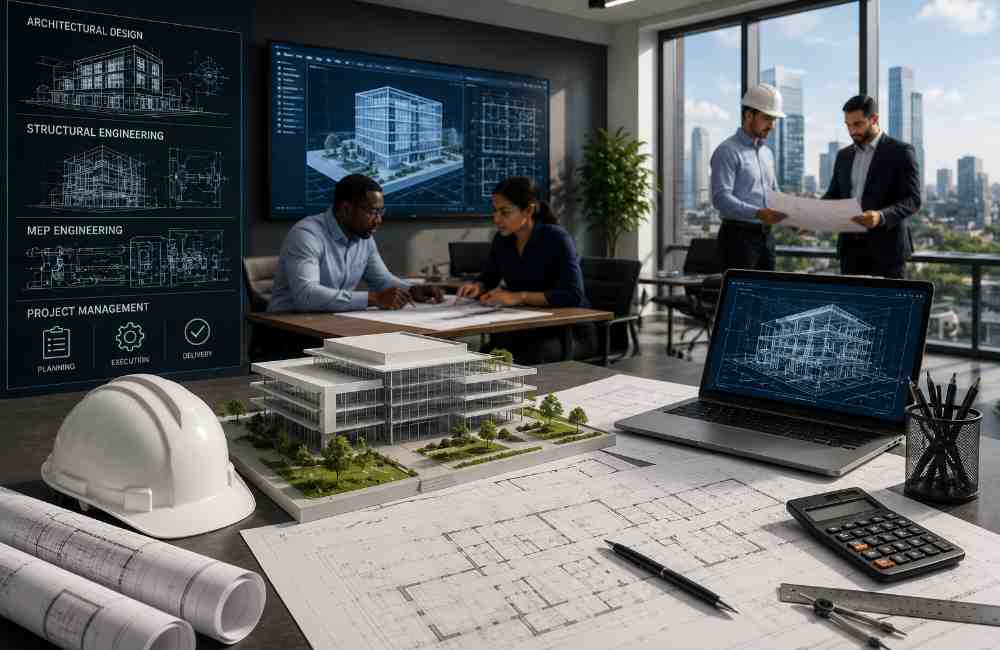
Digital transformation is playing an increasingly important role in architectural engineering projects across Saudi Arabia. Modern infrastructure developments rely heavily on technologies such as Building Information Modeling (BIM), artificial intelligence, digital twins, and smart monitoring systems to improve planning accuracy and operational efficiency.
Engineering companies are using digital tools to optimize project management, reduce construction risks, and improve collaboration between multiple stakeholders. BIM platforms allow engineers, contractors, and architects to coordinate designs more effectively while identifying structural or operational challenges before construction begins.
Smart infrastructure projects also require advanced digital connectivity systems that support transportation monitoring, energy management, water conservation, and public safety operations. As a result, architectural engineering firms are increasingly expanding their expertise beyond traditional building design into integrated digital infrastructure planning.
The demand for sustainable engineering practices is growing alongside digital adoption. Many developers now prioritize environmentally responsible construction methods, energy-efficient materials, and renewable energy integration when planning large-scale projects.
Global attention toward sustainable infrastructure continues to influence regional development priorities. According to the World Bank, resilient and sustainable urban infrastructure is becoming increasingly important for long-term economic development and climate adaptation in rapidly urbanizing economies.
Transportation infrastructure remains one of the strongest drivers for architectural engineering service demand in Saudi Arabia. Major projects involving metro systems, airports, roads, ports, and rail networks require extensive engineering consultancy support throughout planning and execution stages.
The Riyadh Metro project represents one of the largest public transportation investments in the region and continues to create opportunities for engineering consultants specializing in transport planning, tunnel systems, and smart mobility integration. Airport expansion projects and logistics corridor developments are also contributing to strong engineering demand.
Tourism infrastructure projects are equally important. Saudi Arabia’s efforts to become a global tourism destination have accelerated investments in resorts, entertainment complexes, heritage restoration projects, and hospitality infrastructure. These developments require architectural expertise capable of balancing sustainability, cultural preservation, and modern design standards.
Engineering firms are also supporting the development of smart hospitality systems that improve energy efficiency, visitor management, and operational automation across tourism destinations. This growing focus on integrated tourism infrastructure is expanding the scope of engineering and architectural services within the Kingdom.
Riyadh continues to lead architectural and engineering activity in Saudi Arabia due to the concentration of government-backed projects and major infrastructure investments. The city hosts many of the Kingdom’s most significant urban transformation initiatives and remains the primary destination for engineering consultancies and global infrastructure firms.
Projects such as King Salman Park, New Murabba, and major commercial district expansions are increasing demand for urban planning specialists, structural engineers, sustainability consultants, and project management firms. Riyadh’s ongoing expansion is also creating opportunities for firms involved in residential planning, public transportation systems, and digital infrastructure integration.
Other regions are also contributing to sector expansion. The Red Sea coastal region is becoming a major tourism and hospitality investment center, while industrial projects in the Eastern Province continue to increase demand for engineering services focused on logistics and industrial infrastructure.
Public infrastructure development remains a long-term national priority. According to the Saudi Ministry of Finance, government spending continues to prioritize infrastructure, transportation, tourism, housing, and economic diversification projects that support sustainable urban development goals.
Despite strong development activity, the architectural engineering sector faces several operational challenges. One of the most significant issues is the growing shortage of highly skilled engineering professionals capable of managing complex smart city and infrastructure projects.
The rapid pace of development has increased demand for civil engineers, environmental consultants, BIM specialists, sustainability experts, and digital infrastructure professionals. Competition for experienced talent has intensified as engineering firms seek professionals with expertise in large-scale international projects.
Project complexity is also increasing operational pressure on engineering consultancies. Smart cities require multidisciplinary coordination involving transportation systems, renewable energy integration, utility management, environmental planning, and digital connectivity infrastructure. Managing these interconnected systems requires advanced technical expertise and efficient project coordination.
Regulatory compliance remains another important consideration. Saudi Arabia continues to strengthen sustainability standards, urban planning regulations, and construction codes to improve project quality and environmental performance. Engineering firms must continuously adapt to these evolving requirements while maintaining cost efficiency and project timelines.
Several international engineering companies continue to expand operations across Saudi Arabia to participate in long-term infrastructure and smart city projects. Firms such as AECOM, Jacobs, WSP, Bechtel, AtkinsRéalis, Parsons Corporation, Fluor Corporation, and HDR Inc. remain active contributors to major development initiatives throughout the Kingdom.
Many global companies are establishing regional headquarters and strengthening local partnerships to align with Saudi Arabia’s localization initiatives. The emphasis on domestic participation is encouraging collaboration between international engineering firms and local construction or consultancy companies.
Competition within the sector is also driving innovation in digital engineering services, sustainability consulting, and project management capabilities. Companies that combine technical expertise with advanced digital infrastructure planning are increasingly positioned to secure major contracts tied to smart city development.
Saudi Arabia Architectural Engineering Services Market is expected to remain closely connected to the Kingdom’s long-term urban transformation strategy. As smart city projects, tourism infrastructure, transportation systems, and sustainable urban developments continue to expand, architectural and engineering firms may play an even larger role in shaping the future of Saudi Arabia’s infrastructure landscape.

© 2025 Crivva - Hosted by Airy Hosting Managed Website Hosting.