

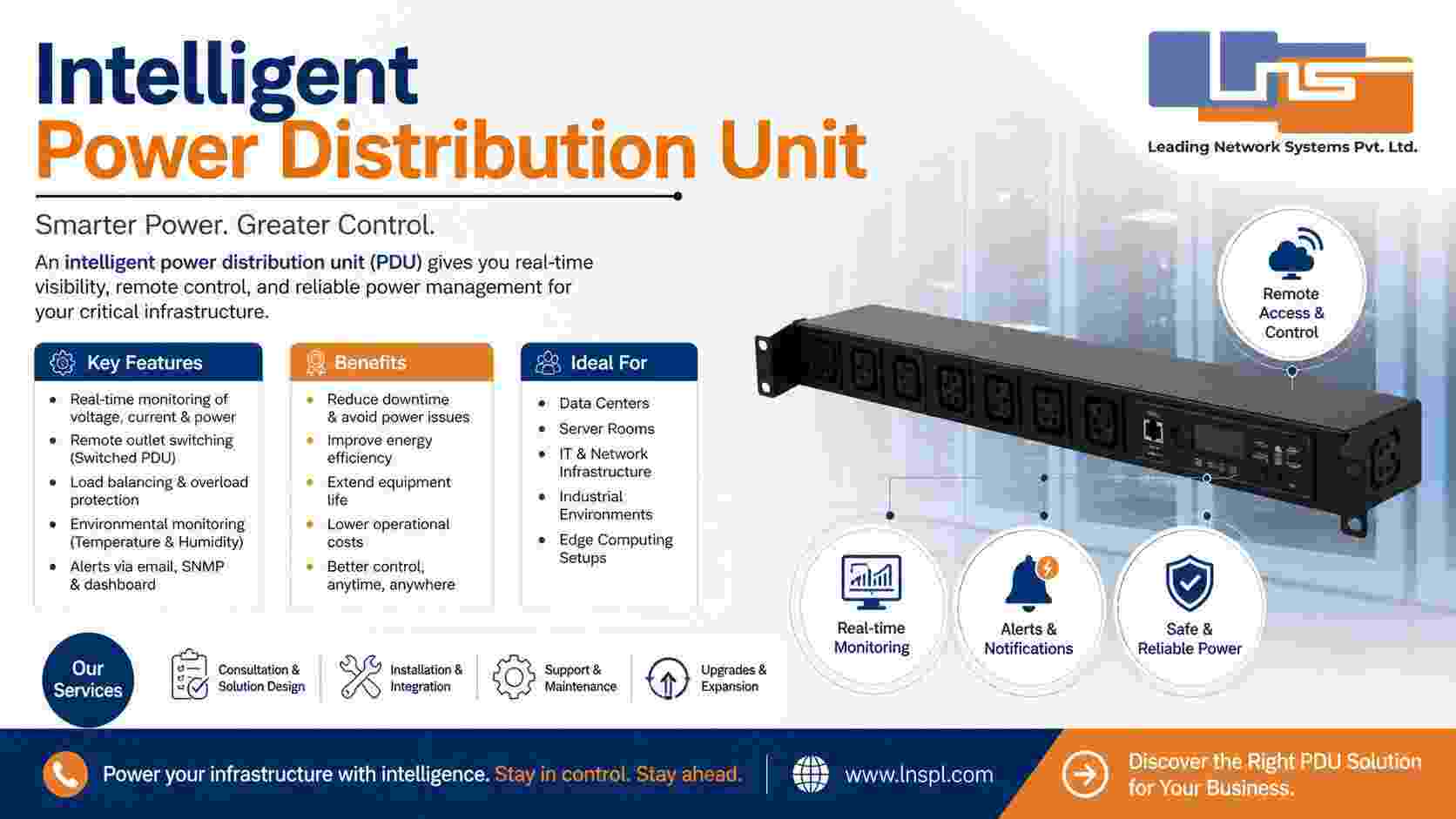
If you’ve ever managed a server room or even a small IT setup, you already know one thing—power control isn’t just about plugging things in and hoping for the best. That’s where an intelligent power distribution unit (PDU) steps in. It brings visibility, control, and a bit of peace of mind to your infrastructure.
Let’s talk about what it actually does, why it matters, and how it can make your daily operations a lot smoother.
An intelligent power distribution unit is more than a basic power strip. It distributes electricity to multiple devices while giving you real-time data and control over each outlet.
Think of it as a smart manager for your power usage. It tells you how much energy each device consumes, helps you prevent overloads, and even lets you control outlets remotely.
This is especially useful in:
A basic PDU simply delivers power. That’s it. No feedback, no alerts, no control.
That might work for a home setup, but in a business environment, it creates problems:
An intelligent system fixes these issues by giving you visibility and control.
You can see voltage, current, and power consumption instantly. This helps you understand where your energy is going and spot unusual activity early.
Forgot to turn off a device? No need to be physically present. You can switch outlets on or off from anywhere.
This is where a switched power distribution unit becomes especially helpful—it allows you to reboot equipment remotely without touching the hardware.
It helps distribute power evenly across devices, reducing the risk of circuit overloads.
If something goes wrong—like a spike in power usage—you’ll get notified right away. That quick response can prevent downtime.
Some models even track temperature and humidity, which is useful for keeping your equipment safe.
You might hear both terms used together, and it can get confusing.
Here’s a simple way to look at it:
So, a switched PDU is a part of the broader intelligent category. If you want full visibility and control, go for the intelligent option.
When you can monitor and control power remotely, you fix issues faster. No waiting, no unnecessary delays.
You’ll know exactly which devices are consuming more power. That insight helps you cut waste and manage costs.
Instead of physically checking equipment, you can handle many tasks remotely. That saves time and effort.
Stable and balanced power reduces stress on devices, which helps them last longer.
Power management is critical here. Even a small issue can affect multiple systems. Intelligent PDUs help maintain stability and control.
From small server racks to large network setups, these units keep everything running smoothly.
Factories and production units rely on consistent power. Monitoring helps avoid unexpected interruptions.
When equipment is installed in hard-to-reach areas, remote control becomes a huge advantage.
Not all PDUs are the same. Here are a few things to check before making a decision:
Make sure it supports your current setup and allows room for expansion.
Look for detailed data reporting—not just basic readings.
Ethernet or cloud-based access can make remote management easier.
Access control and authentication matter, especially in enterprise setups.
Ensure it works well with your existing infrastructure and software.
Companies like LNS provide power distribution solutions that fit different business needs, from small IT environments to larger industrial setups.
A little planning upfront saves a lot of trouble later.
As systems grow more complex, manual power management just doesn’t cut it anymore. Intelligent PDUs bring automation and visibility into the picture.
They help you stay ahead of issues rather than reacting to them.
And with the growing demand for uptime and reliability, having this level of control isn’t a luxury—it’s a necessity.
Businesses are shifting toward smarter infrastructure. Power management is a big part of that shift.
An intelligent power distribution unit helps:
It’s a simple upgrade that delivers long-term value.
A basic PDU only distributes power. An intelligent PDU adds monitoring, remote control, and alerts.
Yes, especially if it includes switched functionality. You can turn outlets on or off from anywhere.
It depends. If you only need remote control, it works. If you also want monitoring and alerts, go for a fully intelligent unit.
They can. By tracking usage, you can identify and reduce unnecessary power consumption.
Absolutely. Even small setups benefit from better control and visibility.
Managing power shouldn’t feel like guesswork. With the right intelligent power distribution unit, you get control, visibility, and fewer surprises.
If you’re planning to upgrade your infrastructure or want better control over your current setup, it’s worth exploring solutions offered by LNS. Their range of power management products supports both growing businesses and established environments.
Take a closer look at your setup today—you might be just one smart upgrade away from a much smoother operation.

© 2025 Crivva - Hosted by Airy Hosting Managed Website Hosting.