

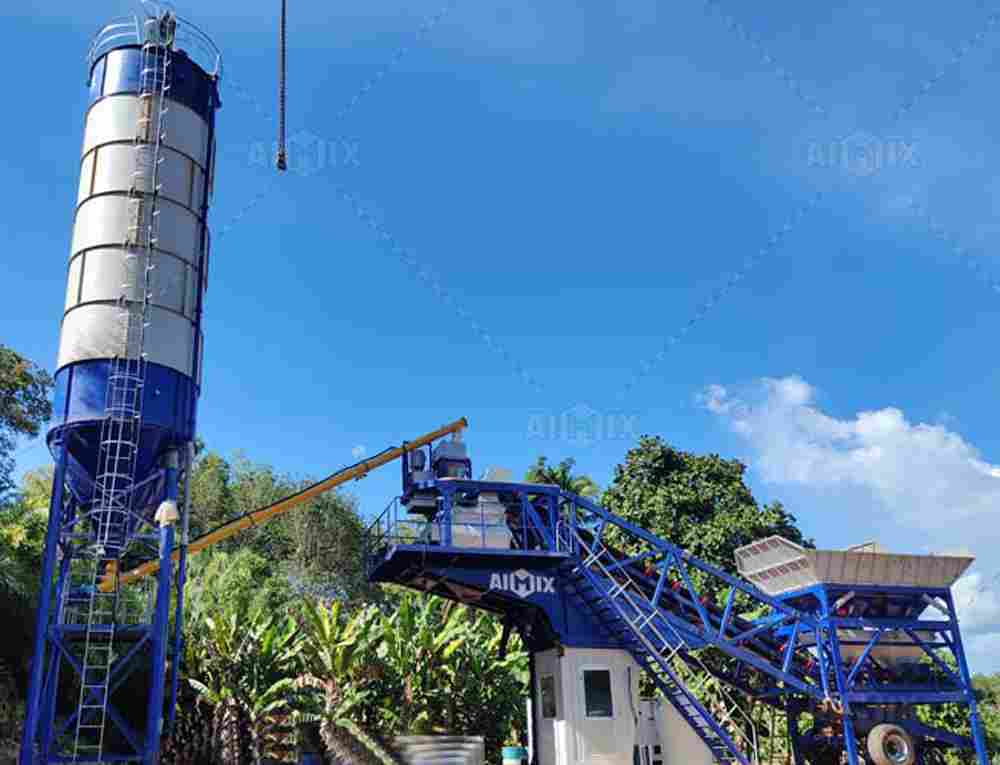
The decision to deploy a portable batch plant on a Nigerian construction site is a declaration of intent. It signals a commitment to concrete quality, production control, and schedule independence. Yet the gap between that declaration and successful operation is filled with three critical variables: power, water, and logistics. Nigerian contractors often focus intently on the plant itself—its capacity, its brand, its price—while underestimating the site infrastructure required to make that plant productive. This is a dangerous oversight. A portable batch plant without reliable power is an expensive sculpture. A plant without adequate water produces nothing. A plant positioned without logistical foresight becomes a bottleneck rather than a solution. This guide provides a systematic framework for assessing and preparing site conditions before the first component of your AIMIX or comparable portable concrete batch plant for sale arrives. The objective is straightforward: to ensure that when the equipment is on the ground, the supporting systems are ready to make it operational without delay or compromise.
The first technical task is calculating the electrical demand of your specific batch plant configuration. A typical AIMIX portable plant in the 20 to 40 cubic meter per hour range requires between 25 and 45 kilowatts of connected load. This demand is distributed across several subsystems: the aggregate batching machine (two to four motors of 5.5 to 11 kilowatts each), the twin-shaft mixer (15 to 30 kilowatts), the cement screw conveyor (4 to 7.5 kilowatts), the air compressor (5.5 to 11 kilowatts), and the control system and lighting (1 to 3 kilowatts). The critical distinction is between starting load and running load. Electric motors draw five to seven times their rated current during startup. A plant with 40 kilowatts of running load may require 150 kilowatts of peak starting capacity if all motors start simultaneously. Professional practice dictates staged starting, where motors are sequenced to avoid simultaneous inrush currents. Your plant supplier should provide a starting sequence diagram as part of the technical documentation.
Nigerian grid power is, for most project sites, an unreliable foundation for batch plant operations. Voltage fluctuations, frequency variations, and unscheduled outages are common outside dedicated industrial zones. Contractors who rely solely on grid connection typically face production interruptions that cascade through their concrete placement schedules. The standard solution is a dedicated generator sized for the plant’s total load plus twenty percent reserve capacity. For a 40 kilowatt plant, a 60 to 75 kVA generator is appropriate. The generator must be equipped with an automatic voltage regulator and a governor capable of maintaining 50 hertz under varying load conditions. Diesel fuel storage is the corollary requirement. A plant operating eight hours daily consumes between 40 and 80 litres of diesel depending on load factor. On-site storage of at least 1,000 litres is recommended to buffer against supply disruptions. For sites with some grid reliability, an automatic transfer switch allows seamless transition between grid and generator, preserving production continuity.
The connection between power source and plant components requires professional electrical engineering. Undersized cables cause voltage drop, which reduces motor torque and can prevent proper starter engagement. For a 40 kilowatt plant located 50 meters from the generator, copper cable of at least 35 square millimeters is required. Longer distances demand heavier gauges or the positioning of the generator closer to the concrete batching plant in Nigeria. The distribution panel must include motor protection circuit breakers, thermal overload relays, and phase failure relays. Nigerian climatic conditions—heat, dust, and humidity—demand enclosures rated at least IP54. All connections must be made by a certified electrical contractor, with verification of earth continuity and insulation resistance before initial startup. This is not an area for compromise or improvisation. Electrical faults on batch plants have caused fires, equipment damage, and operator injuries across Nigerian sites. Proper planning prevents these outcomes.
Water is not an auxiliary consideration for a batch plant; it is a primary raw material. A typical concrete mix contains between 150 and 200 litres of water per cubic meter. For a plant producing 30 cubic meters daily, water demand is 4,500 to 6,000 litres per day, or 135,000 to 180,000 litres monthly. This consumption excludes water required for mixer washdown, which adds another twenty to thirty percent. The site assessment must therefore identify a water source capable of supplying at least 10,000 litres daily to accommodate both production and cleaning. Boreholes are the preferred solution for long-duration projects. Surface water from rivers or lakes may be used but requires testing and potentially treatment. Municipal supply is rarely adequate in volume or pressure for batch plant operations, and reliance on water tankers introduces a supply chain vulnerability that will eventually disrupt production.
The chemical composition of mixing water directly affects concrete properties. Potable water is generally acceptable. Non-potable sources require testing for pH (acceptable range 6 to 8), chlorides (less than 500 parts per million for reinforced concrete), sulphates (less than 2,000 parts per million), and total dissolved solids (less than 2,000 parts per million). Water with high organic content can retard setting. Water with oils or greases reduces bond strength. In Nigerian coastal regions, borehole water may have elevated chloride levels from saltwater intrusion. In industrial zones, surface water may contain contaminants from upstream activities. The prudent contractor commissions a water quality analysis before finalizing plant location. Treatment options include sedimentation tanks for suspended solids, filtration for particulate matter, and chemical adjustment for pH. In extreme cases, trucking in potable water may be the only reliable option, and the budget must reflect this ongoing cost.
On-site water storage provides buffer capacity against supply interruptions. A minimum storage of 20,000 litres is recommended for plants producing 20 to 40 cubic meters daily. This tankage can be provided by sectional steel tanks, high-density polyethylene tanks, or reinforced concrete reservoirs. The storage must be positioned to provide positive suction head to the plant’s water pump, typically meaning the tank outlet is above the pump inlet. Pump selection depends on the distance and elevation difference between storage and plant. For distances under 30 meters with minimal elevation change, a 2 to 3 horsepower centrifugal pump suffices. Longer distances or higher elevations require multistage pumps. Distribution piping from storage to plant should be at least 50 millimeters in diameter to maintain flow rate. All piping must be protected from sunlight to prevent algal growth, and from vehicle traffic to prevent crushing. A flow meter at the plant connection allows verification of delivery rates and early detection of line obstructions.
The physical location of the batch plant within the project site determines productivity. Three principles guide placement. First, the plant must be accessible to aggregate and cement delivery vehicles. Articulated dump trucks and cement tankers require turning radii of at least 20 meters and ground bearing capacity of 8 to 10 tonnes per square metre. Soft ground requires improvement with crushed stone or concrete hardstanding. Second, the plant should be positioned to minimise concrete transport distance to the placement area. Each 100 meters of transport distance adds cycle time and reduces the hourly output of the concrete delivery system. Third, the plant must be upwind of dust-sensitive areas such as worker accommodation or material storage. Prevailing wind patterns in Nigeria vary by region and season; a wind rose analysis, even informal, informs placement decisions.
The batching plant requires organised stockpiles for sand, gravel, and stone. Each aggregate type needs a dedicated stockpile area of at least 50 square meters for every 100 cubic meters of storage. The stockpile base should be compacted and sloped for drainage. Aggregate contamination is a common failure mode on Nigerian sites. Sand stockpiles placed directly on laterite become contaminated with fines that alter concrete properties. Stone stockpiles placed in low areas collect standing water, leading to moisture content variation. The solution is a hardstanding area of concrete or compacted crushed stone, with separate bays for each aggregate type. A wheel loader or backhoe transfers material from stockpiles to the plant’s charging hopper. The travel path between stockpile and hopper should be maintained to prevent rutting and ensure consistent feeding.
A final logistical requirement often overlooked is space for maintenance. The portable batch plant will require regular servicing: belt adjustments, bearing lubrication, liner inspections, and electrical checks. A dedicated area of at least 20 square meters should be allocated for tools, spare parts, and maintenance activities. Critical spares include drive belts, fuses, proximity switches, and a set of mixing blades. For AIMIX plants, the supplier can provide a recommended spares list based on the specific model. This storage area should be lockable, dry, and accessible for equipment access.

© 2025 Crivva - Hosted by Airy Hosting Managed Website Hosting.