

Nigeria’s construction sector has experienced remarkable expansion over the past decade, driven by urbanisation pressures, federal infrastructure programmes, and a growing private real estate market. Within this environment, procurement decisions for construction materials carry outsized financial consequences. Concrete — the lifeblood of virtually every structural project — presents contractors and developers with a fundamental choice: invest in an on-site mini concrete batch plant, or continue sourcing ready-mix concrete from third-party suppliers. This decision is far from trivial. It touches capital allocation, operational logistics, quality assurance, and long-term project economics in ways that deserve rigorous examination.
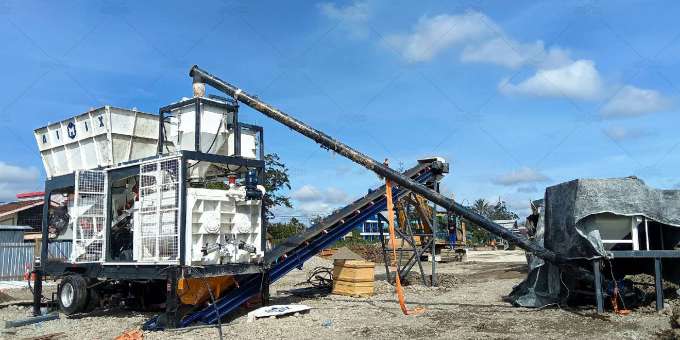
The initial financial outlay for a mini concrete batch plant in Nigeria typically ranges from ₦15 million to ₦60 million, depending on output capacity and country of manufacture. Chinese-fabricated units — which dominate the Nigerian market — occupy the lower end of this spectrum, with capacities between 25 m³/hr and 50 m³/hr. European or American-branded alternatives command premium prices but offer superior automation and longevity. Beyond the plant itself, procurement costs must encompass ancillary infrastructure: concrete mixers, conveyors, aggregate storage bins, water supply systems, and electrical connections. Importation duties and inland haulage from Lagos or Apapa port to project sites can add 8–15% to the base concrete batch plant cost, a figure frequently underestimated during budget planning.
Owning a batching plant introduces a distinct category of recurrent costs that outsourced arrangements entirely sidestep. Diesel consumption is perhaps the most punishing of these, particularly given Nigeria’s chronic fuel pricing volatility. A mid-sized plant operating eight hours daily can consume between 40 and 80 litres of diesel per shift. Personnel requirements include a plant operator, quality control technician, and general labourers — payroll obligations that persist regardless of daily production volumes. Spare parts sourcing presents another friction point; components for imported plants often require international procurement, introducing lead times of two to six weeks that can paralyse operations. Scheduled maintenance, calibration of weigh batchers, and periodic drum lining replacements constitute further recurrent obligations that inflate the true cost of ownership beyond what initial capital figures suggest.
Ready-mix concrete suppliers in Nigeria — including established operators in Lagos, Abuja, Port Harcourt, and Kano — typically price their product per cubic metre, with rates ranging from ₦65,000 to ₦120,000/m³ depending on grade, additives, and delivery distance. On the surface, this appears straightforward. However, the true cost of outsourced concrete is encumbered by several ancillary charges that erode apparent simplicity. Minimum order thresholds, demurrage fees for transit mixer detention beyond the allotted offloading window, and dry-season surcharges applied during periods of aggregate scarcity all inflate per-unit costs. Furthermore, the oligopolistic nature of the ready-mix market in several Nigerian cities grants suppliers disproportionate pricing leverage, leaving contractors with limited capacity to negotiate during peak construction seasons.
Beyond pricing, outsourced concrete introduces supply chain dependencies that carry latent financial risk. Transit mixers navigating Lagos or Abuja traffic corridors frequently deliver concrete outside optimal workability windows, forcing site teams to either reject loads or compromise on placement quality — both outcomes carrying cost implications. Strikes, flooding, fuel scarcity, or supplier capacity constraints can trigger concrete delivery stoppages that idle entire construction workforces. In Nigeria’s construction environment, where liquidated damages clauses are increasingly embedded in commercial contracts, project delays precipitated by third-party supply failures translate directly into contractual penalties. These contingent liabilities rarely appear in straightforward cost-per-metre comparisons but represent material financial exposures for project owners and main contractors alike.
The financial calculus between ownership and outsourcing pivots fundamentally on concrete volume. For projects consuming fewer than 500 m³ in total, the capital and mobilisation costs of a mini batching plant are rarely recoverable within the project duration, making outsourced supply the economically rational choice. However, for medium-to-large projects requiring between 2,000 m³ and 10,000 m³ — encompassing most commercial buildings, bridge substructures, and industrial facilities — the arithmetic shifts decisively. At a conservative in-house production cost of ₦45,000/m³ (accounting for raw materials, labour, fuel, and maintenance), versus a market outsourced rate of ₦90,000/m³, the differential of ₦45,000 per cubic metre means that a plant costing ₦30 million achieves full cost recovery at approximately 667 m³ of production. Every cubic metre thereafter represents pure financial surplus relative to outsourcing. Contractors managing multiple sequential projects can further amortise plant investment across engagements, compressing the effective payback period substantially.
Financial analysis conducted solely through a cost-per-unit lens risks overlooking strategic value dimensions that carry genuine monetary weight. Quality control is perhaps the most consequential. An on-site mini batching plant enables real-time adjustment of mix designs, water-cement ratios, and admixture dosages in response to ambient temperature, aggregate moisture content, and structural specification requirements. This granular oversight reduces the incidence of rejected pours, structural remediation costs, and post-construction liability exposures — expenses that never appear in procurement budgets but can devastate project margins. Ownership also confers scheduling sovereignty. Production can be calibrated to site rhythm rather than supplier availability, eliminating the costly phenomenon of workforce idling awaiting concrete deliveries.
For contractors operating in Nigeria’s emerging construction markets — Enugu, Kaduna, Owerri, Uyo — where ready-mix supply infrastructure remains underdeveloped, plant ownership may be the only viable path to assured concrete supply at any price point. In such geographies, the choice is not merely economic but existential for project viability. Finally, asset ownership carries balance sheet implications. A well-maintained batching plant retains resale value and can be deployed as collateral for project financing, a consideration of practical relevance given the constrained credit environment Nigerian contractors routinely navigate.
The determination of which concrete procurement model makes superior financial sense in Nigeria is not amenable to a universal answer. It is a function of project scale, geographic location, organisational capacity, and strategic positioning. What the evidence consistently demonstrates, however, is that for contractors engaged in sustained, volumetrically significant construction activity, the mini concrete batch plant transitions from capital burden to competitive advantage — converting a fixed investment into a durable engine of margin protection and operational control.

© 2025 Crivva - Hosted by Airy Hosting Managed Website Hosting.